Automotive Wrapping Course
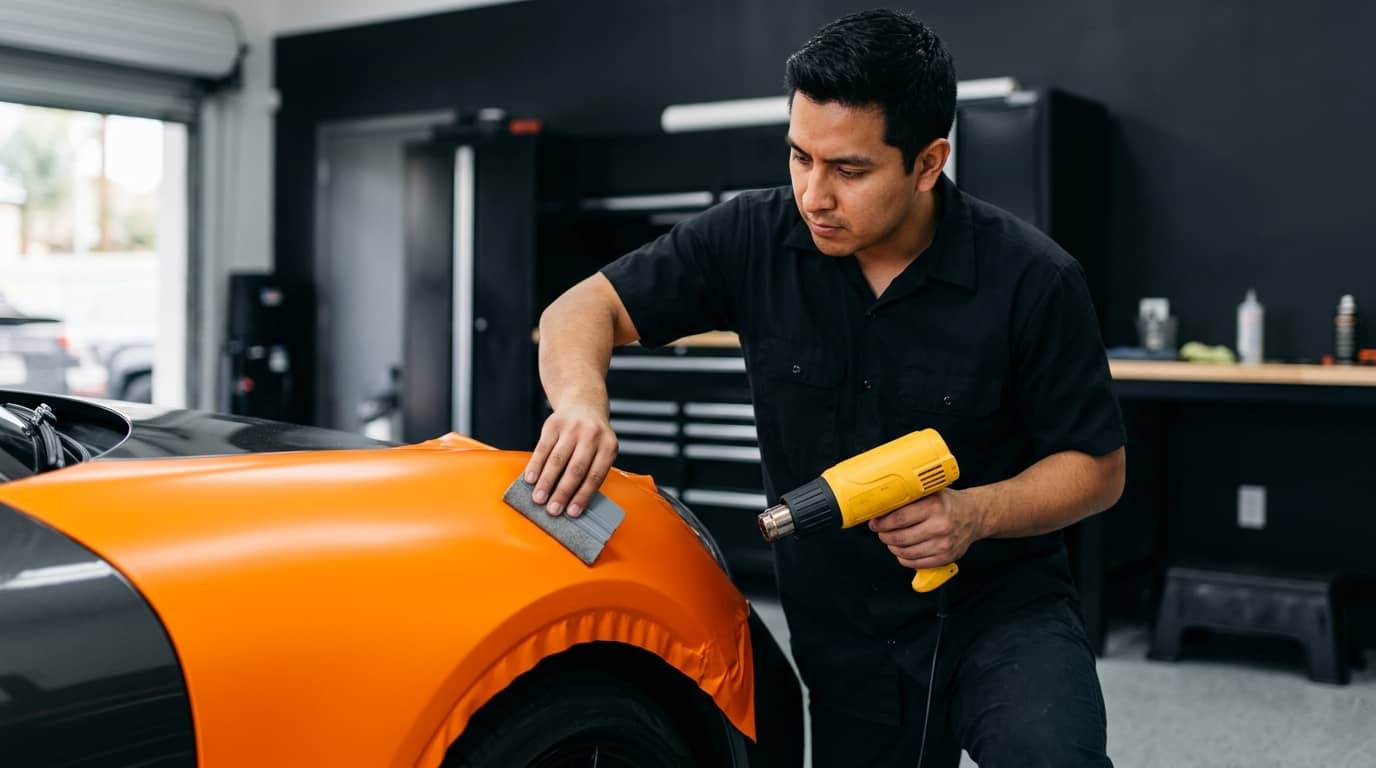
This Automotive Wrapping Course takes you from zero to professional installer, covering everything from workspace setup and surface prep to full vehicle wrap execution and specialty films. You'll build real, hands-on skills that clients pay top dollar for. Whether you're starting a new career or adding a high-demand service to your shop, this course gives you the technical foundation to deliver quality work every time.
4 to 360 hours of flexible workload
valid certificate in your country
What Will I Learn?
You'll learn how to properly prepare any vehicle surface, select the right vinyl film for every project, and apply it cleanly across flat panels, compound curves, and recessed areas. The course covers essential tools, squeegee technique, heat application, and edge finishing so your wraps look sharp and last. You'll also tackle specialty films like chrome, color-shift, and paint protection film. Beyond installation, you'll learn safe wrap removal, client maintenance education, job pricing, and how to manage full fleet projects. By the end, you'll have the complete skill set to work professionally in the wrap industry.
Elevify Differentials
Develop Skills
- Surface Preparation Mastery: Execute a complete decontamination sequence on any vehicle panel.
- Vinyl Film Handling: Measure, cut, and position film on flat and complex curved surfaces.
- Complex Panel Wrapping: Wrap bumpers, fenders, and mirrors without wrinkles or lifting edges.
- Business Pricing Strategy: Calculate material costs and set profitable labor rates for wrap jobs.
Suggested Summary
Before starting, you can change the chapters and workload. Choose which chapter to start with. Add or remove chapters. Increase or decrease the course workload.What our students say
Your classes are perfect. I purchased the one-year package and finally have the opportunity to follow various topics of my interest without needing to switch platforms... I thank you for everything you do, I've already recommended you to other people...

Giulio CarloDigital Marketing Student
I like how the lessons are straight to the point and how I can switch chapters and skip content I don't need.

Mariana FerresPhotography Student
I like the content and the presentation style and video transcription, which speeds up the process!

Luciana AlvarengaNail Design Student
The platform is fast, simple to use. The diversity of content and complementary videos really help with learning.

André FelipePrompt Engineering Student
FAQ
Who is Elevify? How does it work?
Do the courses have certificates?
Are the courses free?
What is the course workload?
What are the courses like?
How do the courses work?
What is the duration of the courses?
What is the cost or price of the courses?
What is an EAD or online course and how does it work?
PDF Course