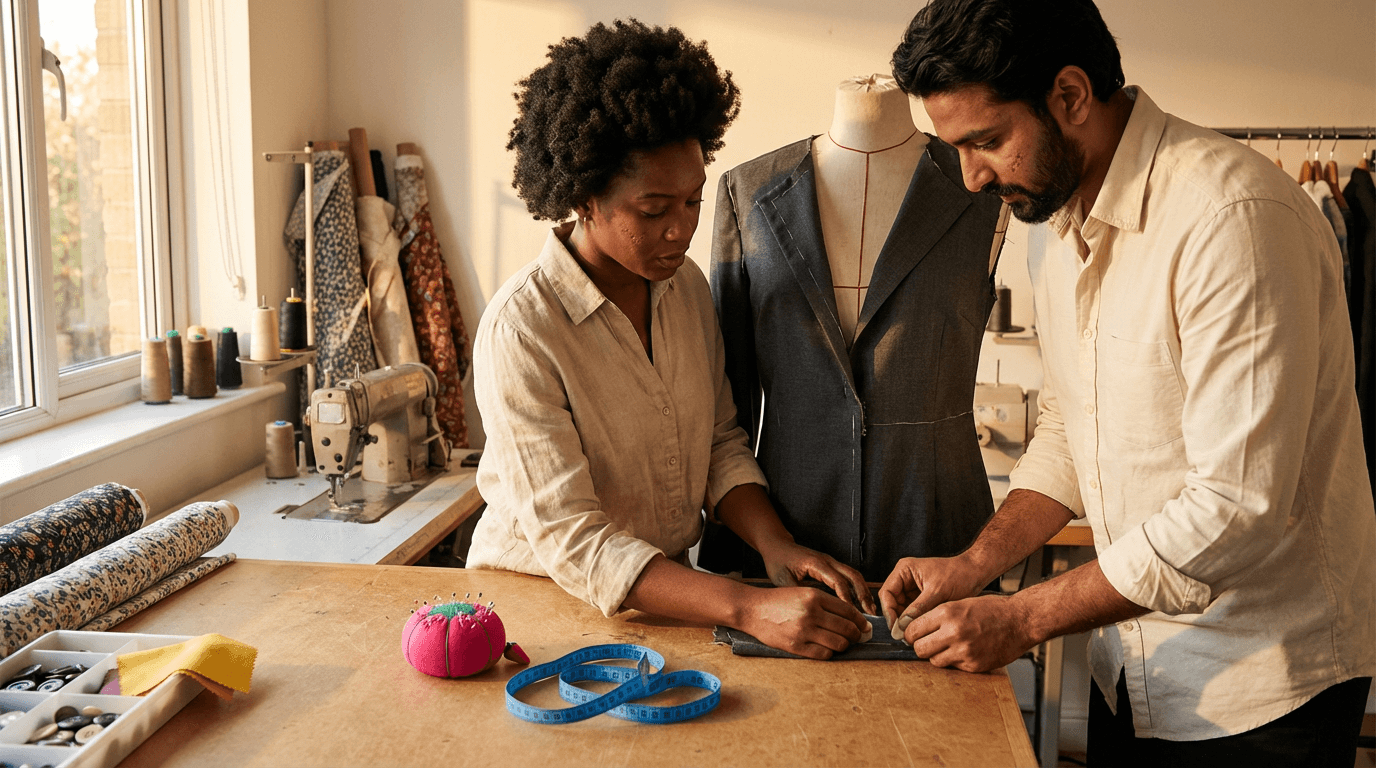
Lesson 1Measuring and transferring pattern adjustments: pivoting darts, rotating fullness, and preserving grainLearn accurate methods for measuring and transferring pattern or garment adjustments, including pivoting darts, rotating fullness, and preserving grain, so alterations hang correctly and maintain the designer’s intended balance and movement.
Measuring bodies and existing garmentsMarking alterations on muslins and testsPivoting and reshaping darts safelyRotating fullness without distorting fitMaintaining grainlines during changesLesson 2Interfacings, stabilizers, and stay-stitching: application for collars, waistbands, and bust areasLearn how interfacings, stabilizers, and stay‑stitching support shape and prevent distortion in collars, waistbands, and bust areas, with guidance on weight selection, grain direction, placement, and pressing for long‑lasting, smooth results.
Choosing interfacing weight and typeFusible vs. sew-in interfacing methodsStabilizing waistbands and fly frontsSupport for collars, cuffs, and placketsStay-stitching curves to prevent stretchingLesson 3Machine vs. hand sewing decisions: when to hand-stitch seams and finishes for durability and appearanceUnderstand when machine stitching is best and when hand sewing gives superior control, strength, or invisibility, so you can plan alterations that balance speed, durability, and refined appearance in seams, hems, and finishing details.
Criteria for choosing hand vs. machineHand-finishing hems and facingsHand-sewn closures and hooksInvisible hand stitches on formalwearBlending machine stitches into originalsLesson 4Reinforcement techniques: bartacks, rivets, and bar tacks for high-stress pointsMaster reinforcement methods that protect high‑stress areas such as pockets, zippers, waistbands, and belt loops, using bartacks, rivets, and layered stitching to prevent failures while maintaining comfort and a neat, intentional look.
Identifying stress points in garmentsSewing bartacks by machineHand-worked bar tacks for controlUsing rivets on denim and workwearReinforcing belt loops and pocket cornersLesson 5Fundamental stitch types: straight, backstitch, slipstitch, blind hem, zigzag, bartack, and darning techniquesBuild a solid foundation in essential stitch types used in alterations, including straight, backstitch, slipstitch, blind hem, zigzag, bartack, and darning, with emphasis on tension control, placement, and matching existing garment stitching.
Perfecting the machine straight stitchBackstitching for strength and securityHand slipstitch and blind hem stitchZigzag, stretch, and overcast stitchesBartack and darning for repairsLesson 6Edge finishes for delicate cotton and stable finishes for wool and denimExplore edge finishes that protect raw edges and support shape, from narrow hems on delicate cotton to sturdy, low‑bulk finishes on wool and denim, ensuring durability, comfort, and a clean look in hems, facings, and seam allowances.
Rolled and baby hems on fine cottonsClean-finished and turned-under edgesBias-bound edges on wool facingsFlat-felled and mock-felled denim seamsChoosing thread and stitch length by fabricLesson 7Safety, machine maintenance, and needle selection for specific materialsDevelop safe habits and routine maintenance for domestic and industrial machines, and learn how to select appropriate needles for wovens, knits, denim, and delicate fabrics to avoid skipped stitches, damage, and unnecessary machine wear.
Personal safety and workspace setupDaily and periodic machine maintenanceTroubleshooting tension and skipped stitchesNeedle types and sizes for key fabricsReplacing needles and testing stitchesLesson 8Seam finishes for different fabrics: serging, pinking, Hong Kong, and bound seamsLearn how to choose and execute seam finishes that match fabric type, garment use, and alteration needs, including serged, pinked, Hong Kong, and bound seams, to control fraying, bulk, comfort, and professional interior appearance.
Comparing seam finishes by fabric behaviorSerging seams on wovens and knitsPinking and when it is sufficientHong Kong finish on unlined garmentsBound seams for bulky or scratchy fabricsLesson 9Pressing techniques and tools for wool, cotton, and denim to shape and set seamsDevelop pressing strategies for wool, cotton, and denim that shape seams, hems, and curves without shine or distortion, using tools such as tailor’s hams, seam rolls, clappers, and pressing cloths to set stitches and refine the final finish.
Pressing vs. ironing: why it mattersSteam, heat, and moisture controlUsing hams, rolls, and clappersPressing seams open and to one sidePreventing shine and imprint marks