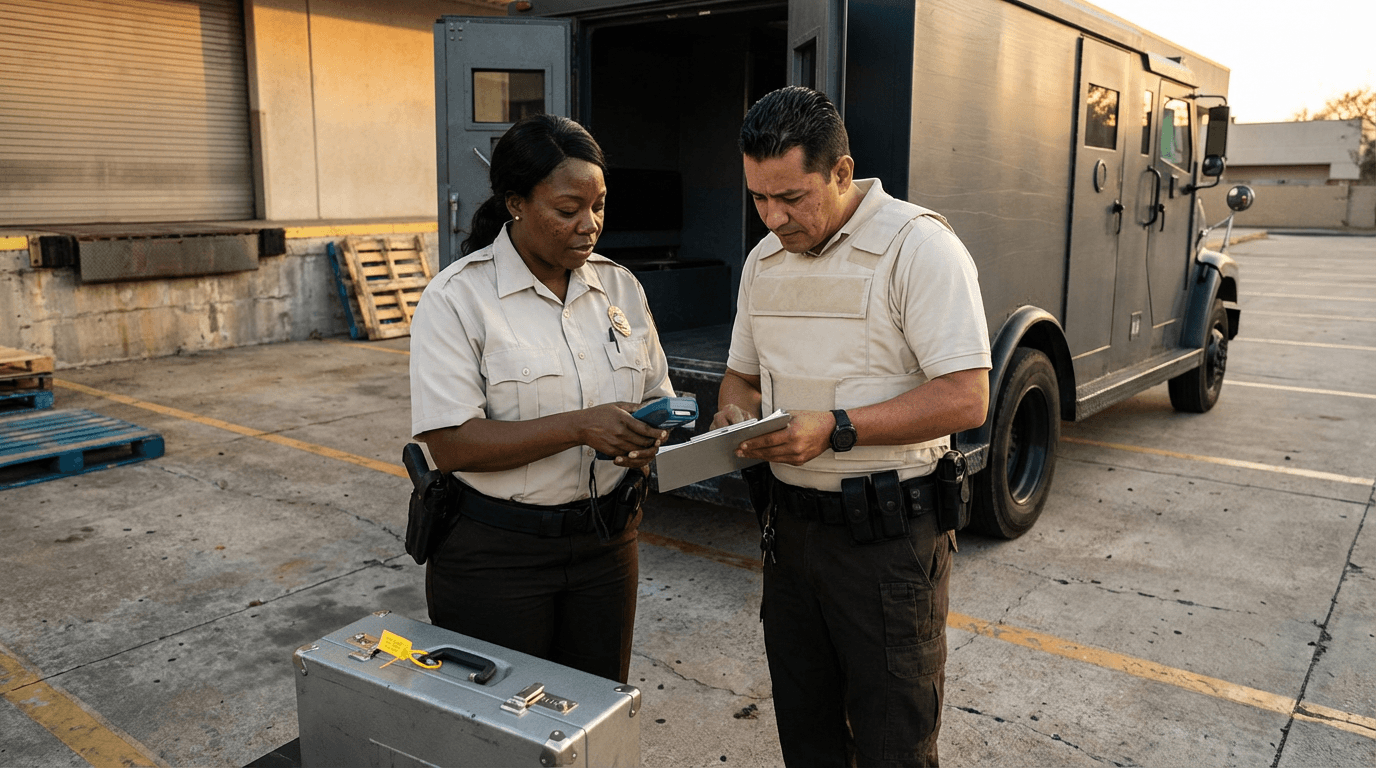
Lesson 1Pre-mission checklists for personnel and vehicle (radio, weapon, PPE, cash containers, spare batteries, medical kit)This section presents structured pre-mission checklists for crew and vehicle, covering radios, weapons, PPE, cash containers, batteries, medical kits, documents, and sign-offs, reducing human error and ensuring consistent mission readiness.
Standard crew readiness checklistVehicle safety and security checklistWeapons, ammunition, and PPE checksCash containers, seals, and labelsSpare batteries and medical kit reviewLesson 2Communication protocols: radio procedures, call signs, encrypted channels, silent and duress signalsThis section covers secure communication for missions, including radio discipline, call signs, encryption use, code words, silent and duress signals, escalation protocols, and fallback methods if primary systems fail.
Radio discipline and message structureCall signs, identifiers, and brevity codesUsing encrypted and secure channelsSilent, covert, and duress signalsBackup communication methodsLesson 3Personal readiness and human factors: fatigue management, behavioural checks, medication and substance rules, avoiding personal items that interfere with duty equipmentThis section addresses human factors affecting mission safety, including fatigue, stress, fitness for duty, medication and substance rules, personal conduct, and avoiding clothing or items that interfere with weapons or safety gear.
Fatigue, sleep, and shift schedulingBehavioral red flags and peer checksMedication, alcohol, and drug policiesFitness for duty and self-reportingClothing and gear compatibility rulesLesson 4Intelligence gathering on local crime: using official alerts, police briefings, company intel, local news feeds, and open-source indicatorsThis section explains how to gather and interpret crime intelligence from police, regulators, company databases, local media, and open sources, turning raw information into practical route and procedure adjustments for safer operations.
Using official crime alerts and bulletinsAttending police and regulator briefingsUsing company incident and risk databasesMonitoring local news and social mediaEvaluating open-source threat indicatorsLesson 5Vehicle inspection: armoured vehicle systems, locks, seals, alarm systems, tyre and fluid checksThis section details systematic inspection of armoured vehicles before deployment, including armour integrity, locks and seals, alarms, tyres, fluids, lights, and documentation, ensuring the vehicle is secure, roadworthy, and mission ready.
Exterior armor and body integrity checksDoor locks, hinges, and security sealsAlarm, CCTV, and GPS tracking testsTire condition, pressure, and wheel checksEngine fluids, lights, and brake testsLesson 6Briefing formats and delegation: conducting concise pre-departure briefings, role assignment, contingency triggers and decision authorityThis section explains how to run focused pre-departure briefings, assign roles, clarify command hierarchy, define contingency triggers, and delegate tasks so every crew member understands responsibilities and decision authority.
Standard pre-departure briefing formatClarifying roles and task ownershipDefining command and decision authorityContingency triggers and actionsRecording attendance and key pointsLesson 7Route planning and threat assessment: map tools, alternate routes, choke points, parking constraints, timing windowsThis section covers how to design safe cash-in-transit routes, assess threats along the path, use mapping tools, plan alternates, manage choke points and parking, and schedule movements within secure timing windows to reduce exposure.
Using digital and paper mapping toolsIdentifying high-risk zones and choke pointsPlanning primary and alternate routesParking, loading, and escape path planningTiming windows and pattern avoidanceLesson 8Legal and policy review: relevant use-of-force law, detention and search limits, privacy and public safety obligationsThis section reviews key legal and policy rules for cash-in-transit work, including use of force, detention and search limits, privacy, public safety duties, and company standard operating procedures that must guide every mission decision.
Use-of-force principles and limitationsDetention, search, and seizure boundariesPrivacy, recording, and data protectionPublic safety and duty-of-care obligationsApplying company SOPs to missions