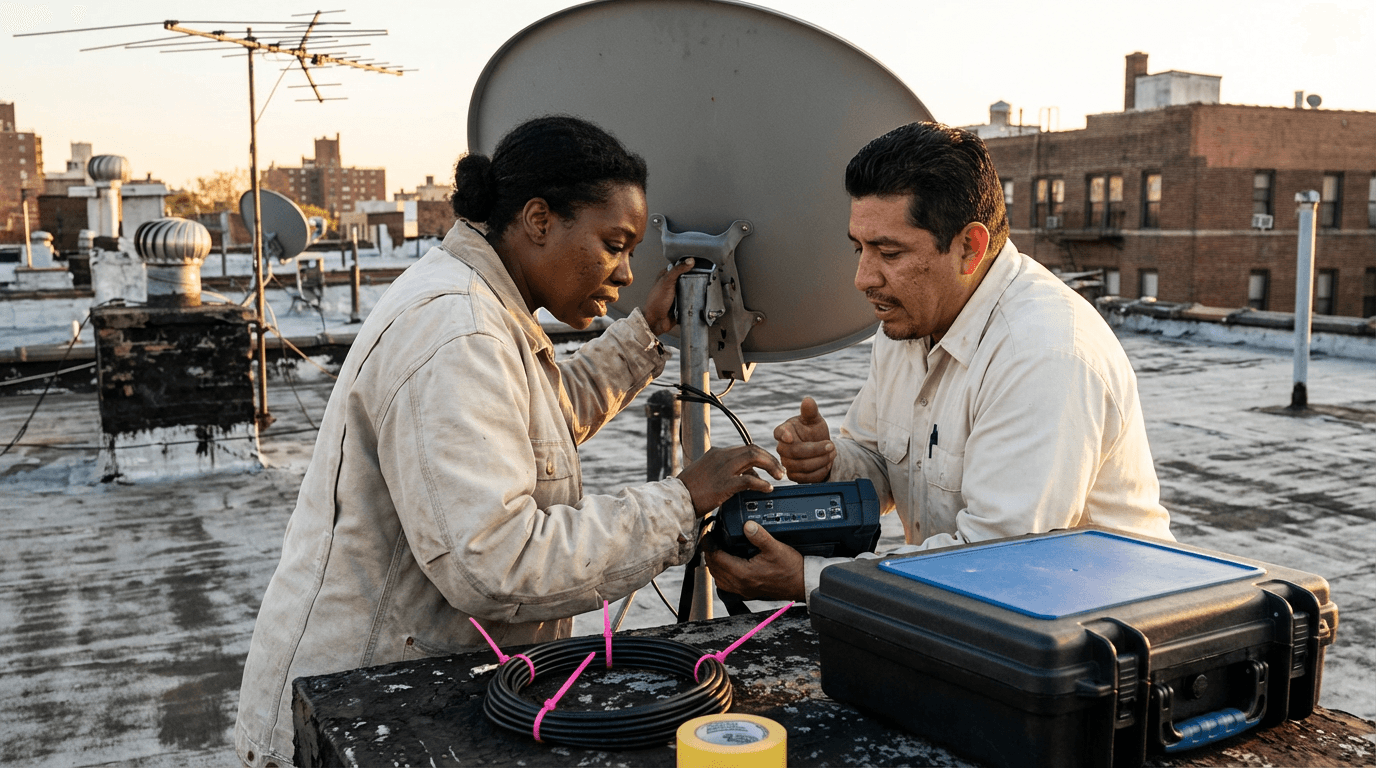
Lesson 1Line-of-sight analysis: identifying trees, buildings, roof edges, and seasonal foliage impactAcquire knowledge on assessing line-of-sight by detecting trees, structures, roof borders, and barriers. You will examine the satellite path, possible dish positions, and changes in plant cover over seasons that might influence signal strength over time in Eritrean landscapes.
Using sighting tools to trace satellite pathsIdentifying current physical obstructionsEstimating seasonal foliage growth impactComparing alternative dish mounting spotsDocumenting LOS risks in site notesLesson 2Pre-work check: paperwork, permits, customer confirmation, and site photos for baseline documentationPrior to commencing tasks, validate documents, approvals, and client information. This part outlines verifying task details, taking initial images, and noting current damages or risks to safeguard both the worker and the client in local Eritrean settings.
Reviewing work orders and job scopeConfirming customer identity and expectationsChecking permits and property approvalsTaking baseline photos of site conditionsRecording pre-existing damage and hazardsLesson 3Inspecting coaxial cables, connectors, splitters, multiswitches, and indoor terminationThis part addresses checking coaxial lines, joins, dividers, and multi-switches for harm, dampness, and signal weakening. You will also examine indoor ends, markings, and tension relief to guarantee enduring dependability in Eritrean installations.
Identifying kinks, crushing, and UV damageChecking connectors for corrosion and loosenessEvaluating splitters and multiswitch placementInspecting indoor wall plates and terminationsLabeling cable paths for future serviceLesson 4Using tools and apps for preliminary azimuth/elevation/skew lookup (satellite lookup websites, compass apps)Acquire skills in employing satellite search sites and phone applications to get azimuth, elevation, and skew figures. This part covers map matching, magnetic north against true north, and confirming measurements with actual site features in Eritrea.
Choosing reliable satellite lookup websitesUsing compass and inclinometer appsUnderstanding magnetic vs true northChecking skew values for selected satellitesCross-checking app data with field realityLesson 5Visual inspection of dish, mount, mast, and wall/roof bracketsConduct a thorough visual check of the dish, holder, pole, and supports. Learn to identify misalignments, loose parts, rust, and water harm that could impact safety, aiming precision, or system steadiness over time in Eritrean conditions.
Checking dish alignment and visible warpingInspecting mast plumb and rigidityExamining wall and roof bracket anchoringIdentifying rust, cracks, and metal fatigueAssessing sealant and water intrusion pointsLesson 6Personal protective equipment and PPE checklist: harnesses, anchors, helmets, gloves, and footwearGrasp the essential personal safety gear for satellite tasks, covering harnesses, fix points, head covers, hand covers, and foot gear. Learn to apply a PPE list to confirm state, suitability, and adherence before each assignment in Eritrea.
Selecting fall arrest harnesses and lanyardsChoosing anchors and lifelines for roofsUsing helmets, gloves, and eye protectionSelecting slip-resistant, insulated footwearCompleting and storing PPE checklistsLesson 7Roof and balcony access planning: ladder placement, fall hazards, and rescue considerationsArrange secure entry to roofs and balconies by selecting firm ladder spots, managing fall risks, and readying rescue plans. Learn to assess grounds, secure points, weather threats, and regional rules before ascending in Eritrean homes.
Selecting safe ladder locations and anglesSecuring ladders to structures and anchorsAssessing roof surfaces and load capacityIdentifying fall hazards and exclusion zonesPlanning rescue routes and emergency accessLesson 8Assessing dish condition: reflector, feedhorn/LNB, bolts, corrosion, and structural integrityEvaluate the state of the reflector, feedhorn or LNB, and all bolts. This part handles rust, sun damage, water entry, and framework frailty that might need fixing, swapping, or re-securing in local Eritrean environments.
Inspecting reflector surface for dentsChecking LNB housing and weather sealsTesting LNB arm rigidity and alignmentEvaluating bolts, nuts, and clamp tightnessDeciding when replacement is requiredLesson 9Electrical safety and grounding checks: nearby power lines, lightning protection, and bonding requirementsThis part clarifies spotting electrical risks near satellite spots, including power wires and service poles. Learn basics of earthing, linking, and lightning safeguards to keep the setup and people secure in Eritrea.
Maintaining clearances from overhead linesIdentifying service entrances and metersVerifying dish and mast grounding pathsChecking bonding to building grounding systemAssessing surge and lightning protection