Aralin 1Mga pagsusuri na partikular sa malamig na panahon: kondisyon ng baterya, diesel heaters, tigas ng hose, mga hakbang laban sa pagyelo para sa mga selyo at filterTinutukan ng araling ito ang mga panganib sa malamig na panahon sa mga sasakyang nagpapuno ng langis at mga sistema ng langis, kabilang ang pagganap ng baterya, paghanda ng diesel heater, kakayahang lumiko ng hose, at proteksyon ng mga selyo, filter, at mga bahagi mula sa pagyelo na maaaring magkompromiso sa ligtas na paghahatid ng langis.
Assess battery health and cold-cranking capacityVerify diesel heater operation and fuel supplyCheck hose stiffness and risk of crackingProtect seals, O-rings, and gaskets from freezingCold-weather additives and anti-gel measuresAralin 2Mga sistema ng refueler: integridad ng hose, couplings, reels, nozzles, meters at beripikasyon ng kalibrasyonNakatuon sa mga sistema ng paghahatid ng langis ng refueler, kabilang ang mga hose, couplings, reels, nozzles, meters, at beripikasyon ng kalibrasyon, at ipinaliliwanag ang mga hakbang sa pagsusuri upang matiyak ang integridad, katumpakan, at operasyon ng pagpapuno ng langis na walang pagtagas.
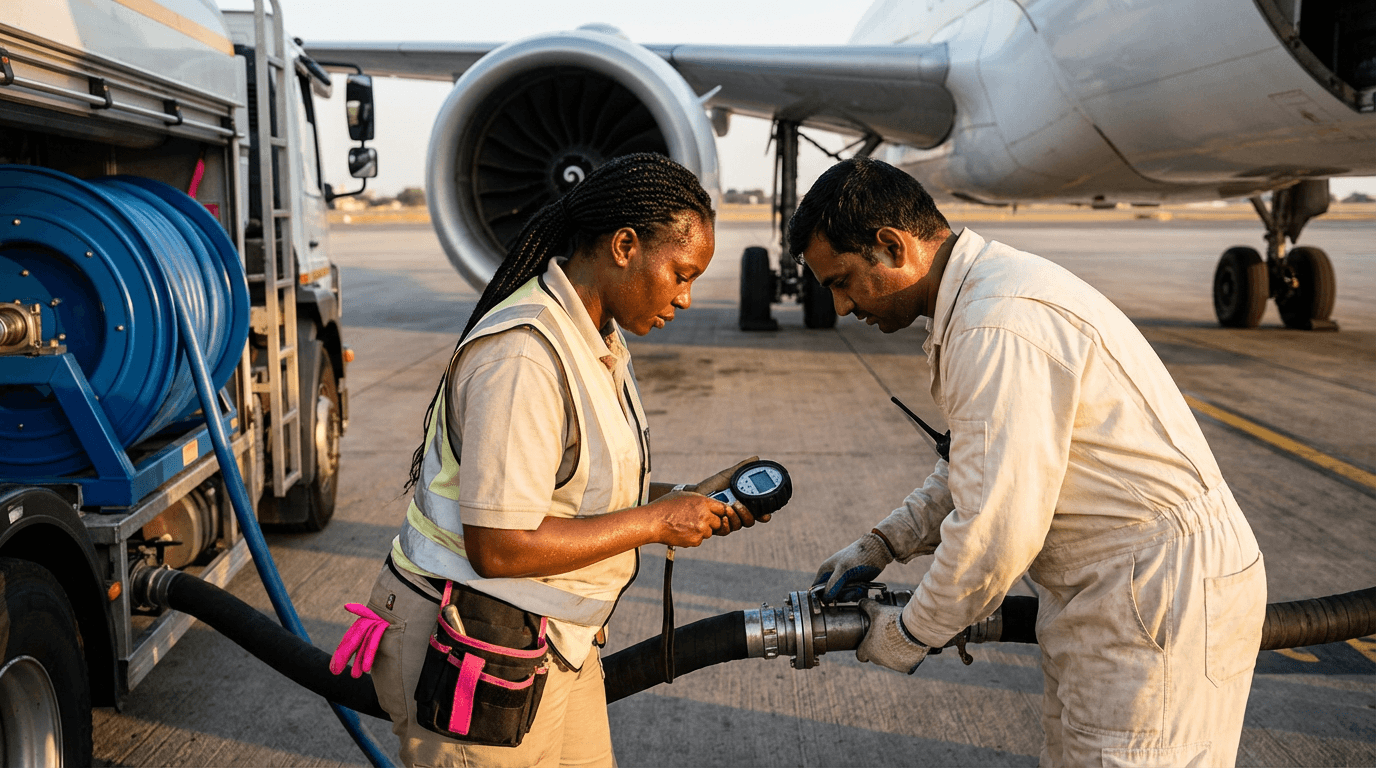
Inspect hose outer cover and reinforcementCheck couplings, seals, and swivel jointsTest hose reels, rewind, and locking devicesNozzle condition, bonding, and deadman testsMeter accuracy checks and seal verificationAralin 3Dokumentasyon at paperwork: load manifests, sertipiko ng kalidad ng langis, delivery notes, maintenance logs, authorization formsInilalarawan ang mga kinakailangang dokumento sa operasyon para sa bawat gawain ng pagpapuno ng langis, kabilang ang mga load manifests, sertipiko ng kalidad ng langis, delivery notes, maintenance records, at authorization forms, at kung paano suriin, punan, at ligtas na iimbak ang mga ito.
Verify load manifests and uplift calculationsCheck fuel quality certificates and batch dataComplete delivery notes and customer sign-offUpdate maintenance and defect log entriesControl, filing, and retention of recordsAralin 4Human factors at pag-mitigate ng pressure ng oras: pagsusuri sa pagod, komunikasyon sa dispatcher, pag-prioritize sa ilalim ng abalang turnaroundTinitingnan ang mga human factors na nakakaapekto sa mga pagsusuri bago ang operasyon, kabilang ang pagod, pressure ng oras, komunikasyon sa dispatcher, at pag-prioritize ng mga gawain, upang mabawasan ang mga error sa panahon ng abalang turnaround at mapanatili ang mga margin ng kaligtasan.
Recognizing fatigue and reduced vigilanceBriefing with dispatcher on workloadPrioritizing critical safety checks firstUse of cross-checks and peer verificationStrategies to resist unsafe time pressureAralin 5Onboard safety equipment: portable at fixed fire extinguishers, spill kits, PPE (cold-weather gear, gloves, eye protection), signageInilalahad ang mga kinakailangang onboard safety equipment para sa mga refueler, kabilang ang mga fire extinguishers, spill kits, PPE, at safety signage, at ipinaliliwanag ang pagsusuri, pagsusuri sa serviceability, at tamang paglalagay para sa mabilis na access sa panahon ng emergencies.
Inspect portable fire extinguishers and sealsCheck fixed fire systems and activation pointsVerify spill kit contents and absorbent stocksConfirm PPE availability and correct sizingSafety signage, labels, and placard conditionAralin 6Daily vehicle inspection checklist: engine, brakes, lights, tires, cabin controls, fuel pump operationInilalahad ang structured daily inspection ng mga refueler vehicles, na nakatuon sa engine, brakes, lights, tires, cabin controls, at operasyon ng fuel pump upang matiyak ang roadworthiness at ligtas na ramp performance bago pumasok sa movement area.
Engine oil, coolant, and visible leak checksBrake, steering, and parking brake functionLights, beacons, and audible warning devicesTire condition, inflation, and wheel securityCabin controls, mirrors, and visibility checksAralin 7Pagsusuri at pag-iisolate ng bumaliking refueler: mga hakbang upang suriin ang trak pagbalik mula sa ibang stand bago ang susunod na assignmentInilalarawan kung paano suriin at, kung kinakailangan, i-isolate ang refueler na bumalik mula sa ibang stand, na sinusuri ang kalinisan, status ng fuel system, dokumentasyon, at safety equipment bago i-assign sa susunod na operasyon.
Confirm previous fueling task completionCheck for leaks, spills, or fuel odorsVerify filter status and water drain recordsReview trip log and any defect reportsIsolation procedures if issues are detectedAralin 8Filtration at water-separation systems sa trak: bowl/selector valves, coalescers, filter elements, differential pressure indicatorsIpinaliliwanag ang mga bahagi ng filtration at water-separation sa mga refueler trucks, kabilang ang mga bowl, selector valves, coalescers, filter elements, at differential pressure indicators, at kung paano suriin ang mga ito upang mapanatili ang kalinisan ng langis at maiwasan ang kontaminasyon.
Identify filter vessels and water separator layoutInspect sight bowls and drain water correctlyCheck selector valves for correct positionAssess coalescer and filter element conditionInterpret and record differential pressure readingsAralin 9Pre-shift verification routines at timing: frequency ng mga pagsusuri (simula ng shift, sa pagitan ng stands), checklists at sign-off practicesTinutukan ang structured pre-shift at in-shift verification routines, kabilang ang timing ng mga pagsusuri, paggamit ng standardized checklists, dokumentasyon, at sign-off practices upang matiyak ang accountability at consistent safety performance.
Start-of-shift full vehicle and system checkBetween-stand quick turnaround inspectionsUse of standardized checklists and formatsSupervisor review and electronic sign-offHandling defects found during routine checksAralin 10Grounding at bonding equipment: kondisyon ng cable, clamps, testing procedures at continuity checksIpinaliliwanag ang mga prinsipyo ng grounding at bonding para sa mga refueler, na nakatuon sa integridad ng cable, kondisyon ng clamp, at continuity testing, at inilalarawan ang mga routine sa pagsusuri na nag-iwas sa static discharge sa panahon ng fueling operations sa ramp.
Visual inspection of grounding cable insulationClamp jaw condition and spring tensionContinuity testing and resistance limitsStorage, routing, and chafing preventionActions when grounding equipment is unserviceable