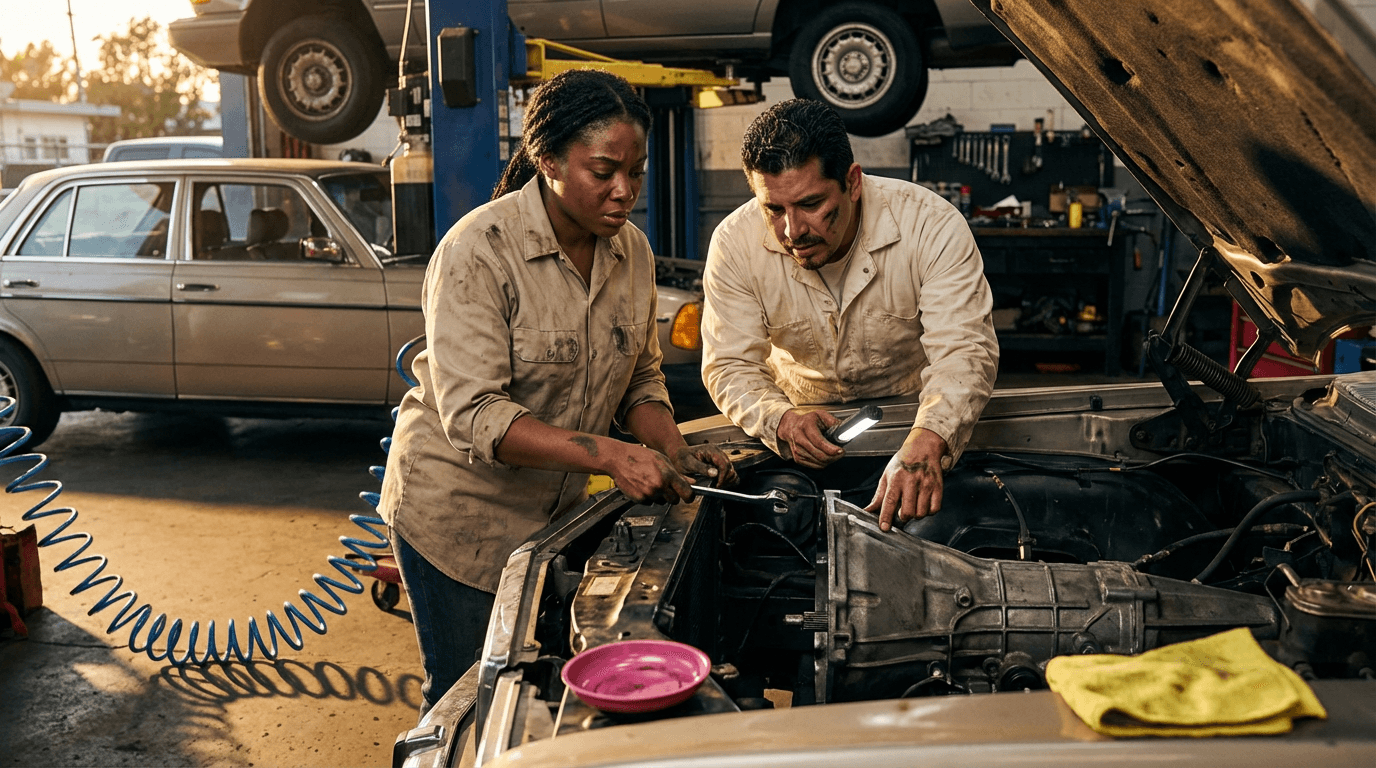
Lesson 1Transmission fitment and mounting: input shaft engagement checks, pilot/bearing installation, crossmember and mount torquingThis section covers correctly positioning and mounting the manual transmission, verifying input shaft engagement, installing or inspecting the pilot bearing, and torquing the crossmember and mount hardware to maintain alignment and reliability.
Verifying bellhousing to block alignmentInput shaft engagement and endplay checkPilot bearing selection and installationCrossmember positioning and shim choicesMount torque specs and fastener sequenceLesson 2Shifter installation and linkage setup: console removal, shifter mounting, cable adjustment, detent alignment and bushing lubricationThis section explains how to install the shifter and set up linkage or cables, including console removal, shifter base mounting, linkage alignment, cable adjustment, detent verification, and lubrication of pivots and bushings for precise feel.
Console and trim disassembly stepsShifter base alignment and fasteningRod or cable linkage orientationDetent position and gate verificationBushing and pivot lubrication pointsLesson 3Final assembly checks: torque audit, driveline angle and joint play inspection, exhaust clearance and heat wrap where neededThis section focuses on final assembly verification, including a torque audit of critical fasteners, driveline angle checks, inspection of universal joint play, and confirming exhaust clearance and heat protection around the new transmission layout.
Structured torque audit checklistDriveline angle measurement methodsU‑joint play and phasing inspectionExhaust clearance and rattle checksHeat wrap and shield installationLesson 4Fluids, bleeding and adjustments: gearbox fill procedures, hydraulic system bleeding, clutch freeplay adjustment, shifting feel setupYou will learn correct fluid selection and fill procedures for the manual gearbox, proper bleeding of hydraulic clutch systems, setting clutch freeplay, and fine‑tuning shift feel to balance smooth engagement with reliable gear selection.
Selecting gearbox oil type and gradeFill level checks and leak inspectionHydraulic clutch bleeding techniquesClutch freeplay and bite point setupTest drive and shift feel refinementLesson 5Clutch system installation: flywheel replacement or machining, clutch disc alignment, torque sequence and rotor runout checksThis section covers installing the clutch system, including flywheel inspection and machining or replacement, aligning the clutch disc, torquing the pressure plate in sequence, and checking runout to prevent chatter and premature wear.
Flywheel inspection and resurfacingChoosing bolts and thread treatmentClutch disc alignment tool usePressure plate torque patternRunout measurement and limitsLesson 6Vehicle reception and documentation: photos, VIN, module coding record, pre-conversion test drive checklistHere you will learn how to receive the vehicle, document its condition, capture photos, record VIN and module data, and perform a structured pre‑conversion road test to establish baselines for drivability, noise, and fault codes.
Initial walkaround and photo setRecording VIN, mileage, and optionsScanning and saving module coding dataPre‑conversion road test checklistCustomer concerns and sign‑off formsLesson 7Removal sequence: draining fluids, disconnecting battery, removing automatic transmission, torque converter/flexplate removal, exhaust and crossmember removalThis section explains the safe, logical order for draining fluids, disconnecting the battery, removing the automatic transmission and torque converter, handling the flexplate, and taking down exhaust and crossmember components without damage.
Battery disconnect and safety prepDraining ATF and related fluidsSeparating torque converter from flexplateSupporting and lowering the transmissionExhaust and crossmember removal stepsLesson 8Pedal box fit and clutch actuation setup: installing master cylinder or cable, routing hydraulic lines or cable, reservoir placement and securingYou will learn how to fit the pedal box and set up clutch actuation, including master cylinder or cable installation, pedal ratio considerations, routing hydraulic lines or cable, placing the reservoir, and securing all components against chafe and flex.
Pedal box removal and trial fittingMaster cylinder or cable bracketryHydraulic line or cable routing pathsReservoir placement and mountingPedal travel, stop, and switch adjustmentLesson 9Wiring and ECU/TCU adaptations: fitting neutral/safety switch, reverse lamp wiring, speedometer/tachometer signal checks, immobilizer and TCM reprogramming/blanking strategiesHere you will configure wiring and control modules for the manual setup, including neutral safety and reverse lamp circuits, speedometer and tachometer signals, and strategies for immobilizer, ECU, and TCM coding or deletion as required.
Neutral safety and clutch switch wiringReverse lamp switch integrationSpeedometer and tachometer signal pathsECU coding for manual configurationTCM removal or reprogramming optionsLesson 10Firewall/tunnel and mounting modifications: measuring required clearances, cutting/patching, adding reinforcements and heat shielding if necessaryHere you will learn how to evaluate and modify the firewall and tunnel for manual gearbox clearance, including measuring, cutting, patching, reinforcing, and adding heat shielding while preserving structural integrity and interior sealing.
Measuring gearbox and shifter envelopeMarking and cutting the tunnel safelyFabricating and welding patch panelsAdding structural reinforcementsSeam sealing, paint, and insulation