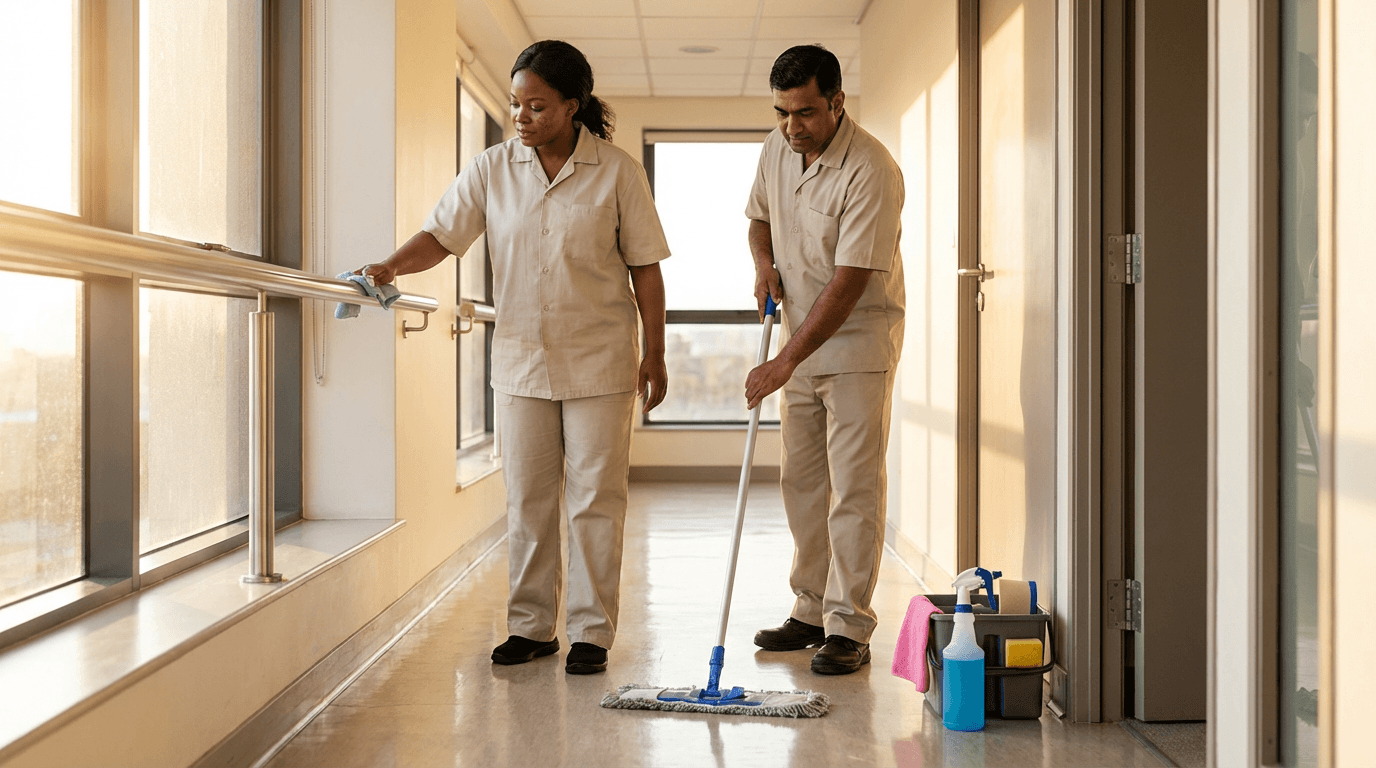
Lesson 1Standard daily tasks per area: hallways and offices (dusting, vacuuming, spot cleaning, trash)Outlines regular daily jobs for hallways and offices, like dusting, vacuuming, spot cleaning, and bin emptying, focusing on busy spots, messy desks, and keeping paths clear and safe.
High and low dusting in offices and hallsVacuuming carpets and hard floor edgesSpot cleaning walls, doors, and switchesDesk area etiquette and personal itemsTrash removal and liner replacementLesson 2Use and interpretation of cleaning product labels, dilution instructions, and MSDS basicsCovers main parts of cleaning product labels, mixing directions, and simple safety data basics so staff select right products, mix safely, and grasp health, safety, and storage needs.
Locating use directions on product labelsUnderstanding hazard symbols and warningsFollowing dilution ratios and mix methodsContact time and dwell time importanceFinding key data in MSDS sheetsLesson 3Floor care basics: sweeping, vacuuming, wet mopping, microfiber techniques, and spot treatmentHandles daily floor cleaning for various surfaces, with proper sweeping, vacuuming, mopping order, cloth use, and quick fixes so floors remain clean, safe, and smart-looking all shift.
Choosing tools for hard floors and carpetsCorrect sweeping and dust control stepsVacuuming patterns and edge detailingWet mopping methods and rinse water careMicrofiber use, color coding, and launderingLesson 4Trash handling and waste segregation (bagging, liners, recycling, safe disposal of sharps/contamination)Deals with safe bin handling, liners, and sorting waste, including recycling tips and steps for sharps or dirty items, to keep staff safe, follow rules, and aid green efforts.
Choosing correct liners and bag sizesSafe lifting, tying, and cart loadingSeparating recyclables from general wasteHandling sharps and contamination safelyStaging waste for pickup and reportingLesson 5Standard daily tasks per area: lobby and entrance (sweep, spot mop, glass/door wipe, mat care, trash)Covers daily lobby and entrance jobs, like mat upkeep, sweeping, spot mopping, glass and door wipes, and bin clearing to give a fresh, welcoming look to users and visitors.
Entry mat shaking, vacuuming, and rotationSweeping and spot mopping traffic lanesCleaning doors, handles, and push platesGlass and window spot cleaning stepsLobby trash, recycling, and odor controlLesson 6Standard daily tasks per area: restrooms (toilet/sink cleaning, disinfecting, restocking, floor care)Sets out daily toilet routines, including bowl and basin cleaning, germ-killing, supply refill, and floor work, stressing germ control and clear cleanliness marks.
Toilet and urinal cleaning sequenceSink, counter, and mirror detailingDisinfecting high-touch restroom surfacesRestocking paper, soap, and hygiene itemsRestroom floor sweeping and wet moppingLesson 7PPE selection and safe use (gloves, eye protection, non-slip footwear), and wet floor signage protocolExplains picking and using gear like gloves, eye shields, and grippy shoes, plus placing wet floor signs to stop slips, falls, and chemical mishaps while cleaning.
Selecting gloves for chemicals and tasksProper donning and removal of PPEUsing eye and face protection correctlyNon-slip footwear care and inspectionPlacing and removing wet floor signageLesson 8Standard daily tasks per area: kitchen/break room (surface disinfect, sink care, appliance wipe-down, trash/food waste)Defines kitchen and break area jobs, like surface germ-kill, sink care, appliance wipes, and waste handling to curb smells, bugs, and germ spread.
Clearing and disinfecting tables and countersSink, faucet, and drain cleaning stepsMicrowave, fridge, and appliance exteriorsManaging food waste and odor controlChecking supplies and restocking itemsLesson 9Designing an efficient area order and rationale (start high to low, dry to wet, clean to dirty)Shows planning smart cleaning paths, from top to bottom, clean to dirty, dry to wet, to cut germ spread, save time, and avoid redoing work across all spaces.
Mapping zones and daily coverage listsOrder of tasks: high to low, clean to dirtyDry tasks before wet tasks rationaleMinimizing backtracking and rehandlingAdjusting routes for occupied spaces