Medical Equipment Course
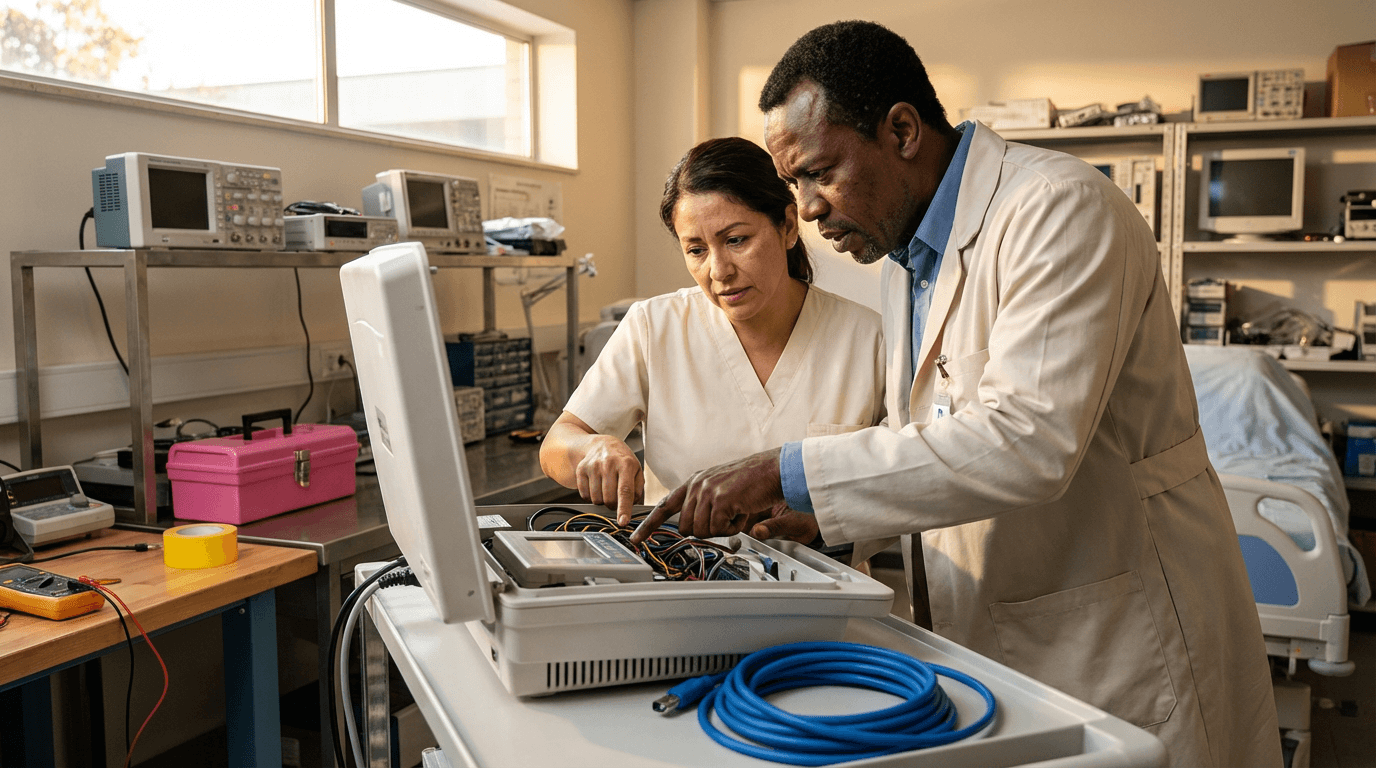
This course equips healthcare professionals with essential skills for operating critical medical devices, emphasizing safety, maintenance, and teamwork to enhance patient care in emergency situations.
from 4 to 360h flexible workload
valid certificate in your country
What will I learn?
The Medical Equipment Course provides targeted, practical training to enable you to operate infusion pumps, defibrillators, and patient monitors with safety and assurance. You will cover installation, configuration, alarm management, fault-finding, sanitation, and routine servicing, along with effective interaction, record-keeping, and hazard control abilities to minimise mistakes, speed up reactions, and ensure all apparatus is prepared for urgent applications.
Elevify advantages
Develop skills
- Infusion pump expertise: establish secure flow rates, address alarms, and resolve bedside issues promptly.
- Defibrillator preparedness: perform inspections, administer secure shocks, and clear warnings swiftly.
- Patient monitor proficiency: set up settings, oversee alarms, and confirm precise readings.
- Safety and upkeep: utilise checklists, avert breakdowns, and record equipment problems.
- Team interaction: provide precise updates, report issues, and promote secure procedures.
Suggested summary
Before starting, you can change the chapters and the workload. Choose which chapter to start with. Add or remove chapters. Increase or decrease the course workload.What our students say
Your lessons are perfect. I purchased the one-year package and finally have the opportunity to follow various topics of my interest without needing to change platforms... I thank you for everything you do, I've already recommended you to other people...

Giulio CarloDigital Marketing Student
I like how the lessons are straight to the point and how I can change chapters and skip content I don't need.

Mariana FerresPhotography Student
I like the content and the way videos are presented and transcribed, which speeds up the process!

Luciana AlvarengaNail Design Student
The platform is fast, simple to use. The diversity of content and complementary videos help a lot with learning.

André FelipePrompt Engineering Student
FAQ
Who is Elevify? How does it work?
Do the courses have certificates?
Are the courses free?
What is the course workload?
What are the courses like?
How do the courses work?
What is the duration of the courses?
What is the cost or price of the courses?
What is an EAD or online course and how does it work?
PDF Course