Sound Recordist Training
4.2/5
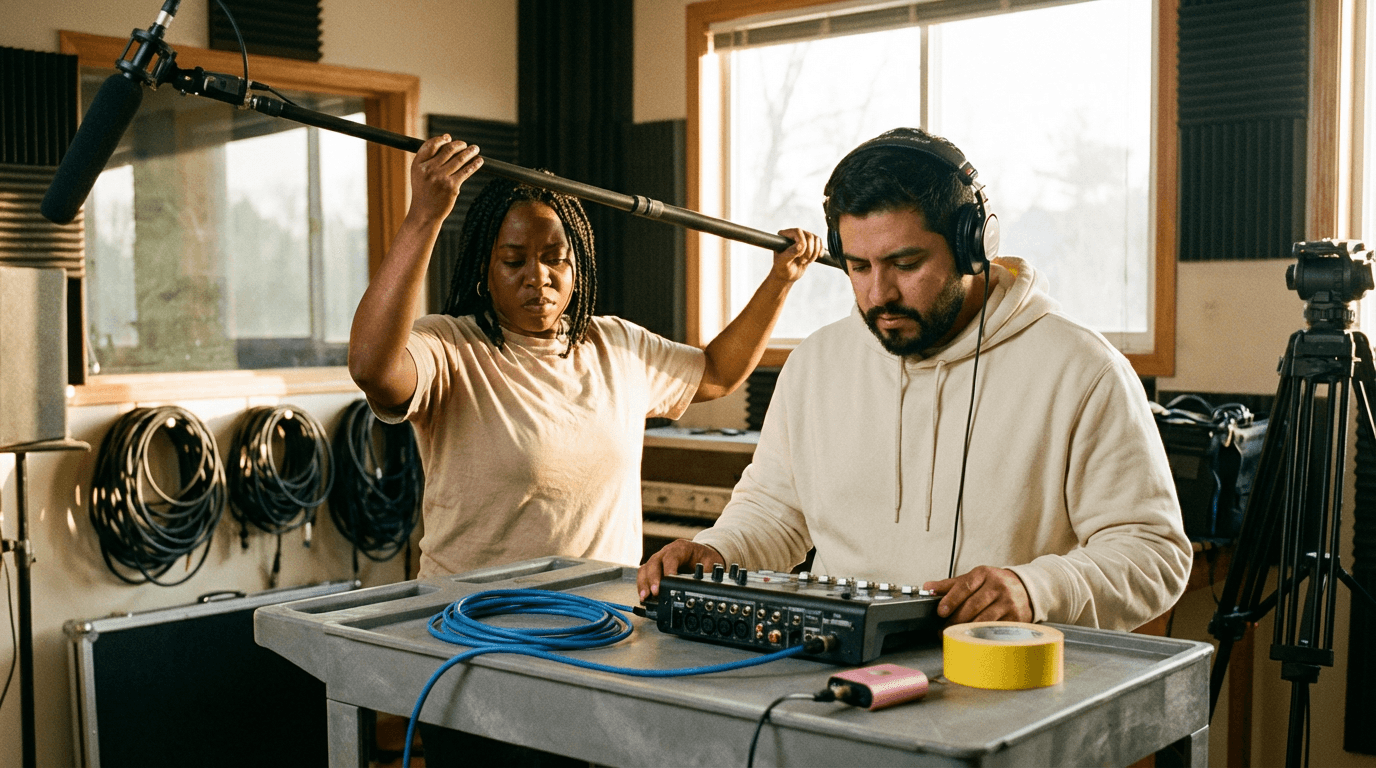
This course provides intensive practical training in location sound recording, focusing on boom operation, lavalier setup, RF coordination, environmental noise reduction, backup strategies, and team communication to ensure pristine, dependable dialogue tracks for all types of shoots. Participants gain the expertise to perform confidently as sound recordists in professional environments.
4.2 in the evaluation
from 4 to 360h flexible workload
valid certificate in your country
What will I learn?
Acquire hands-on skills for on-set work, including selecting equipment, positioning microphones, covering multiple angles, and staging gain accurately. Master noise management, failure prevention, crew coordination, and take documentation for efficient post-production. Through structured workflows, safety measures, and vigilant monitoring, emerge equipped to produce clear, dependable audio tracks in high-speed film projects.
Elevify advantages
Develop skills
- On-set troubleshooting: swiftly resolve RF, power, and microphone problems using expert procedures.
- Precision boom handling: record clear dialogue amid intricate multi-camera setups.
- Location noise management: control street, clothing, and set sounds for quality production audio.
- Professional recording process: organise tracks, adjust gain levels, and oversee for seamless mixing.
- Set professionalism: interact, log details, and partner effectively as a chief sound operator.
Suggested summary
Before starting, you can change the chapters and the workload. Choose which chapter to start with. Add or remove chapters. Increase or decrease the course workload.What our students say
Your lessons are perfect. I purchased the one-year package and finally have the opportunity to follow various topics of my interest without needing to change platforms... I thank you for everything you do, I've already recommended you to other people...

Giulio CarloDigital Marketing Student
I like how the lessons are straight to the point and how I can change chapters and skip content I don't need.

Mariana FerresPhotography Student
I like the content and the way videos are presented and transcribed, which speeds up the process!

Luciana AlvarengaNail Design Student
The platform is fast, simple to use. The diversity of content and complementary videos help a lot with learning.

André FelipePrompt Engineering Student
FAQ
Who is Elevify? How does it work?
Do the courses have certificates?
Are the courses free?
What is the course workload?
What are the courses like?
How do the courses work?
What is the duration of the courses?
What is the cost or price of the courses?
What is an EAD or online course and how does it work?
PDF Course