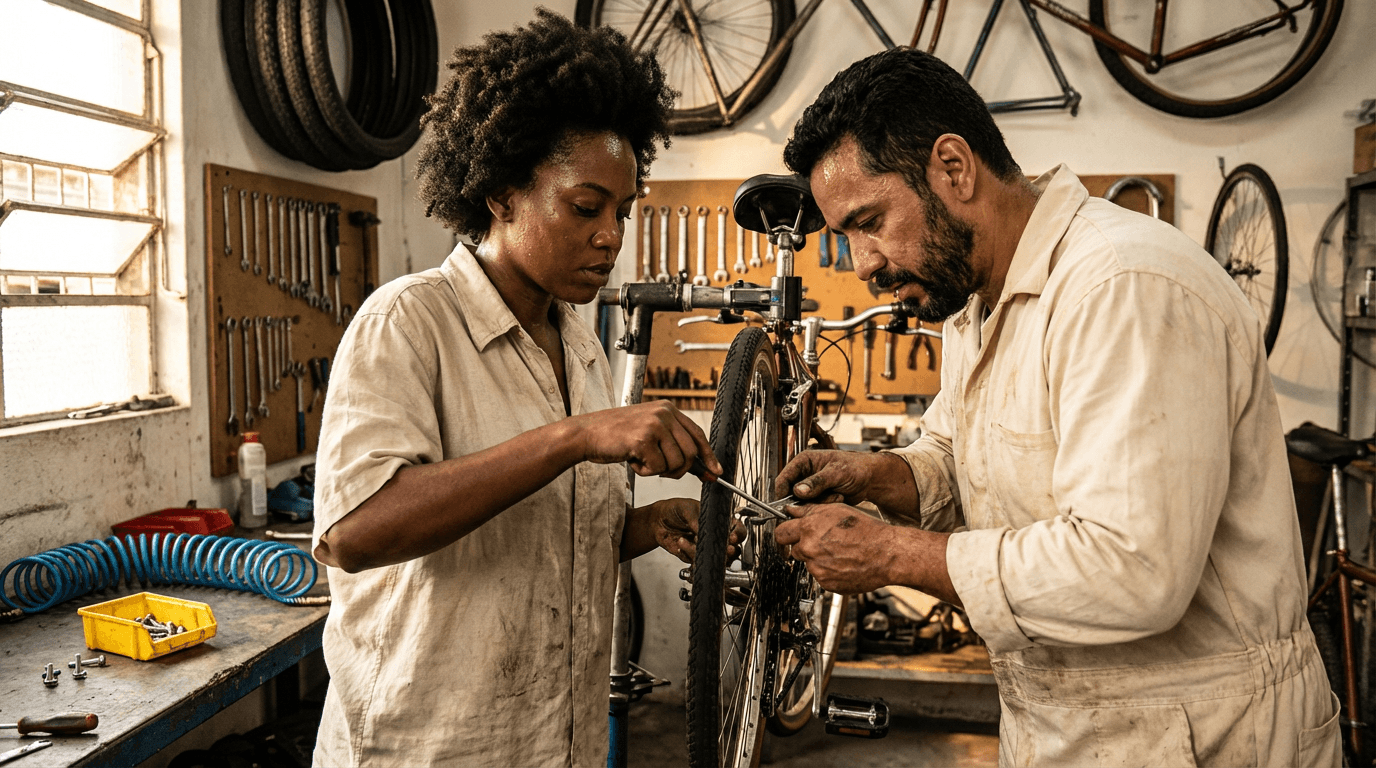
Lesson 1Step-by-step rear wheel removal and reinstallation for city bikesGet good at safely taking off and putting back rear wheels on city bikes. You'll manage chain, gears, mudguards, and brakes while keeping the frame, cables, and rider's extras safe from harm.
Preparing bike, stand, and gear positionDisconnecting brakes and hub gear linkagesSafe chain and derailleur handlingCorrect axle placement in dropoutsAligning fenders and racks after refitLesson 2Preventive measures and customer advice: route choices, pressure checks, puncture-resistant tape and linersGive clear advice that fits each rider. You'll talk about routes, tyre pressure checks, protective tapes and liners, and real maintenance times that cut down repeat flats and earn rider trust.
Advising on debris-heavy and clean route optionsTeaching simple weekly pressure checksUsing puncture-resistant tape and linersSetting realistic tire inspection intervalsExplaining trade-offs of extra puncture protectionLesson 3Visual and hands-on checks: tire, sidewall, valve, rim tape, and wheelLearn to check tyre tread, sidewalls, valve area, rim tape, and wheel build step by step. Practice looking and feeling to find hidden damage and patterns causing repeat rear flats.
Reading tire tread wear and cut patternsSidewall cracks, bulges, and casing splitsValve base damage, leaks, and misalignmentRim tape coverage, holes, and displacementWheel trueness, dents, and spoke-related risksLesson 4Choosing correct tire pressure: recommended pressures, factors (rider weight, load, puncture resistance)Pick rear tyre pressure using maker's ranges, rider weight, load, roads, and puncture risk. Balance ride comfort, grip, and flat protection, and note down advice for next time.
Reading sidewall pressure ranges correctlyAdjusting for rider weight and cargo loadPressure choices for city, gravel, and rough roadsBalancing comfort, grip, and puncture riskRecording baseline pressures on service ticketLesson 5Tools and materials list for flats: tire levers, pump with gauge, spare tubes, patch kit, rim tape, tire bootsPut together a full flat repair kit for shop or roadside work. Choose and care for levers, pumps, tubes, patches, rim tape, boots, and extras that keep work moving on repeat flats.
Choosing durable tire levers and sparesPump selection, gauges, and valve adaptersTube sizing, valve types, and storagePatch kits, glues, and instant patchesRim tape, tire boots, and emergency materialsLesson 6Repair options and decision criteria: patching vs replacing tube vs replacing tireCompare patching, new tube, or new tyre using safety, cost, and lasting fixes. Know when repair is okay, when to suggest better for safety, and explain choices plainly.
Assessing tube damage and patchabilityEvaluating tire cuts, bulges, and exposed casingCost, reliability, and time trade-offsWhen to recommend full tire replacementExplaining choices clearly to the customerLesson 7Initial customer questions to identify flat context and historyPractice good questions to quickly learn when, where, and how flats happen. Capture riding setup, load, tyre age, and past fixes to guide fast diagnosis of repeat rear flats.
Opening questions about ride type and terrainClarifying when and how the flat appearedChecking tire age, mileage, and storageReviewing previous flat repairs and failuresRecording answers in clear service notesLesson 8Tire and tube selection for durability: puncture protection, tire width, tube valve typeChoose tyres and tubes to cut repeat flats while fitting bike and rider. Compare puncture layers, widths, builds, and valve types, and explain weight, feel, and cost choices.
Comparing puncture protection layers and beltsChoosing tire width for load and comfortTube sizing and wall thickness choicesSchrader vs Presta vs Dunlop valve selectionMatching components to rim and frame clearanceLesson 9Sequential diagnostic steps: inflate, locate leak, inspect tube and tire interiorFollow steady steps: safe inflate, find leak, check tube and tyre inside. Link leak spot to causes and know when to keep looking for sharp bits.
Safe inflation on a repair standWater dunk and listening methods for leaksMapping tube leak to tire and rim positionsInspecting tire interior for glass and wiresDocumenting findings for recurring issuesLesson 10Common flat causes and how to distinguish them: puncture, pinch, valve failure, bead separationLearn to tell puncture, pinch, valve, and bead flats apart by looking at tube damage and the situation. You'll link each type to common causes and pick fixes that stop rear flats from happening again.
Single-hole punctures from sharp objectsSnakebite pinch flats and low pressure linksValve stem tears, leaks, and core failuresBead seating issues and blowout signsCombining tube clues with rider historyLesson 11Safety checks before return: spin test, inflation check, quick-release/thru-axle security, short test rideDo final safety checks before handing back the bike. Check bead fit, pressure hold, wheel straightness, and axle tightness, then do a quick ride or stand test for solid rear flat repair.
Spinning wheel to check wobble and rubConfirming even bead seating and no bulgesRechecking pressure after brief rest periodVerifying quick-release or thru-axle torqueShort test ride or stand test under loadLesson 12Wheel and rim inspection: rim strip, spoke ends, sharp edges, rim brake wearCheck wheel and rim for hidden flat causes. Look at rim strip cover, spoke tips, rough spots, dents, and brake wear, then decide on filing, parts, or wheel rebuild.
Checking rim strip width and alignmentIdentifying sharp or protruding spoke endsFinding burrs, dents, and pinch pointsAssessing rim brake track wear and cracksDeciding on repair, replacement, or rebuild