Laundry Care Products Course
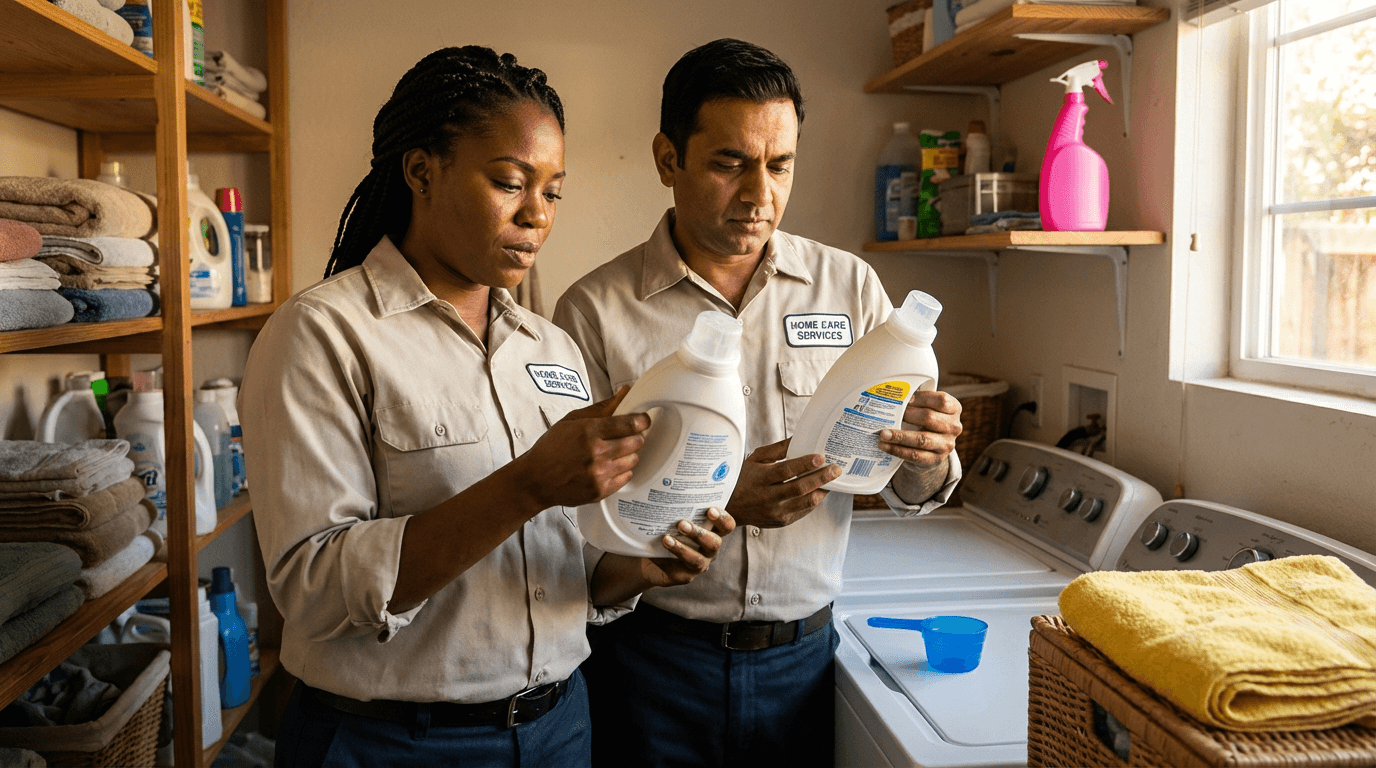
Master laundry care products for professional domestic cleaning. Learn dosing, water hardness, stain treatment, fabric protection, and guest-safe choices to keep linens whiter, softer, and longer-lasting while reducing skin irritation and product waste. This course equips you with practical skills for high-quality laundry results in home or hospitality settings.
from 4 to 360h flexible workload
certificate valid in your country
What will I learn?
The Laundry Care Products Course gives you practical skills to choose the right detergents, softeners, and cycles for consistently fresh, soft linens. Learn dosing, temperature, and water hardness adjustments, plus stain treatment, allergy-friendly product selection, and safe chemical handling. Follow clear protocols to reduce residue, protect fabrics, prevent skin irritation, and keep laundry results reliably high-quality.
Elevify advantages
Develop skills
- Pro dosing and cycles: Set detergent, temperature, and spin for spotless results.
- Hard water control: Test, treat, and adjust wash routines to stop scale and graying.
- Laundry chemistry basics: Read labels, match products to fabrics, avoid damage.
- Guest-safe laundry: Cut residue, perfumes, and irritants for allergy-friendly linens.
- Hotel-grade SOPs: Build clear sorting, washing, and maintenance checklists fast.
Suggested summary
Before starting, you can change the chapters and workload. Choose which chapter to start with. Add or remove chapters. Increase or decrease the course workload.What our students say
Your lessons are perfect. I purchased the one-year package and finally have the opportunity to follow various topics of my interest without needing to change platforms... I thank you for everything you do, I've already recommended you to other people...

Giulio CarloDigital Marketing Student
I like how the lessons are straight to the point and how I can change chapters and skip content I don't need.

Mariana FerresPhotography Student
I like the content and the way videos are presented and transcribed, which speeds up the process!

Luciana AlvarengaNail Design Student
The platform is fast, simple to use. The diversity of content and complementary videos help a lot with learning.

André FelipePrompt Engineering Student
FAQ
Who is Elevify? How does it work?
Do the courses have certificates?
Are the courses free?
What is the course workload?
What are the courses like?
How do the courses work?
What is the duration of the courses?
What is the cost or price of the courses?
What is an EAD or online course and how does it work?
PDF Course