Civil Protection and Emergency Response Course
Master the full spectrum of civil protection and emergency management — from hazard assessment and incident command to evacuation planning and community recovery. This course gives you the practical frameworks, operational tools, and decision-making skills that real emergencies demand. Whether you work in government, public safety, or humanitarian response, this training prepares you to act with confidence when it matters most.
from 4 to 360h flexible workload
certificate valid in your country
What will I learn?
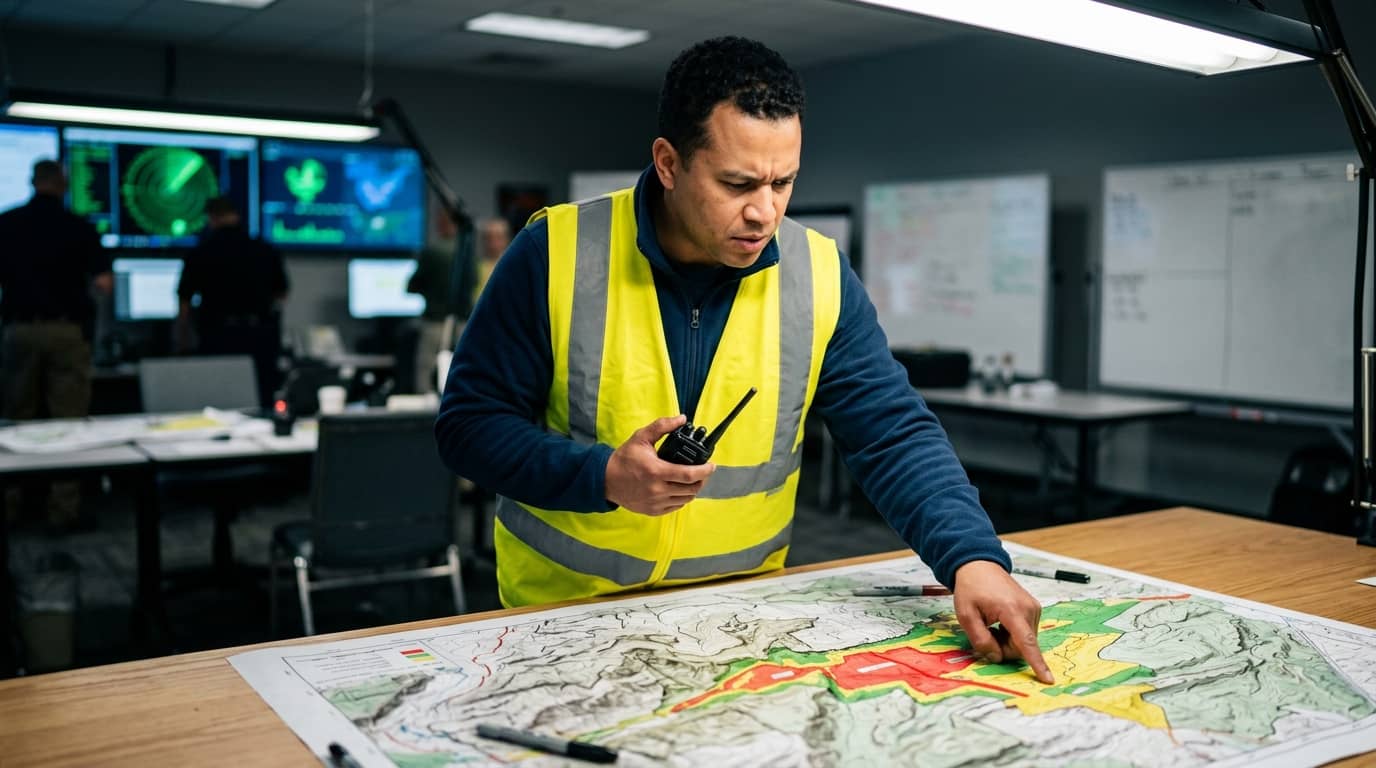
You will learn how emergency management systems are structured, who holds authority, and how agencies coordinate during a crisis. You will develop skills to assess hazards, build risk profiles, and write emergency plans that meet recognised standards. The course covers the Incident Command System, Emergency Operations Centers, and mass casualty triage. You will also study evacuation logistics, shelter operations, crisis communication, and community recovery. By the end, you will have a complete, practical foundation in civil protection operations.
Elevify advantages
Develop skills
- Incident Command System: Apply ICS structures to manage multi-agency emergency response operations.
- Hazard Risk Assessment: Identify, analyse, and prioritise community hazards using standardised risk matrices.
- Emergency Plan Development: Build compliant, operational emergency plans following a six-step planning process.
- Crisis Communication: Design clear public alert messages and coordinate information across response agencies.
Suggested summary
Before starting, you can change the chapters and workload. Choose which chapter to start with. Add or remove chapters. Increase or decrease the course workload.What our students say
Your lessons are perfect. I purchased the one-year package and finally have the opportunity to follow various topics of my interest without needing to change platforms... I thank you for everything you do, I've already recommended you to other people...

Giulio CarloDigital Marketing Student
I like how the lessons are straight to the point and how I can change chapters and skip content I don't need.

Mariana FerresPhotography Student
I like the content and the way videos are presented and transcribed, which speeds up the process!

Luciana AlvarengaNail Design Student
The platform is fast, simple to use. The diversity of content and complementary videos help a lot with learning.

André FelipePrompt Engineering Student
FAQ
Who is Elevify? How does it work?
Do the courses have certificates?
Are the courses free?
What is the course workload?
What are the courses like?
How do the courses work?
What is the duration of the courses?
What is the cost or price of the courses?
What is an EAD or online course and how does it work?
PDF Course