CT and MRI Course
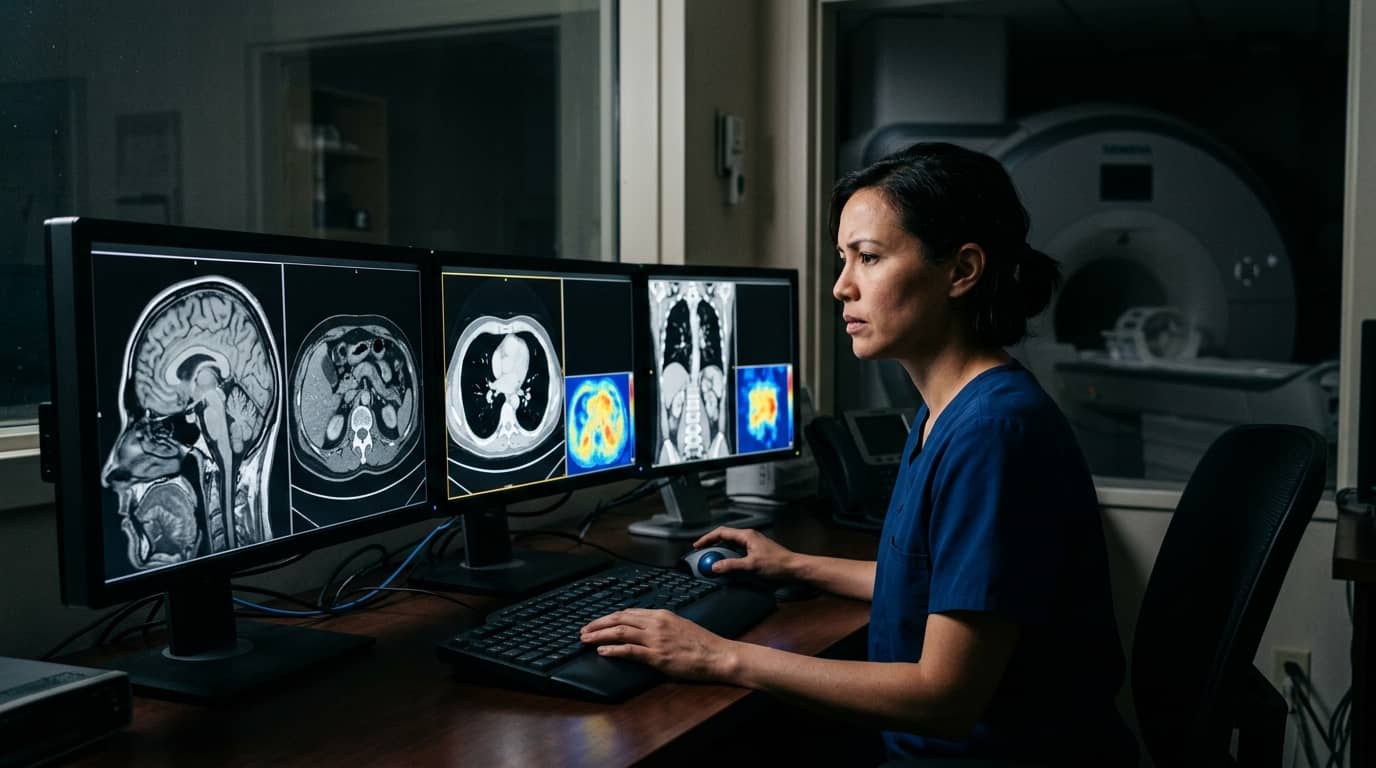
Master the physics, technology, and clinical application of CT and MRI in one comprehensive course. From scanner hardware and pulse sequences to contrast agents and image interpretation, you will build the technical expertise that modern radiology demands. This course is designed for radiographers, radiologists, and imaging professionals ready to perform at the highest level.
from 4 to 360h flexible workload
certificate valid in your country
What will I learn?
This course covers the foundational physics of X-ray attenuation and nuclear magnetic resonance, then builds into CT and MRI scanner technology, acquisition parameters, and protocol design. You will study radiation dose management, contrast agent pharmacology, and patient safety procedures for both modalities. Systematic image interpretation across the brain, chest, abdomen, and musculoskeletal system is taught using structured search patterns and real diagnostic criteria. Advanced topics include spectral CT, diffusion and perfusion MRI, AI-assisted reconstruction, and quantitative imaging biomarkers. Quality assurance, PACS informatics, and evidence-based protocol development round out your professional skill set.
Elevify advantages
Develop skills
- Configure CT Protocols: Select kVp, mAs, pitch, and reconstruction algorithms for diagnostic-quality CT acquisitions.
- Optimise MRI Sequences: Choose and adjust spin echo, gradient echo, and EPI sequences for any clinical indication.
- Manage Radiation Dose: Apply ALARA principles, interpret CTDIvol metrics, and implement dose reduction strategies effectively.
- Interpret Cross-Sectional Images: Apply systematic search patterns to identify and characterise pathology on CT and MRI.
Suggested summary
Before starting, you can change the chapters and workload. Choose which chapter to start with. Add or remove chapters. Increase or decrease the course workload.What our students say
Your lessons are perfect. I purchased the one-year package and finally have the opportunity to follow various topics of my interest without needing to change platforms... I thank you for everything you do, I've already recommended you to other people...

Giulio CarloDigital Marketing Student
I like how the lessons are straight to the point and how I can change chapters and skip content I don't need.

Mariana FerresPhotography Student
I like the content and the way videos are presented and transcribed, which speeds up the process!

Luciana AlvarengaNail Design Student
The platform is fast, simple to use. The diversity of content and complementary videos help a lot with learning.

André FelipePrompt Engineering Student
FAQ
Who is Elevify? How does it work?
Do the courses have certificates?
Are the courses free?
What is the course workload?
What are the courses like?
How do the courses work?
What is the duration of the courses?
What is the cost or price of the courses?
What is an EAD or online course and how does it work?
PDF Course