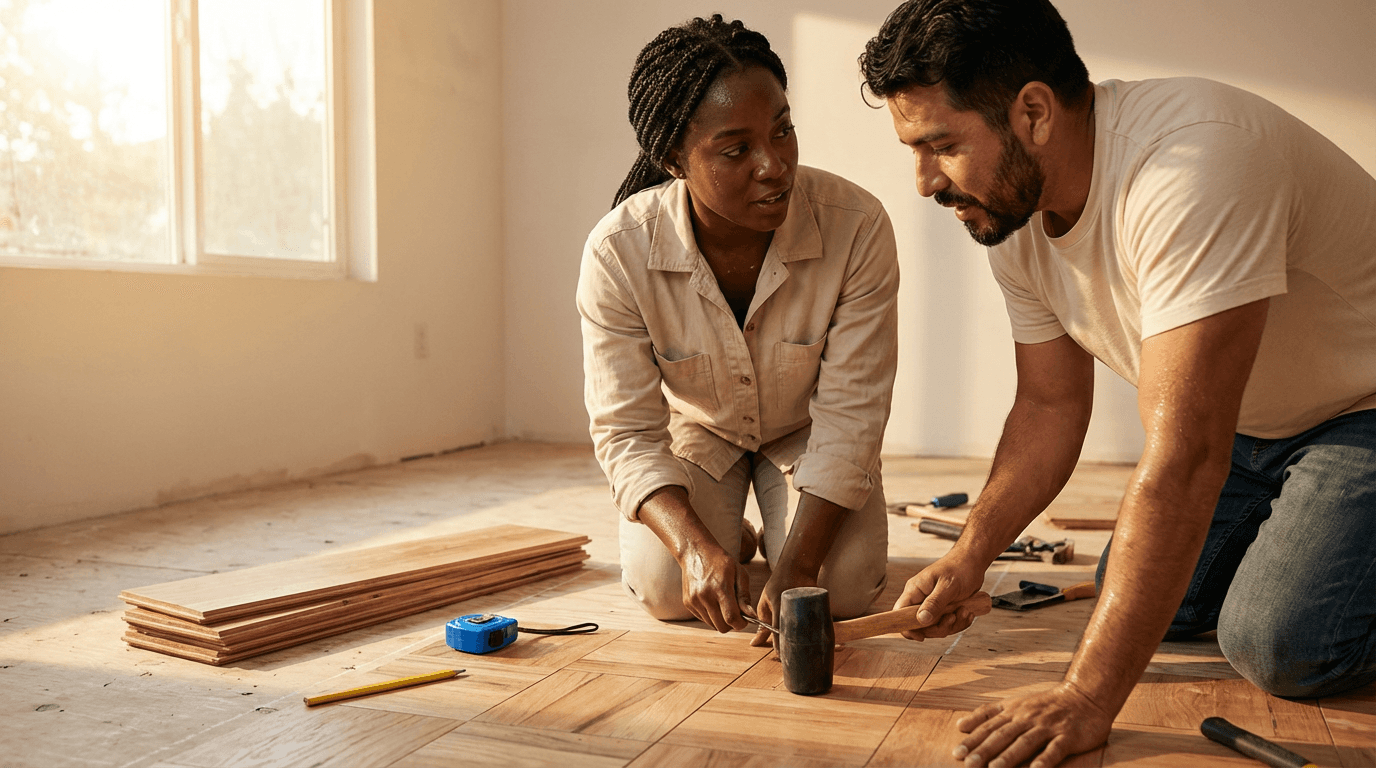
Lesson 1Parquet patterns: geometry, material yield, and visual effects of herringbone, chevron, and mosaicYou'll look at how herringbone, chevron, and mosaic patterns impact wood use, layout tricky bits, and room looks. Learn to sort board sizes, waste amounts, and pattern flow to fit room shape and light just right.
Herringbone geometry and layout fundamentalsChevron angle choices and directional emphasisMosaic and panel patterns for small spacesMaterial yield, offcuts, and waste calculationsPattern choice versus room proportions and lightLesson 2Physical and mechanical properties of common parquet species: oak, maple, walnut, ashThis bit checks density, bend strength, and shrink-swell habits of oak, maple, walnut, and ash. You'll weigh their build quality, cutting ease, and fit for various parquet styles and busy spots.
Density and weight differences among speciesElasticity, stiffness, and deflection under loadWear layer performance in solid and engineered parquetMachining, splintering, and edge stability by speciesSpecies suitability for residential versus light commercialLesson 3Finish types: penetrating oils, water-based polyurethane, solvent-based polyurethane, hardwax oils — composition and performanceHere we stack up penetrating oils, water-based and solvent-based polyurethanes, plus hardwax oils. You'll get their makeup, drying ways, looks, and how they hold up to pick the best for each job.
Penetrating oils: solids content and curingWater‑based polyurethane layers and additivesSolvent‑based polyurethane and film hardnessHardwax oils: wax fraction and open timeVisual look: sheen, depth, and grain highlightingLesson 4Moisture movement and dimensional stability per species; suitability for concrete subfloorsWe break down moisture shifts and size steadiness for main wood types and how it hits installs over concrete. You'll judge risks of gaps, warping, and glue fails in changing dampness.
Radial versus tangential shrinkage by speciesEngineered versus solid stability comparisonsMoisture limits for concrete subfloors and slabsVapor barriers, primers, and adhesive selectionSpecies choices for high humidity or slab‑on‑gradeLesson 5Durability and scratch resistance ratings; Janka hardness and impact on family living roomsWe link toughness scores and Janka hardness to home family life. You'll see how dents, scratches, and wear show in lounges, and balance hardness with cosiness, sound, and cost.
Understanding Janka hardness test proceduresHardness versus denting from furniture and toysScratch resistance from pets, sand, and chair legsBalancing hardness, comfort, and acoustic behaviorSpecies selection for busy family living roomsLesson 6Comparative maintenance and refinishing characteristics for each speciesYou'll compare oak, maple, walnut, and ash on cleaning, wear handling, and redo jobs. Get expected lifespan, sanding limits, and how wood colour and grain affect repair looks.
Routine cleaning needs by species hardnessSurface wear patterns and gloss loss over timeSanding limits for solid and engineered parquetColor change impact on patch and board repairsRefinishing intervals in typical home conditionsLesson 7Pattern installation constraints: board sizes, tongue-and-groove orientation, and required cutting allowancesThis part spells out how pattern picks limit board sizes, tongue-groove setup, and cut extras. You'll plan layouts sticking to maker rules and cut site hassles.
Board length and width rules for herringboneChevron angle, leg length, and factory millingTongue‑and‑groove direction and reference linesExpansion gaps and border framing strategiesCutting allowances and waste for complex layoutsLesson 8Finish properties: abrasion resistance, yellowing, VOCs, breathability, recoatability, and repairabilityThis explains how finish makeup drives wear resistance, yellowing, fume output, air flow, redo ease, and fix options. You'll match film and soak-in types to use and upkeep needs.
Abrasion resistance and traffic class ratingsYellowing behavior of oils and polyurethanesVOCs, indoor air quality, and regulationsFinish breathability and moisture bufferingRecoatability, spot repair, and blending limitsLesson 9Selecting wood species, pattern, and finish to meet client needs: durability, warmth, cleaning, and classic appearance (decision criteria checklist)This gives a clear way to match wood, pattern, and finish to client hopes. You'll use a checklist on toughness, warmth, clean effort, style, and future changes.
Clarifying client lifestyle and traffic patternsPrioritizing durability versus visual warmthCleaning effort, stain tolerance, and sheen levelClassic, modern, and rustic style preferencesDecision checklist for final parquet specificationLesson 10Appearance, grain, and color stability: tannins, oxidation, and staining behaviorThis checks how grain, colour, and natural stuff like tannins change parquet looks over time. You'll predict fade, stain risks, and colour hold under light and daily knocks.
Grain types and perceived texture in parquet floorsNatural color ranges of major parquet wood speciesTannins and reactions with adhesives and finishesOxidation, UV exposure, and long‑term color changePreventing stains from metals, pets, and household spills