Mining Management Course
4.7/5
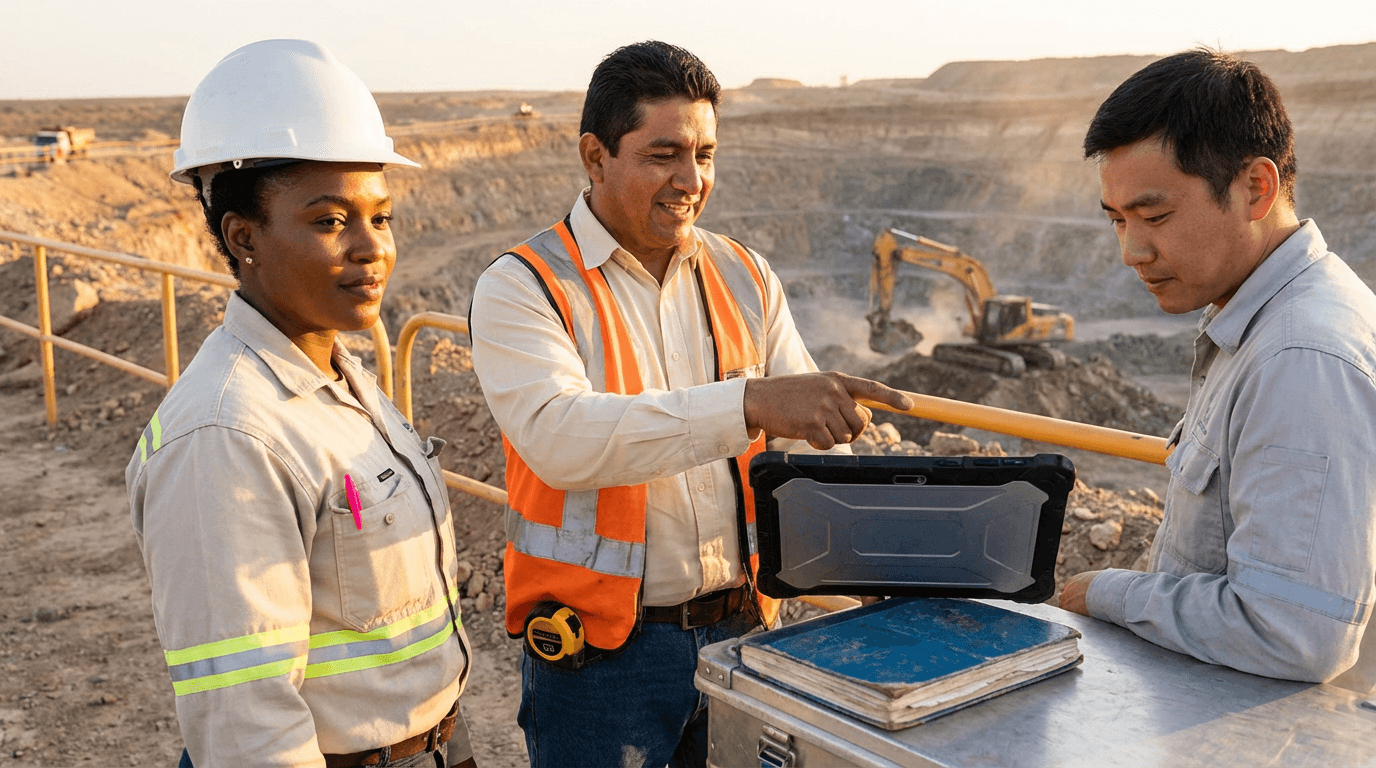
This course equips mining professionals with essential tools for stabilizing production, controlling costs, and enhancing safety in open pit copper-gold operations, focusing on data-driven decision-making and strategic planning.
4.7 in the evaluation
from 4 to 360h flexible workload
certificate valid in your country
What will I learn?
The Mining Management Course provides practical tools to stabilise production, control costs, and strengthen safety in open pit copper-gold operations in Brazil. Learn to use drilling, blasting, haulage, equipment, and workforce data to improve KPIs, build realistic budgets, manage risk, and communicate clearly with boards, regulators, communities, and internal teams through a focused 12-month action plan.
Elevify advantages
Develop skills
- Mine KPI diagnostics: read, benchmark, and improve core open pit performance.
- Cost and cash analysis: link mine operations to unit costs, EBITDA, and budget.
- Risk and safety leadership: apply RCA, controls, and culture tools to cut incidents.
- Community and regulator engagement: manage complaints, permits, and reporting.
- 12-month action planning: build practical production, cost, and ESG roadmaps.
Suggested summary
Before starting, you can change the chapters and workload. Choose which chapter to start with. Add or remove chapters. Increase or decrease the course workload.What our students say
Your lessons are perfect. I purchased the one-year package and finally have the opportunity to follow various topics of my interest without needing to change platforms... I thank you for everything you do, I've already recommended you to other people...

Giulio CarloDigital Marketing Student
I like how the lessons are straight to the point and how I can change chapters and skip content I don't need.

Mariana FerresPhotography Student
I like the content and the way videos are presented and transcribed, which speeds up the process!

Luciana AlvarengaNail Design Student
The platform is fast, simple to use. The diversity of content and complementary videos help a lot with learning.

André FelipePrompt Engineering Student
FAQ
Who is Elevify? How does it work?
Do the courses have certificates?
Are the courses free?
What is the course workload?
What are the courses like?
How do the courses work?
What is the duration of the courses?
What is the cost or price of the courses?
What is an EAD or online course and how does it work?
PDF Course