Agricultural Drones (UAS) for Crop Monitoring Course
What will I learn?
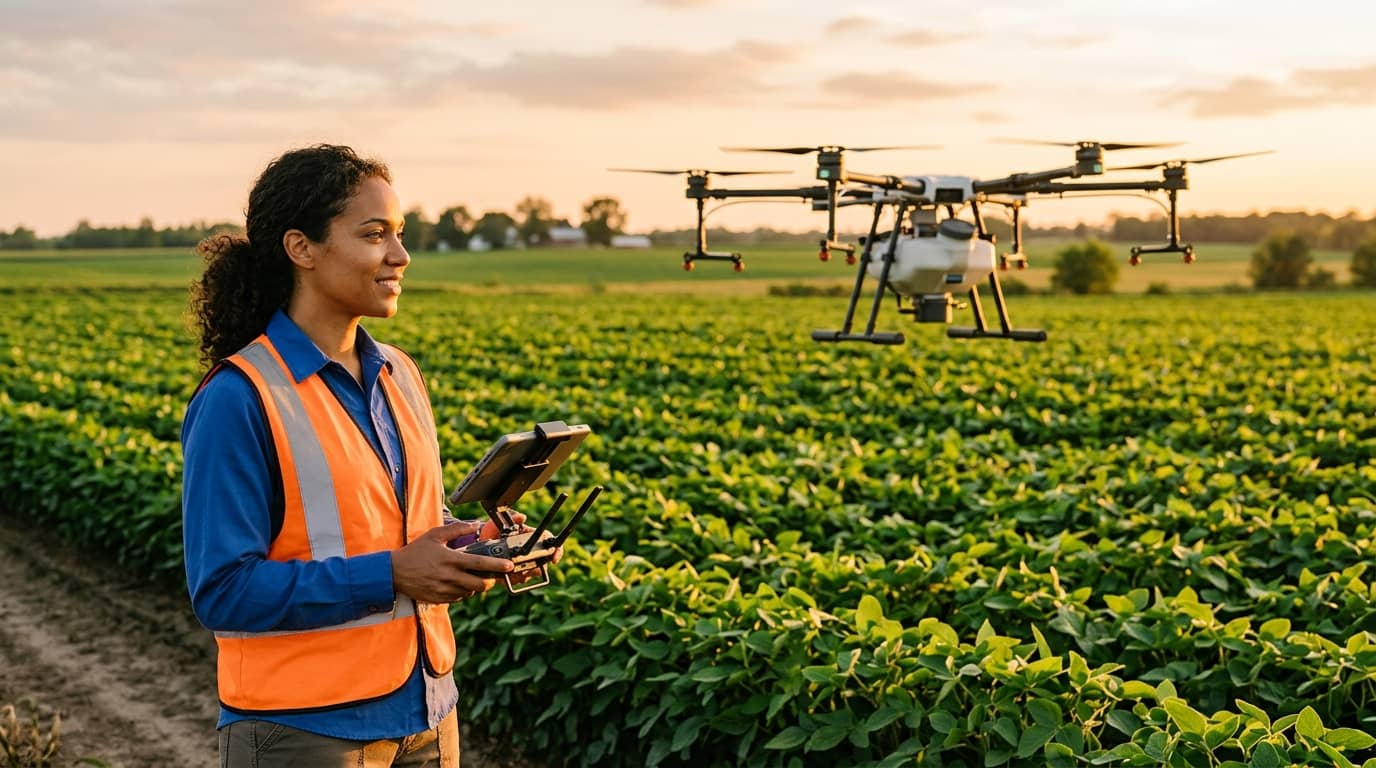
This course covers everything you need to operate agricultural drones professionally and get real agronomic value from the data you collect. You will learn how drone hardware works, how to plan and execute safe field missions, and how to process raw imagery into accurate orthomosaics and vegetation index maps. You will develop the skills to identify crop stress, nutrient deficiencies, disease, and pest damage from aerial data. The course also covers precision agriculture decision-making, including how to build variable-rate prescription maps and integrate drone outputs with farm management systems. On the business side, you will learn how to manage drone fleets, maintain regulatory compliance, and communicate findings clearly to farmers and agronomists.
Elevify advantages
Develop skills
- Flight Planning: Design precise, repeatable drone survey missions for large agricultural fields.
- Crop Health Analysis: Interpret NDVI, NDRE, and thermal data to diagnose plant stress.
- Data Processing: Generate georeferenced orthomosaics and vegetation index maps from raw imagery.
- Precision Prescriptions: Build variable-rate input maps that translate aerial data into field action.
Suggested summary
Before starting, you can change the chapters and workload. Choose which chapter to start with. Add or remove chapters. Increase or decrease the course workload.What our students say
Your lessons are perfect. I purchased the one-year package and finally have the opportunity to follow various topics of my interest without needing to change platforms... I thank you for everything you do, I've already recommended you to other people...

I like how the lessons are straight to the point and how I can change chapters and skip content I don't need.

I like the content and the way videos are presented and transcribed, which speeds up the process!

The platform is fast, simple to use. The diversity of content and complementary videos help a lot with learning.

FAQ
Who is Elevify? How does it work?
Do the courses have certificates?
Are the courses free?
What is the course workload?
What are the courses like?
How do the courses work?
What is the duration of the courses?
What is the cost or price of the courses?
What is an EAD or online course and how does it work?
PDF Course