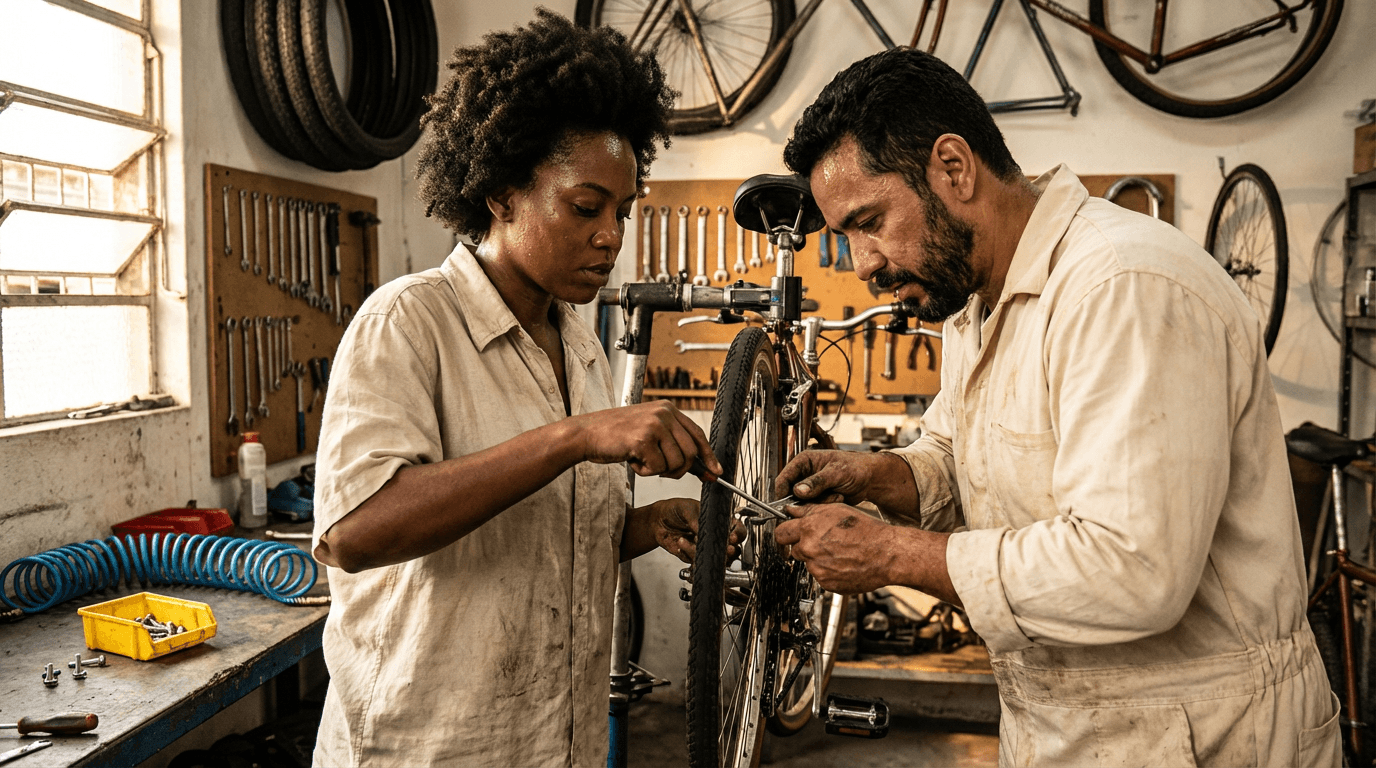
Lesson 1Visual checks: pad wear and compound, rim braking surface condition, wheel true and rim contaminationPerform essential visual checks before adjustments. You will assess pad wear and compound, rim sidewalls, braking surface cleanliness, and wheel true, spotting cracks, grooves, and contamination that reduce power or cause squeal.
Inspecting pad wear pattern and remaining thicknessIdentifying pad compound type and suitabilityChecking rim sidewalls for wear and cracksAssessing wheel true at the braking surfaceFinding oil, polish, or debris on rim and padsLesson 2Initial customer questions about brake feel, wet conditions, recent pad changes, and noisesLearn how to question the customer about brake feel, noise history, riding style, and conditions. Use their feedback to prioritise safety issues, identify likely faults, and plan an efficient, targeted inspection sequence.
Clarifying customer description of brake problemsAsking about riding style and terrain conditionsHistory of pad, rim, and cable replacementsIdentifying wet weather and contamination risksSetting expectations for brake feel and noiseLesson 3Safety checks before return: full functional brake test, secure cable anchor, check rotor clearance if present, test rideCarry out final safety checks before returning the bike. You will verify cable anchors, arm security, pad clearance, and rotor or disc clearance if present, then perform a short test ride to confirm reliable, quiet braking.
Confirming cable anchor and pinch bolt securityChecking pad clearance and equal arm returnInspecting rotor or disc clearance if fittedVerifying quick-release and wheel seatingConducting short test ride and final listenLesson 4Tools and materials list for brake service: cable cutters, 5/6/8 mm wrenches, pad tool, sandpaper, isopropyl alcohol, new padsPrepare and organise tools and materials for efficient brake work. You will select cutters, wrenches, abrasives, solvents, and spare parts, ensuring everything is safe, compatible, and ready before starting service.
Choosing quality cable and housing cuttersSelecting correct wrench and hex key sizesUsing sandpaper and files on pads and rimsApplying isopropyl alcohol and clean ragsStocking pads, cables, and small hardwareLesson 5Brake hardware inspection: cable, housing, noodle/straddle wire, springs, and quick-release mechanismInspect all brake hardware for safety and function. You will examine cable and housing, noodle or straddle wire, springs, and quick-release parts, looking for corrosion, kinks, fraying, binding, and incorrect routing or assembly.
Checking cable for fraying, kinks, and corrosionInspecting housing ends, ferrules, and routingExamining noodle or straddle wire for damageAssessing return springs and spring anchor pointsTesting quick-release function and orientationLesson 6Brake arm movement and pivot service: lubrication, bolt torque, and removing excess playService brake arm pivots for smooth, even movement. You will clean and lubricate pivot points, set correct bolt torque, remove excess play, and ensure both arms return crisply without binding or asymmetrical motion.
Disassembling brake arms from fork bossesCleaning pivot surfaces and contact areasApplying appropriate lubricants sparinglySetting pivot bolt torque to specEliminating side play and arm rockingLesson 7Replacing pads and selecting pad compounds for quiet braking and wet performanceLearn when and how to replace pads and choose compounds. You will compare rubber types, cartridge inserts, and wet weather options, balancing noise, power, and rim wear to match the rider’s needs and local conditions.
Measuring pad wear and replacement thresholdsComparing pad compounds and rim compatibilityInstalling cartridge and one-piece pad designsAligning new pads to minimize bedding noiseAdvising riders on pad choice for conditionsLesson 8Cable tensioning and centering: adjusting anchor bolt, barrel adjuster, and spring tensionAdjust cable tension and brake centering for consistent feel. You will set anchor bolt position, use barrel adjusters, and tune spring tension so both arms move evenly, pads clear the rim, and lever travel feels firm and predictable.
Setting initial cable length at anchor boltUsing barrel adjusters for fine pad clearanceBalancing spring tension side to sideCorrecting pad rub and uneven arm travelVerifying lever feel and free play rangeLesson 9Testing braking performance: static hard pull, wheel spin-down, and controlled stop testTest braking performance methodically before returning the bike. You will perform static lever pulls, wheel spin-down checks, and controlled stop tests, confirming power, modulation, alignment, and absence of squeal or grabbing.
Static hard lever pull and flex observationWheel spin-down and pad rub detectionLow speed controlled stop test procedureHigh load emergency stop simulationDocumenting results and customer explanationLesson 10Cleaning and deglazing procedures: rim surface and pad cleaning methods and solventsClean and deglaze rims and pads to restore friction and reduce noise. You will choose safe solvents, use abrasives correctly, and avoid damaging finishes, ensuring a fresh, consistent braking surface ready for precise adjustment.
Selecting safe solvents for rims and padsDegreasing rim braking surfaces thoroughlyLightly sanding pads to remove glazingCleaning residue and drying components fullyPreventing future contamination during serviceLesson 11Pad alignment and toe-in technique: positioning relative to rim and step-by-step adjustmentMaster pad alignment and toe-in to improve power and reduce squeal. You will position pads to match rim height and curvature, then apply controlled toe-in using simple tools, verifying clearance and contact under load.
Setting pad height relative to rim sidewallAligning pad face square to rim surfaceCreating toe-in using card or jig methodsChecking pad clearance and lever travelRechecking alignment after hard brake pullsLesson 12Addressing squeal causes: pad contamination, glazing, toe-in, and flexible componentsIdentify and correct common squeal causes. You will diagnose contamination, glazing, poor toe-in, flexible arms, and loose hardware, then apply targeted fixes to achieve stable, quiet braking across different riding conditions.
Recognizing symptoms of pad contaminationAddressing glazing and hardened pad surfacesAdjusting toe-in to control vibrationStiffening or replacing flexible componentsTightening loose bolts and mounting points