Paint protection film installation training
5/5
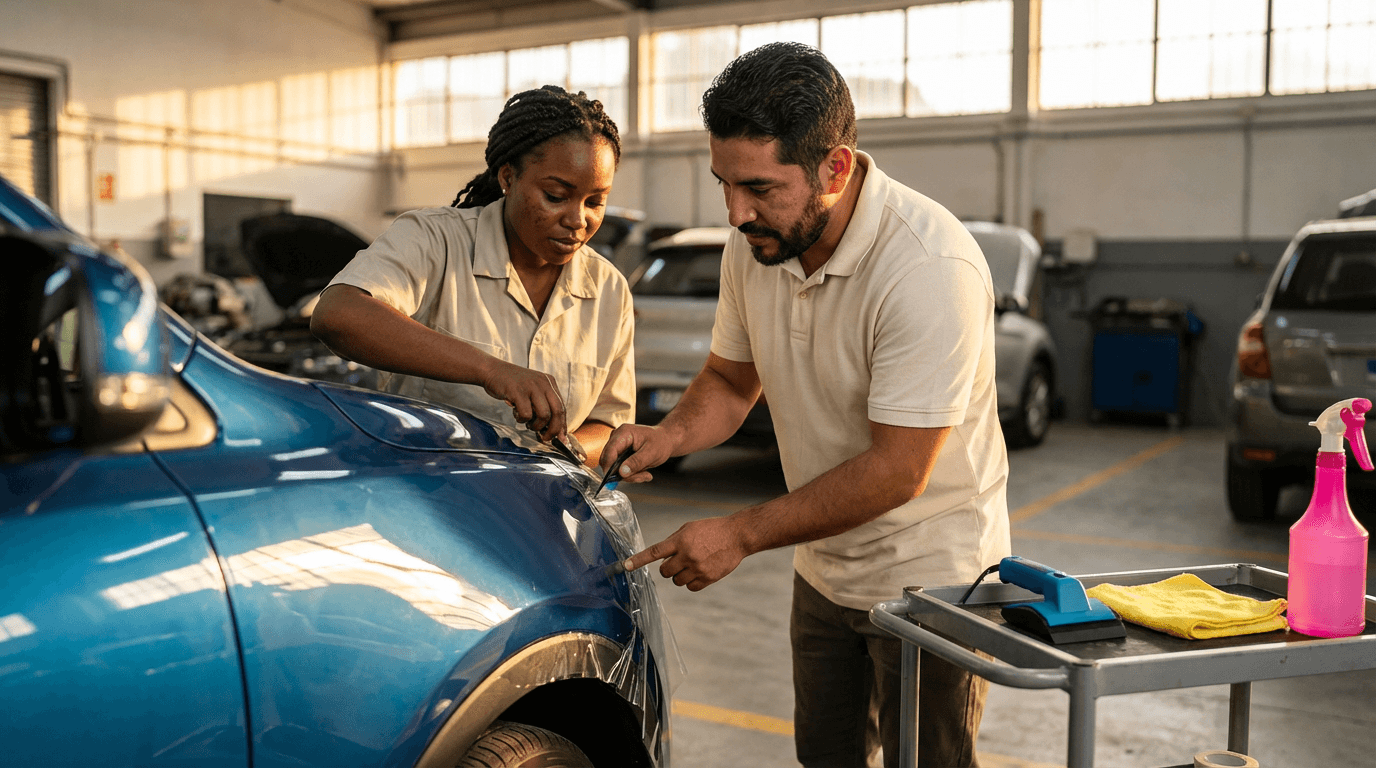
Master professional paint protection film installation. Learn surface prep, pattern strategy, safe cutting, complex curves, risk management, defect correction, and aftercare to deliver flawless, durable PPF results in modern auto bodywork and painting.
5,0 in rating
from 4 to 360h flexible workload
certificate valid in your country
What will I learn?
Master professional paint protection film installation with this focused, hands-on course. Learn to assess vehicle surfaces, plan patterns, control workshop conditions, and work efficiently with advanced PPF materials and tools. Practice step-by-step techniques on hoods, bumpers, mirrors, and fenders, then refine quality control, defect correction, maintenance advice, and documentation to deliver durable, high-value results.
Elevify advantages
Develop skills
- Professional PPF installs: fast, safe, no-cut techniques on all body panels.
- Advanced film handling: stretch, heat, and anchor PPF on complex curves and bumpers.
- Risk control for PPF: protect thin clearcoat, manage solvents, avoid paint damage.
- Quality correction: fix edge lift, bubbles, silvering, and optical defects like a pro.
- Client-ready delivery: aftercare, maintenance, and warranty documentation for PPF.
Suggested summary
Before starting, you can change the chapters and the workload. Choose which chapter to start with. Add or remove chapters. Increase or decrease the course workload.What our students say
Your lessons are perfect. I purchased the one-year package and finally have the opportunity to follow various topics of interest without needing to change platforms... I'm grateful for everything you do, I've already recommended you to other people...

Giulio CarloDigital Marketing Student
I like how the lessons are straight to the point and how I can change chapters and skip content I don't need.

Mariana FerresPhotography Student
I like the content and the way videos are presented and transcribed, which speeds up the process!

Luciana AlvarengaNail Design Student
The platform is fast, simple to use. The diversity of content and complementary videos really help with learning.

André FelipePrompt Engineering Student
FAQ
Who is Elevify? How does it work?
Do the courses have certificates?
Are the courses free?
What is the course workload?
What are the courses like?
How do the courses work?
What is the duration of the courses?
What is the cost or price of the courses?
What is an EAD or online course and how does it work?
Course in PDF