


Facility Maintenance Staff Training
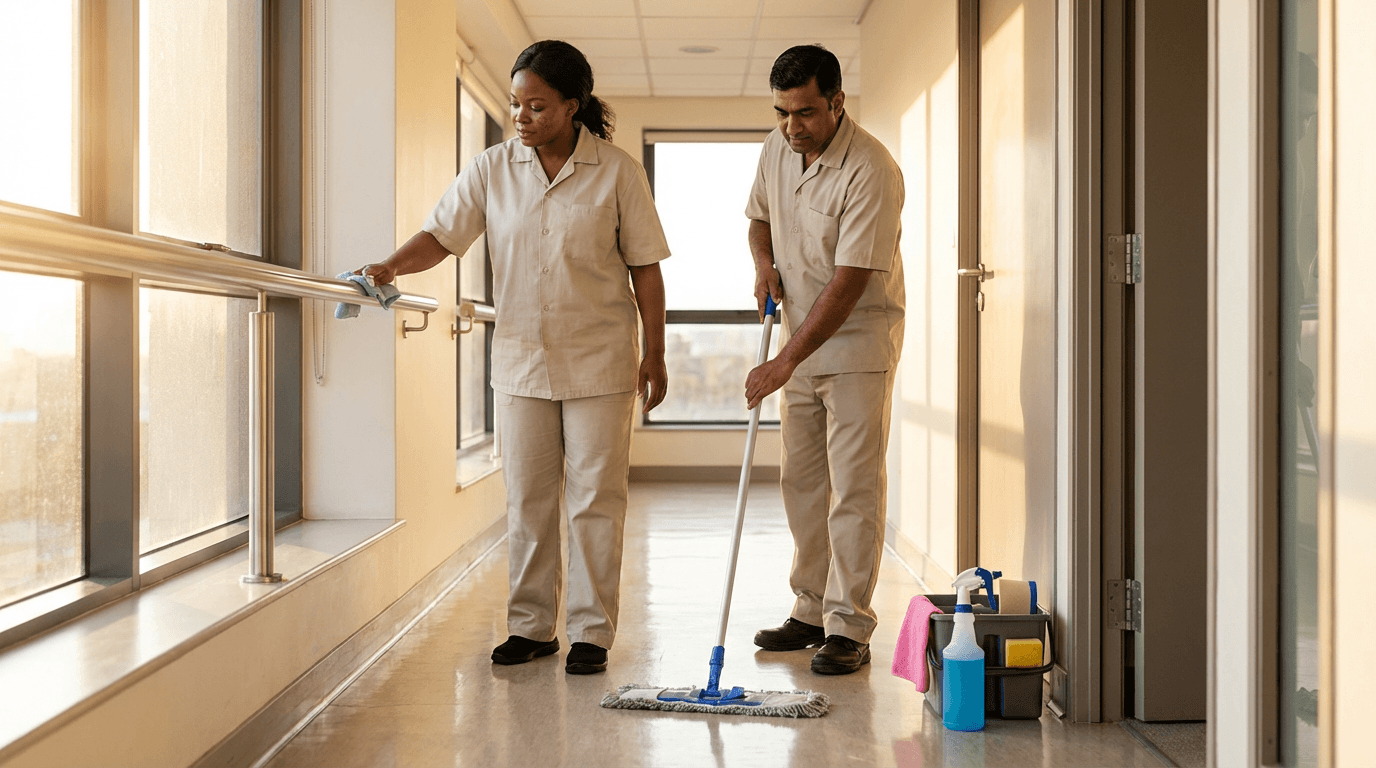
Gain professional skills in facility maintenance and cleaning, including daily routines, safe chemical handling, minor repairs, and customer communication, to ensure clean, safe spaces and excel as a dependable maintenance expert.
flexible workload from 4 to 360h
valid certificate in your country
What will I learn?
This training equips you with hands-on skills to maintain facilities clean, safe, and efficient. Master daily cleaning routines for all areas, proper tools, equipment, and chemical use, hazard management, biofluids, waste handling, minor repairs, recordkeeping, communication, and professional behaviour for better service.
Elevify advantages
Develop skills
- Safe facility cleaning: use PPE, MSDS, and chemicals properly.
- Master daily workflows: plan routes for offices, restrooms, and lobbies.
- Basic repair skills: fix bulbs, drains, and door hardware first.
- Control risks and incidents: identify hazards, log issues, follow protocols.
- Professional conduct: communicate well, respect privacy, show courtesy.
Suggested summary
Before starting, you can change the chapters and workload. Choose which chapter to start with. Add or remove chapters. Increase or decrease the course workload.What our students say
Your classes are perfect. I got the one-year package and finally have the chance to follow several topics I'm interested in without having to switch platforms... I appreciate everything you do, I've already recommended you to others...

Giulio CarloDigital Marketing Student
I like how the lessons are straight to the point and how I can switch chapters and skip content I don't need.

Mariana FerresPhotography Student
I like the content and the way the videos are presented and transcribed, which speeds up the process!

Luciana AlvarengaNail Design Student
The platform is fast and easy to use. The variety of content and the extra videos really help with learning.

Giulio CarloPrompt Engineering Student
FAQ
Who is Elevify? How does it work?
Do the courses have certificates?
Are the courses free?
What is the course workload?
What are the courses like?
How do the courses work?
What is the duration of the courses?
What is the cost or price of the courses?
What is an EAD or online course and how does it work?
PDF Course