Professional risks training
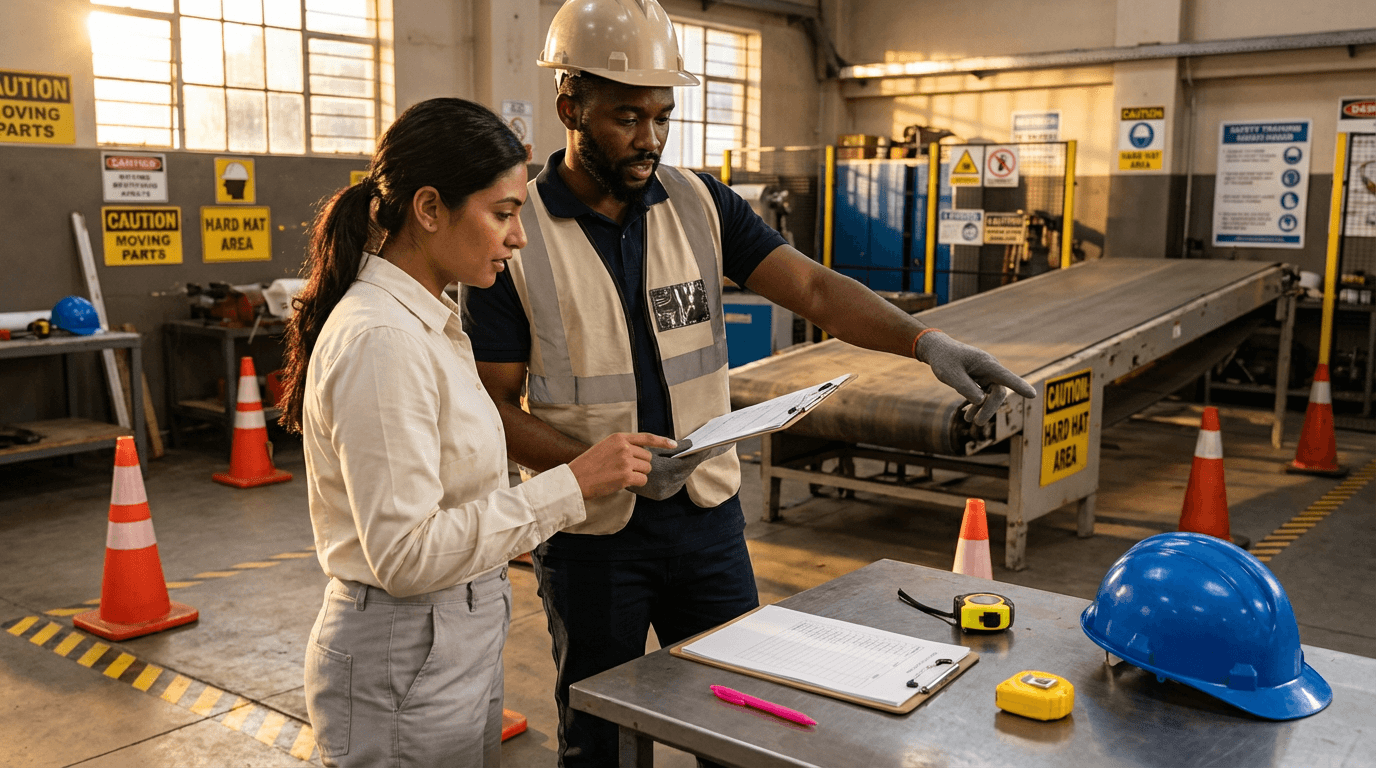
Gain mastery over professional risks in metal fabrication workshops. The training covers hazard spotting, PPE selection, control hierarchies, job safety analyses, permits, and emergency plans to reduce accidents, comply with standards, and safeguard workers daily. It provides hands-on methods to build a stronger safety environment across operations.
flexible workload from 4 to 360h
valid certificate in your country
What will I learn?
This course equips you with practical skills to manage hazards in metal workshops. You will learn to choose and handle PPE, conduct risk assessments, create safe procedures, and use permits, monitoring, plus incident reporting. Develop action plans, KPIs, and communication strategies to lower injuries, boost compliance, and enhance safety culture in your workplace.
Elevify advantages
Develop skills
- Spot workshop hazards quickly: identify metal, chemical, and ergonomic risks.
- Conduct practical risk assessments: use JSA, TRA, and risk matrices for real tasks.
- Master PPE and controls: select, apply, and maintain PPE plus engineering solutions.
- Set up safe work systems: create permits, procedures, and checklists for staff.
- Manage incidents and KPIs: monitor near-misses, audits, and safety metrics.
Suggested summary
Before starting, you can change the chapters and workload. Choose which chapter to start with. Add or remove chapters. Increase or decrease the course workload.What our students say
Your lessons are perfect. I purchased the one-year package and finally have the opportunity to follow various topics of my interest without needing to change platforms... I thank you for everything you do, I've already recommended you to other people...

Giulio CarloDigital Marketing Student
I like how the lessons are straight to the point and how I can change chapters and skip content I don't need.

Mariana FerresPhotography Student
I like the content and the way videos are presented and transcribed, which speeds up the process!

Luciana AlvarengaNail Design Student
The platform is fast, simple to use. The diversity of content and complementary videos help a lot with learning.

André FelipePrompt Engineering Student
FAQ
Who is Elevify? How does it work?
Do the courses have certificates?
Are the courses free?
What is the course workload?
What are the courses like?
How do the courses work?
What is the duration of the courses?
What is the cost or price of the courses?
What is an EAD or online course and how does it work?
PDF Course