


Industrial Mechanic and Assembler Course
This course provides practical training in assembling, aligning, and maintaining industrial conveyor systems, focusing on safety, troubleshooting, and preventive maintenance to enhance equipment reliability and reduce downtime.
flexible workload from 4 to 360h
valid certificate in your country
What will I learn?
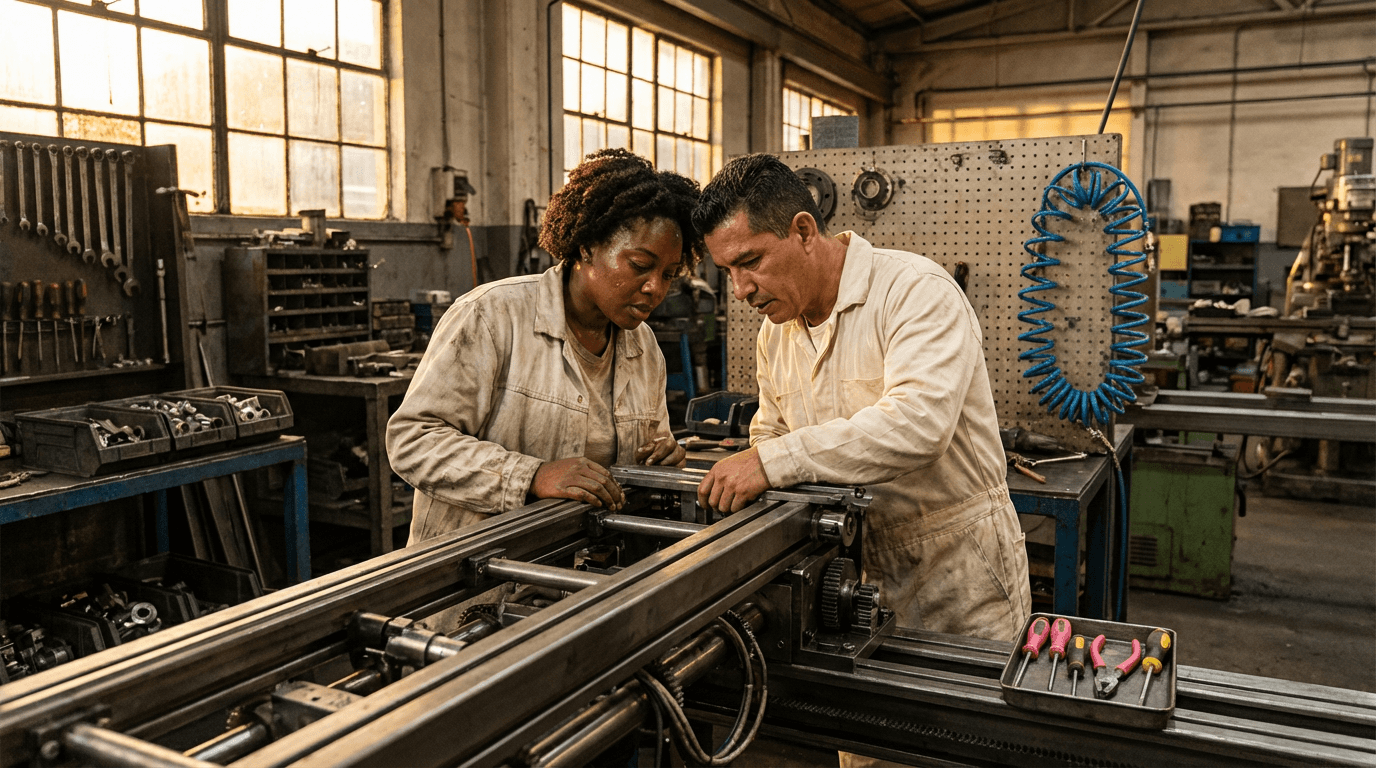
The Industrial Mechanic and Assembler Course equips you with hands-on, step-by-step skills to put together, line up, and start up conveyor systems confidently. You will learn basics of components, accurate measuring, torque handling, and lockout/tagout procedures. Gain practice in fixing issues like shaking, misalignment, too much heat, and loose fasteners, then create a strong maintenance plan to cut down on stoppages and make equipment last longer.
Elevify advantages
Develop skills
- Precise conveyor assembly: make frames square, line up rollers, set torque on fasteners.
- Drive system installation: fix motors in place, connect couplings, tighten belts and chains quickly.
- Vibration and fault finding: identify noise, misalignment, and bearing problems.
- Safe startup: follow checklists, test emergency stops, record vibration, heat, and noise.
- Preventive maintenance scheduling: plan lubrication, checks, and spare parts.
Suggested summary
Before starting, you can change the chapters and workload. Choose which chapter to start with. Add or remove chapters. Increase or decrease the course workload.What our students say
Your classes are perfect. I got the one-year package and finally have the chance to follow several topics I'm interested in without having to switch platforms... I appreciate everything you do, I've already recommended you to others...

Giulio CarloDigital Marketing Student
I like how the lessons are straight to the point and how I can switch chapters and skip content I don't need.

Mariana FerresPhotography Student
I like the content and the way the videos are presented and transcribed, which speeds up the process!

Luciana AlvarengaNail Design Student
The platform is fast and easy to use. The variety of content and the extra videos really help with learning.

Giulio CarloPrompt Engineering Student
FAQ
Who is Elevify? How does it work?
Do the courses have certificates?
Are the courses free?
What is the course workload?
What are the courses like?
How do the courses work?
What is the duration of the courses?
What is the cost or price of the courses?
What is an EAD or online course and how does it work?
PDF Course