Advanced Manufacturing Course
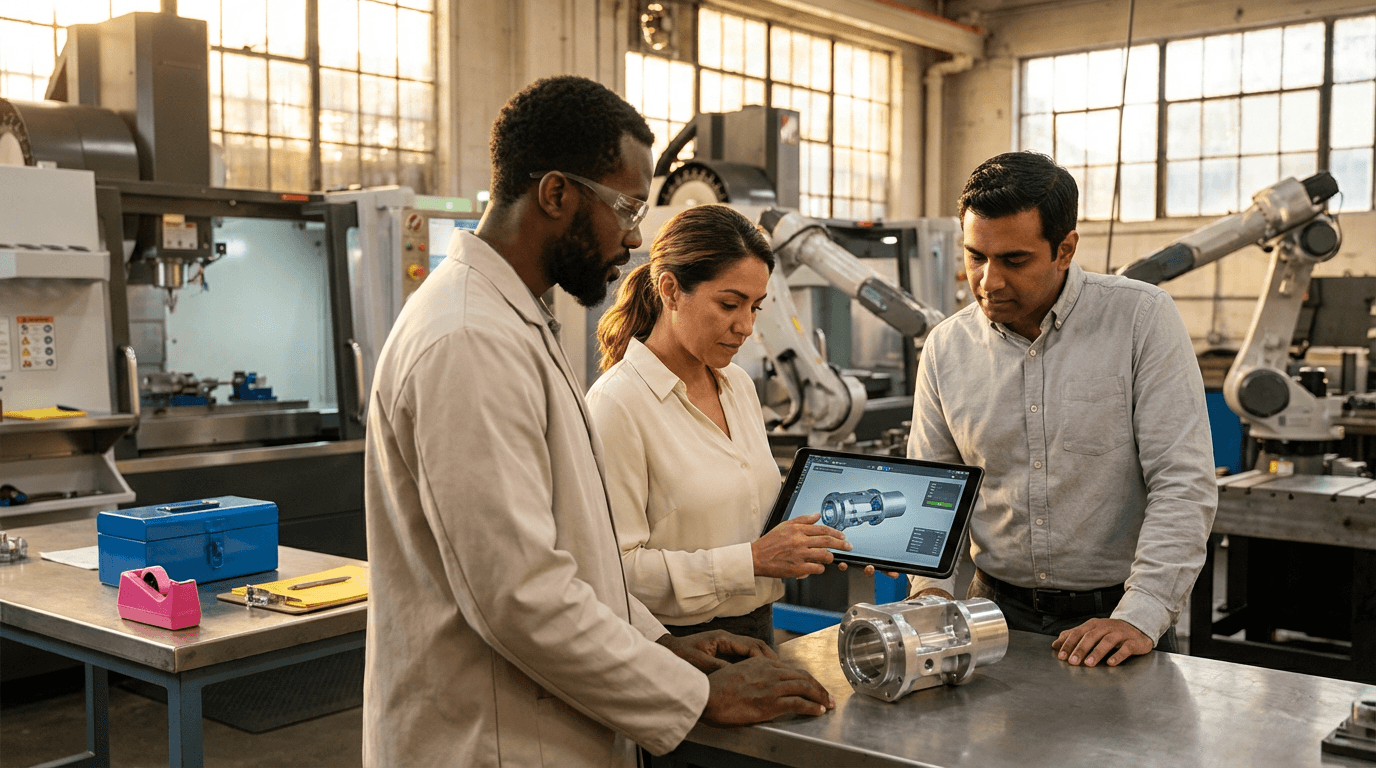
This course equips participants with practical skills to modernize CNC workflows and optimize aluminium housing production through advanced diagnostics, process selection, cost modeling, scalable design, and risk management.
flexible workload from 4 to 360h
valid certificate in your country
What will I learn?
This Advanced Manufacturing Course provides a practical toolkit to modernise CNC workflows and aluminium housing production. Learn to diagnose quality issues, reduce cycle time, and minimise scrap while comparing high-speed machining, additive, near-net, and hybrid options. Build accurate cost models, evaluate ROI, plan pilots, manage risk, and implement scalable, data-driven processes that deliver reliable, repeatable results.
Elevify advantages
Develop skills
- CNC process diagnostics: pinpoint cost, quality, and lead-time drivers fast.
- Advanced process selection: compare HSM, casting, and AM for aluminium housings.
- Cost and ROI modelling: build clear CAPEX, unit cost, and break-even analyses.
- Scalable cell design: plan Industry 4.0-ready hybrid and near-net workflows.
- Risk and validation planning: run pilots, SPC, and mitigation for new processes.
Suggested summary
Before starting, you can change the chapters and workload. Choose which chapter to start with. Add or remove chapters. Increase or decrease the course workload.What our students say
Your lessons are perfect. I purchased the one-year package and finally have the opportunity to follow various topics of my interest without needing to change platforms... I thank you for everything you do, I've already recommended you to other people...

Giulio CarloDigital Marketing Student
I like how the lessons are straight to the point and how I can change chapters and skip content I don't need.

Mariana FerresPhotography Student
I like the content and the way videos are presented and transcribed, which speeds up the process!

Luciana AlvarengaNail Design Student
The platform is fast, simple to use. The diversity of content and complementary videos help a lot with learning.

André FelipePrompt Engineering Student
FAQ
Who is Elevify? How does it work?
Do the courses have certificates?
Are the courses free?
What is the course workload?
What are the courses like?
How do the courses work?
What is the duration of the courses?
What is the cost or price of the courses?
What is an EAD or online course and how does it work?
PDF Course