Arborist training
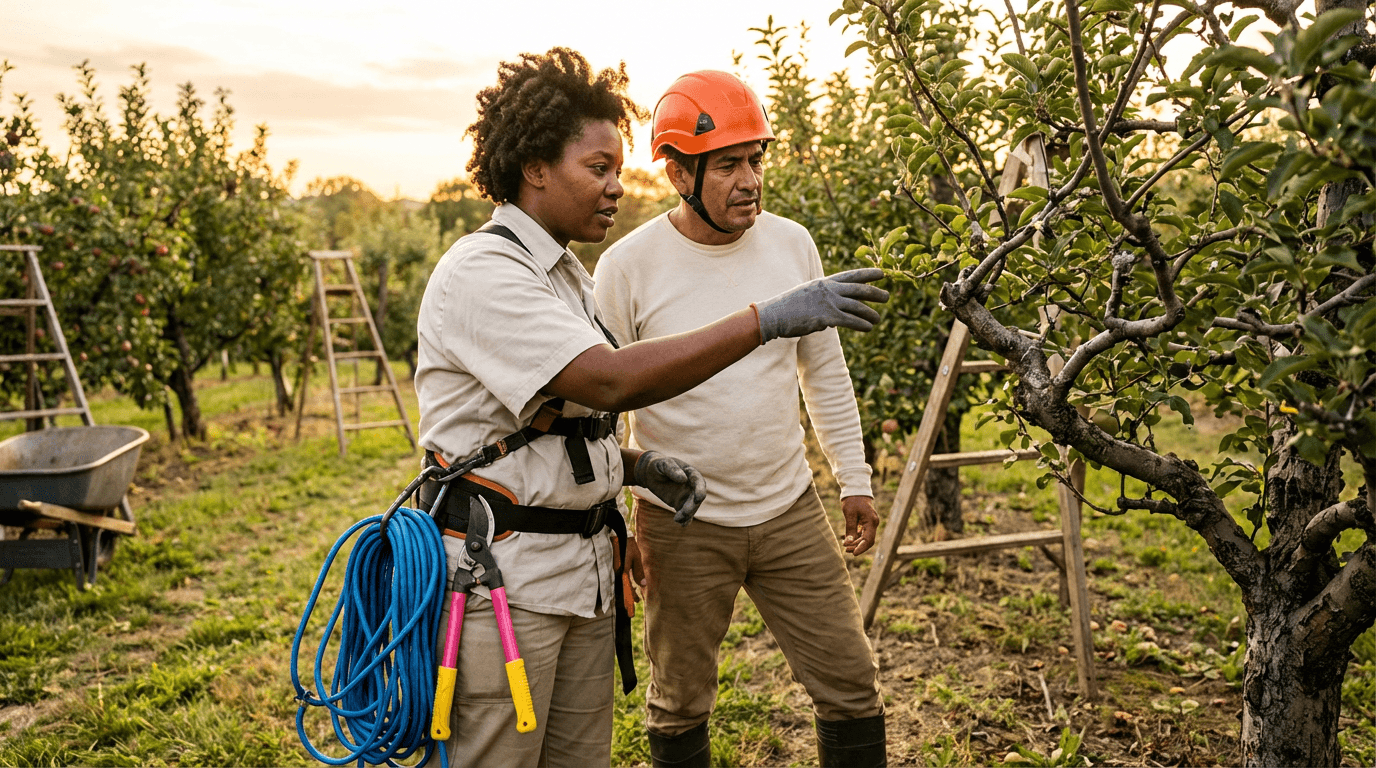
This Arborist Training course teaches safe pruning, risk assessment for trees, and climbing methods suited for farm settings. It enables agriculture workers to safeguard crops, handle oaks, apples, and poplars, while ensuring safety for staff, structures, and machinery across Ugandan farms.
flexible workload from 4 to 360h
valid certificate in your country
What will I learn?
Arborist Training equips you with hands-on skills to inspect, prune, and maintain oaks, apples, and poplars safely on farms. Master climbing techniques, rigging, chainsaw handling at height, decay identification, risk evaluation, and task planning. Build skills in site access, asset protection, waste handling, and delivering clear advice to clients and bosses.
Elevify advantages
Develop skills
- Precision pruning with cuts tailored to tree types for healthier farm trees.
- Tree risk assessment to identify decay, flaws, and collapse risks from ground level.
- Safe climbing using ropes, safety gear, and basic aerial rescue methods.
- Rigging for farms to lower branches without harming crops, paths, or tools.
- Post-work planning with monitoring, soil treatment, and reports for farm overseers.
Suggested summary
Before starting, you can change the chapters and workload. Choose which chapter to start with. Add or remove chapters. Increase or decrease the course workload.What our students say
Your lessons are perfect. I purchased the one-year package and finally have the opportunity to follow various topics of my interest without needing to change platforms... I thank you for everything you do, I've already recommended you to other people...

Giulio CarloDigital Marketing Student
I like how the lessons are straight to the point and how I can change chapters and skip content I don't need.

Mariana FerresPhotography Student
I like the content and the way videos are presented and transcribed, which speeds up the process!

Luciana AlvarengaNail Design Student
The platform is fast, simple to use. The diversity of content and complementary videos help a lot with learning.

André FelipePrompt Engineering Student
FAQ
Who is Elevify? How does it work?
Do the courses have certificates?
Are the courses free?
What is the course workload?
What are the courses like?
How do the courses work?
What is the duration of the courses?
What is the cost or price of the courses?
What is an EAD or online course and how does it work?
PDF Course