Coastal License Course
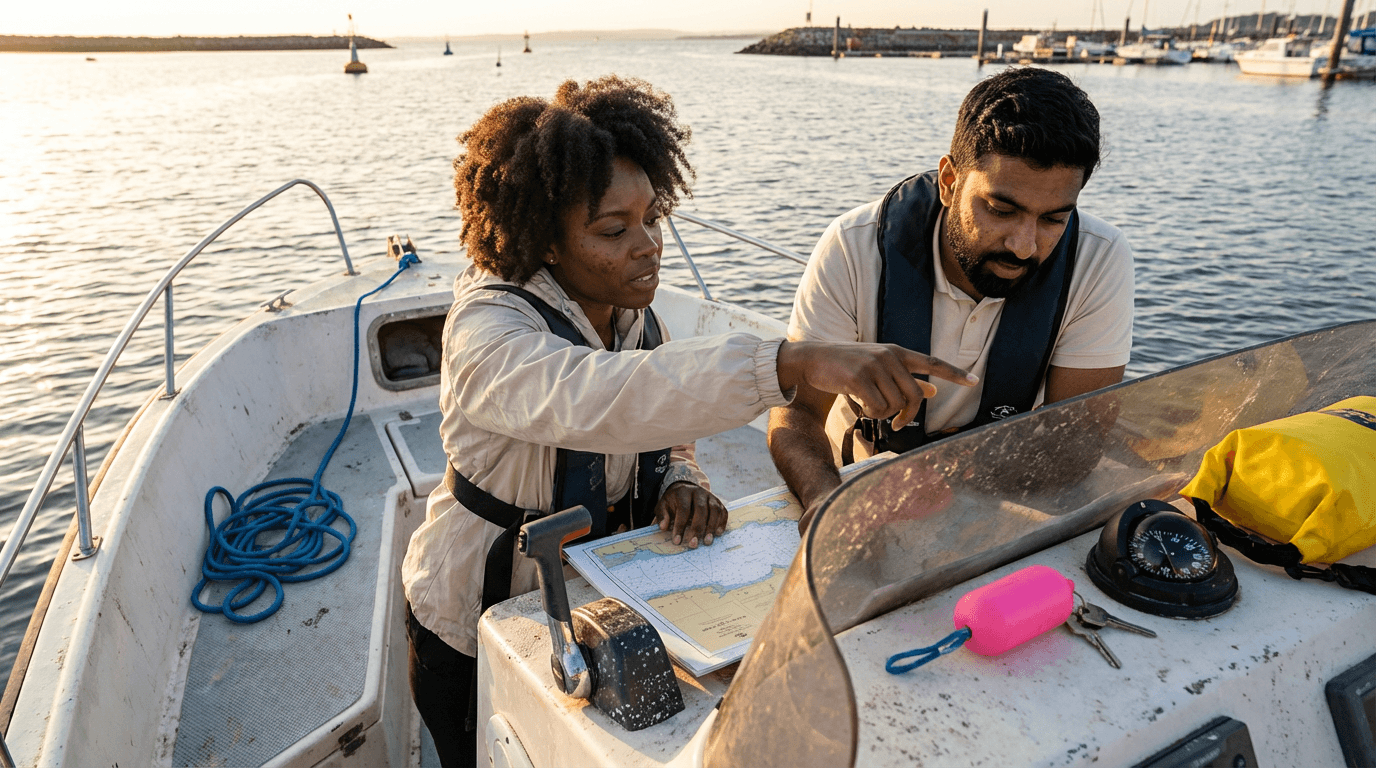
Master coastal navigation in France through this practical Coastal License Course designed for maritime professionals. Acquire skills in safe boat preparation, route planning using charts and tides, COLREGs compliance, weather assessment, and emergency response procedures to confidently operate vessels up to 6 nautical miles offshore while ensuring full regulatory compliance and safety. This course equips you with vital knowledge for controlled and secure coastal trips.
from 4 to 360h flexible workload
valid certificate in your country
What will I learn?
This Coastal License Course equips participants with essential competencies for planning and executing safe coastal voyages up to 6 miles from the shore in France. Key topics include emergency response protocols, man overboard recovery, towing operations, route planning utilizing official charts and tidal data, fundamental COLREG regulations, watchkeeping duties, evaluation of weather conditions and sea states, adherence to safety equipment standards, and thorough preparation of both vessel and crew to guarantee every trip is safe, legally compliant, and executed with assurance.
Elevify advantages
Develop skills
- Coastal trip planning: plot safe French Atlantic routes in one focused session.
- Small powerboat safety: equip, inspect and brief crew for coastal day runs.
- Emergency seamanship: drill man overboard, fire, flooding and abandon-ship.
- COLREGs in practice: apply right-of-way and lights rules in busy coastal traffic.
- Weather and tides judgment: read forecasts and tides to make firm go/no-go calls.
Suggested summary
Before starting, you can change the chapters and the workload. Choose which chapter to start with. Add or remove chapters. Increase or decrease the course workload.What our students say
Your classes are perfect. I purchased the one-year package and finally have the opportunity to follow various topics of my interest without needing to change platforms... I thank you for everything you do, I've already recommended you to other people...

Giulio CarloDigital Marketing Student
I like how the lessons are straight to the point and how I can switch chapters and skip content I don't need.

Mariana FerresPhotography Student
I like the content and the way videos are presented and transcribed, which speeds up the process!

Luciana AlvarengaNail Design Student
The platform is fast, simple to use. The diversity of content and complementary videos help a lot with learning.

André FelipePrompt Engineering Student
FAQ
Who is Elevify? How does it work?
Do the courses have certificates?
Are the courses free?
What is the course workload?
What are the courses like?
How do the courses work?
What is the duration of the courses?
What is the cost or price of the courses?
What is an EAD or online course and how does it work?
PDF Course