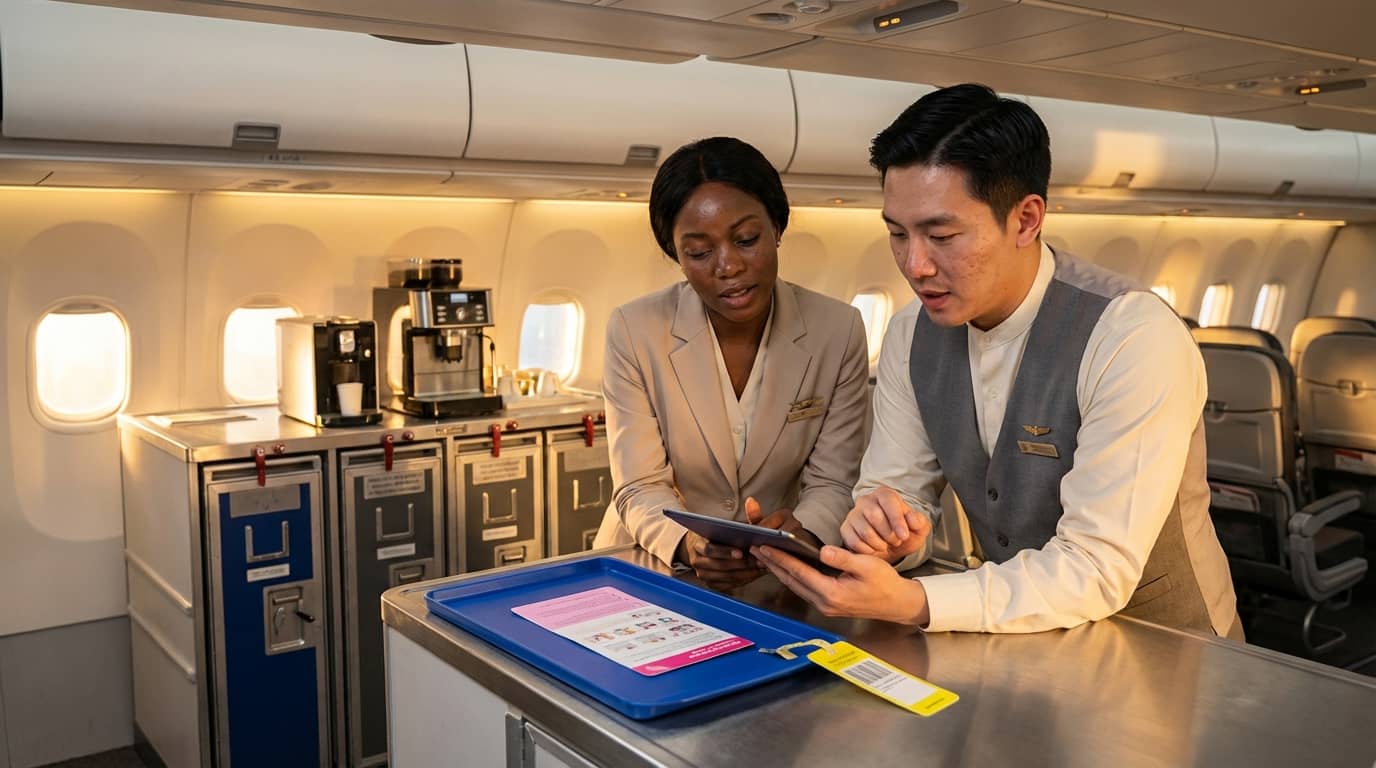
Lesson 1Communication techniques for nervous or confused passengers: de-escalation phrases, clear directions, empathy and repetitionThis lesson teaches ways to spot nervous or mixed-up passengers, use quiet talk, show understanding, repeat things, and use pictures to make instructions clear, lower worry, and stop fights or trouble.
Spotting worry and mix-up signsUsing quiet, easy, clear wordsUnderstanding, agreeing, and comfortingRepeating and showing with eyesCalming down and sending to head attendantLesson 2Passenger boarding management: priority boarding, families with children, unaccompanied minors, reduced mobility assistanceThis lesson shows how to group people for boarding, deal with special groups like important ones, help families and people who can't move easy, and work with gate workers to keep boarding safe, calm, and fast.
Boarding groups and area workingImportant and special customer helpFamilies with kids and push chairsAlone kids boarding helpHelp for people with less movementLesson 3Required documentation and regulatory checks (IDs, licenses, manifests, NOTOC, flight plans)This lesson covers checking crew cards and papers, passenger lists, NOTOC, and other rule papers, and working with pilots to make sure all legal things are ready before closing the door.
Crew cards, papers, and health checksPassenger lists and seat numbersNOTOC things and safety meaningsFlight plans and work papersLast checks before door closeLesson 4Welcoming passengers: scripted greetings, language choices, body language, first impressionsThis lesson is about greeting people at the door, using right words, picking languages, and kind phrases, with strong body moves and eye looks to make good, safe first feelings.
Door places and greeting jobsUsing normal greeting words and changesLanguage pick and kind wordsBody moves, eye contact, and smilesHandling first feelings in waitsLesson 5Crew briefing procedures: roles, special passengers, turbulence, security threats, cultural or language notesThis lesson explains crew meetings structure, job gives, safety and guard topics, special people, rough air plans, and culture or language notes that change talk and help.
Meeting time, place, and leaderJob and area gives in cabinCheck safety, guard, and dangersSpecial people and health worriesRough air, paths, and language notesLesson 6Documentation and handover for special needs: special meals, wheelchair assistance, UMNR paperwork and briefingsThis lesson shows how to check and write special help asks, like special foods, chair help, and alone kids handling, making sure papers, meetings, and talk across crew are right.
Reading special help code wordsSpecial food lists and give plansChair help workingAlone kids papers and care chainMeeting crew on special needs peopleLesson 7Personal presentation, uniform standards, grooming and professional conductThis lesson details uniform rules, clean looks, and body care, and how stand, voice tone, and work ways shape airline picture and build passenger trust and help.
Uniform parts and right wearClean, hair, face paint, and extrasBody care and smell rulesBody moves, stand, and face looksWork tone, words, and limitsLesson 8Carry-on baggage policies and bin management: weight/size enforcement, gate checks, securing loose itemsThis lesson explains hand bag rules, how to check size and heavy, when to check at gate, and how to put and hold things in top bins and under seats to keep safety, comfort, and on-time go.
Normal and airline hand bag limitsMeasuring and heavy check at gateFinding and marking gate-check bagsSafe put in top bins and roomsHolding loose things under seats and in kitchensLesson 9Safety equipment checks: life vests, oxygen, firefighting, AED, first aid kit, emergency lightingThis lesson covers before-flight checks of life jackets, oxygen, fire tools, AED, help kits, and light for emergency, with lists, fault tell, and work with pilots and fix people.
Cabin safety tool listsLife jackets and float checkOxygen bottles, masks, and unit checksFire put out, breath gear, and smoke findersAED, help, and emergency light checksLesson 10Pre-flight cabin and galley inspections: seating, overhead bins, cabin cleanliness, food service setupThis lesson covers step checks of seats, belts, top bins, toilets, lights, plus kitchen tools, food, and serve things, making sure cabin is clean, full, and rule-follow before people come.
Seat, belt, and table checkTop bins, rooms, and coat placesToilet clean and supply checksKitchen tools and locks checkFood, carts, and serve count