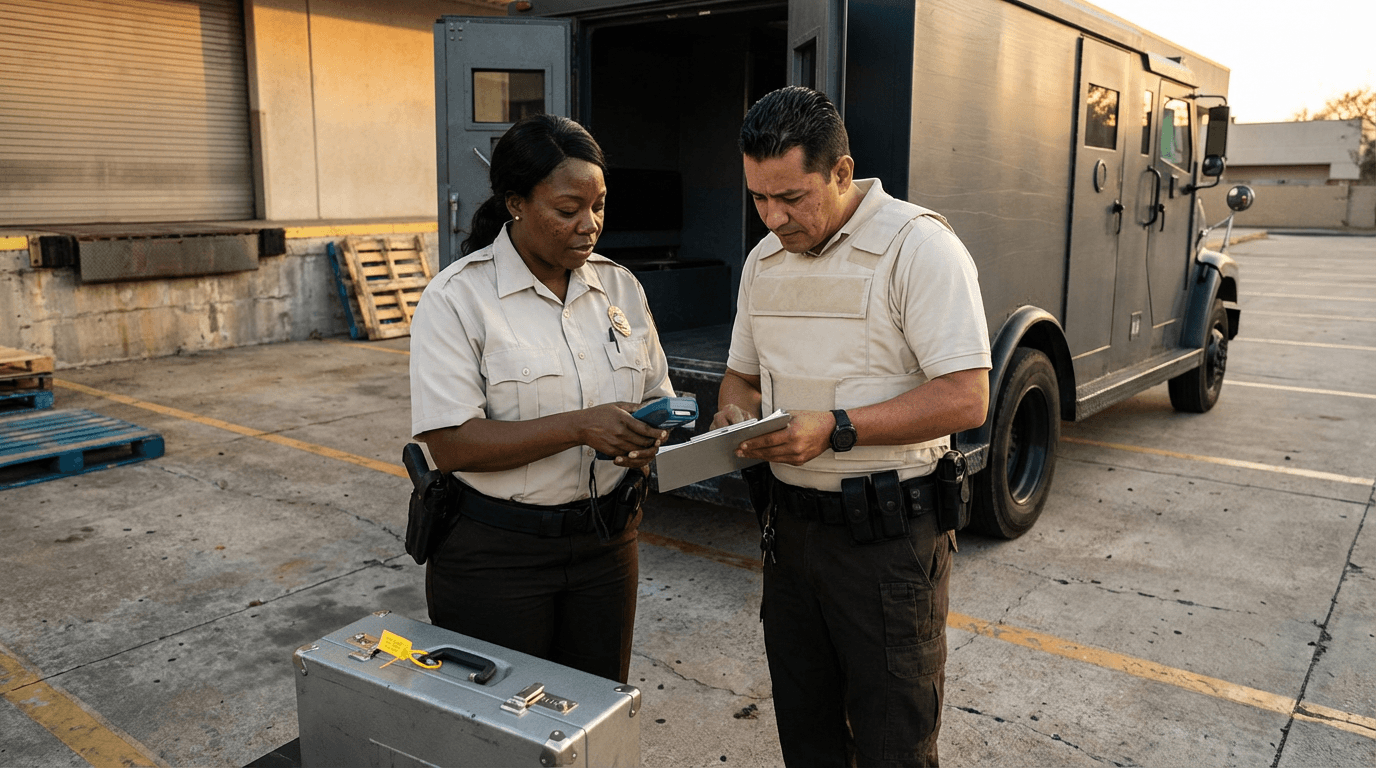
Lesson 1Before-Mission Checks for Staff and Vehicles (Radios, Weapons, Safety Gear, Cash Boxes, Extra Batteries, First Aid Kit)This part shows organized lists for checking crew and vehicles before missions, including radios, weapons, safety gear, cash boxes, batteries, first aid kits, papers, and approvals, to cut down mistakes by people and make sure everyone is ready for the job consistently.
Standard list for crew readinessVehicle safety and protection checksChecks for weapons, bullets, and safety gearCash boxes, seals, and tagsReview of extra batteries and first aid kitLesson 2Talk Rules: Radio Ways, Call Names, Secret Channels, Quiet and Emergency SignsThis part covers safe talking during missions, like keeping radio rules, using call names, secret codes, quiet and emergency signs, steps to raise alerts, and backup ways if main systems stop working.
Radio rules and message setupCall names, IDs, and short codesUsing secret and safe channelsQuiet, hidden, and emergency signsBackup talking methodsLesson 3Personal Readiness and Human Issues: Managing Tiredness, Behavior Checks, Medicine and Substance Rules, Avoiding Personal Things That Block Duty GearThis part looks at human issues that affect mission safety, like tiredness, worry, fitness for work, rules on medicine and substances, personal behavior, and not wearing clothes or items that get in the way of weapons or safety tools.
Tiredness, sleep, and work shiftsBehavior warning signs and friend checksRules on medicine, alcohol, and drugsFitness for work and self-reportingRules for clothes and gear matchingLesson 4Gathering Info on Local Crime: Using Official Warnings, Police Meetings, Company Info, Local News, and Open SourcesThis part explains how to collect and understand crime info from police, rule makers, company records, local news, and open places, changing raw details into useful changes for routes and ways to make operations safer in South Sudan.
Using official crime warnings and newsGoing to police and rule maker meetingsUsing company event and risk recordsWatching local news and social pagesChecking open-source threat signsLesson 5Vehicle Check: Armored Vehicle Parts, Locks, Seals, Alarm Systems, Tire and Fluid ChecksThis part gives step-by-step checks for armored vehicles before going out, including armor strength, locks and seals, alarms, tires, fluids, lights, and papers, ensuring the vehicle is protected, good for roads, and ready for the mission.
Outside armor and body strength checksDoor locks, hinges, and protection sealsAlarm, camera, and GPS testsTire condition, air, and wheel checksEngine fluids, lights, and brake testsLesson 6Meeting Formats and Task Sharing: Holding Short Before-Leave Meetings, Role Giving, Backup Triggers and Decision PowerThis part explains how to hold focused meetings before leaving, give roles, make clear who is in charge, set backup triggers, and share tasks so every crew member knows their duties and who decides.
Standard before-leave meeting setupMaking clear roles and task ownersSetting command and decision powerBackup triggers and stepsNoting who attends and main pointsLesson 7Route Planning and Threat Checking: Map Tools, Other Routes, Tight Spots, Parking Limits, Time SlotsThis part covers how to make safe routes for cash transport, check threats along the way, use map tools, plan other paths, handle tight spots and parking, and time movements in safe slots to cut down risks.
Using digital and paper map toolsFinding high-risk areas and tight spotsPlanning main and other routesPlanning parking, loading, and escape pathsTime slots and avoiding patternsLesson 8Law and Policy Check: Relevant Force-Use Law, Limits on Holding and Searching, Privacy and Public Safety DutiesThis part reviews main law and policy rules for cash transport work, including force use, limits on holding and searching, privacy, public safety tasks, and company standard ways that guide every mission choice.
Principles and limits of force useBoundaries for holding, searching, and takingPrivacy, recording, and data protectionPublic safety and care dutiesUsing company standard ways for missions