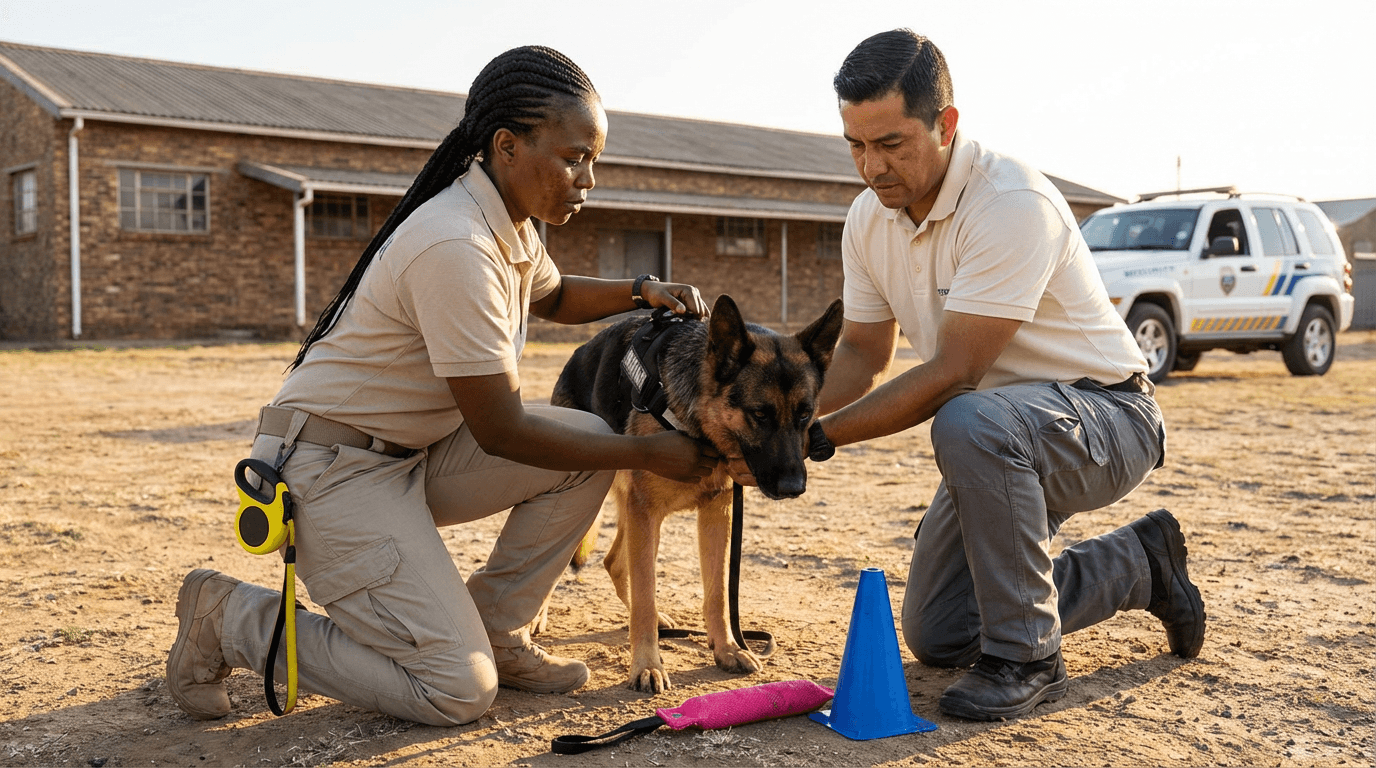
Lesson 1Pre-shift environment scan: weather forecast, terrain conditions, scheduled site activities, and temporary hazardsThis part shows how to do a planned check of surroundings before shift, looking at weather news, ground state, site doings, and short dangers to change plans, tools, and rest times for safe, good dog work.
Reviewing weather, heat, cold, and humidity risksAssessing terrain, footing, and elevation changesIdentifying site traffic, machinery, and noiseLocating chemical, biological, and sharp hazardsPlanning shade, water points, and rest locationsAdjusting work duration and intensity to conditionsLesson 2Behavioral baseline checks: responsiveness, stress signals, and readiness-to-work indicatorsThis part teaches setting and watching normal behavior lines, checking quick answers, excitement, worry signs, and ready-for-work shows, so handlers tell usual ways from early trouble or work danger signs.
Defining each dog’s normal behavior profileAssessing responsiveness to handler cuesRecognizing early and subtle stress indicatorsIdentifying over-arousal and under-arousal statesScreening for pain-related behavior changesDeciding go or no-go for operational deploymentLesson 3Documentation and logs: shift health log, equipment maintenance records, vaccination and vet contact infoThis part covers true health and tool notes, like daily shift health books, tool fix records, shot states, and animal doctor links, helping steady care, law safety, and work duty keeping.
Completing daily K9 shift health log entriesRecording injuries, medications, and restrictionsTracking equipment inspections and repairsMaintaining vaccination and parasite control recordsStoring vet contact and emergency clinic detailsData security, backups, and record retention rulesLesson 4Daily canine health inspection: gait, respiration, mucous membranes, hydration, temperature indicators, and paw/coat conditionThis part shows doing a planned daily health check, reading walk, breath, wet parts, water in body, heat signs, and skin, foot, fur state to find early sickness or hurt before work starts.
Observing gait, posture, and movement symmetryAssessing respiration rate, effort, and soundsChecking mucous membranes and capillary refillEvaluating hydration and subtle dehydration signsInspecting paws, pads, nails, and interdigital areasReviewing coat, skin, and body temperature cuesLesson 5Equipment checks: harnesses, leads, line length, collars, muzzles, bite suits, tracking line, first-aid kit, and replacement partsThis part looks at steady checks of dog work tools, like straps, ropes, line sizes, neck bands, mouth covers, bite clothes, follow lines, help kits, and extra parts, making sure tools are safe, work well, and fit the job.
Inspecting harness stitching, buckles, and fitChecking leads, lines, and hardware for wearEvaluating collars, ID tags, and quick-release useFitting and testing muzzles for safety and comfortReviewing bite suits and hidden sleeve integrityStocking and checking K9 first-aid kits and sparesLesson 6Vehicle and transport checks: secure crates, ventilation, climate control, tie-downs, and emergency extraction proceduresThis part covers vehicle and move safety, like box strength, air flow, weather control, tie systems, load ways, and quick out plans to keep the dog safe in normal trips and big problems.
Inspecting crates, doors, and latching mechanismsEnsuring ventilation and airflow in all seasonsManaging vehicle climate and heat injury risksUsing tie-downs and load securing methodsSafe loading, unloading, and leash controlPracticing emergency extraction and evacuationLesson 7Personal protective equipment for handler: gloves, boots, light sources, radio, spare batteries and reflective wearThis part details handler body safety tools, like hand covers, foot wear, light tools, talk radios, extra power, and shine clothes, showing choice, fit, care, and how they cut risk without hurting dog handling.
Selecting task-appropriate gloves and hand PPEChoosing boots for traction, support, and hazardsUsing headlamps, flashlights, and backup lightsRadio setup, checks, and communication protocolsManaging spare batteries and power banksHigh-visibility and reflective clothing standards