Medical Equipment Course
This course provides essential training on operating and maintaining key medical devices like infusion pumps, defibrillators, and patient monitors, emphasizing safety, troubleshooting, and effective communication to ensure reliable performance in healthcare settings.
from 4 to 360h flexible workload
valid certificate in your country
What will I learn?
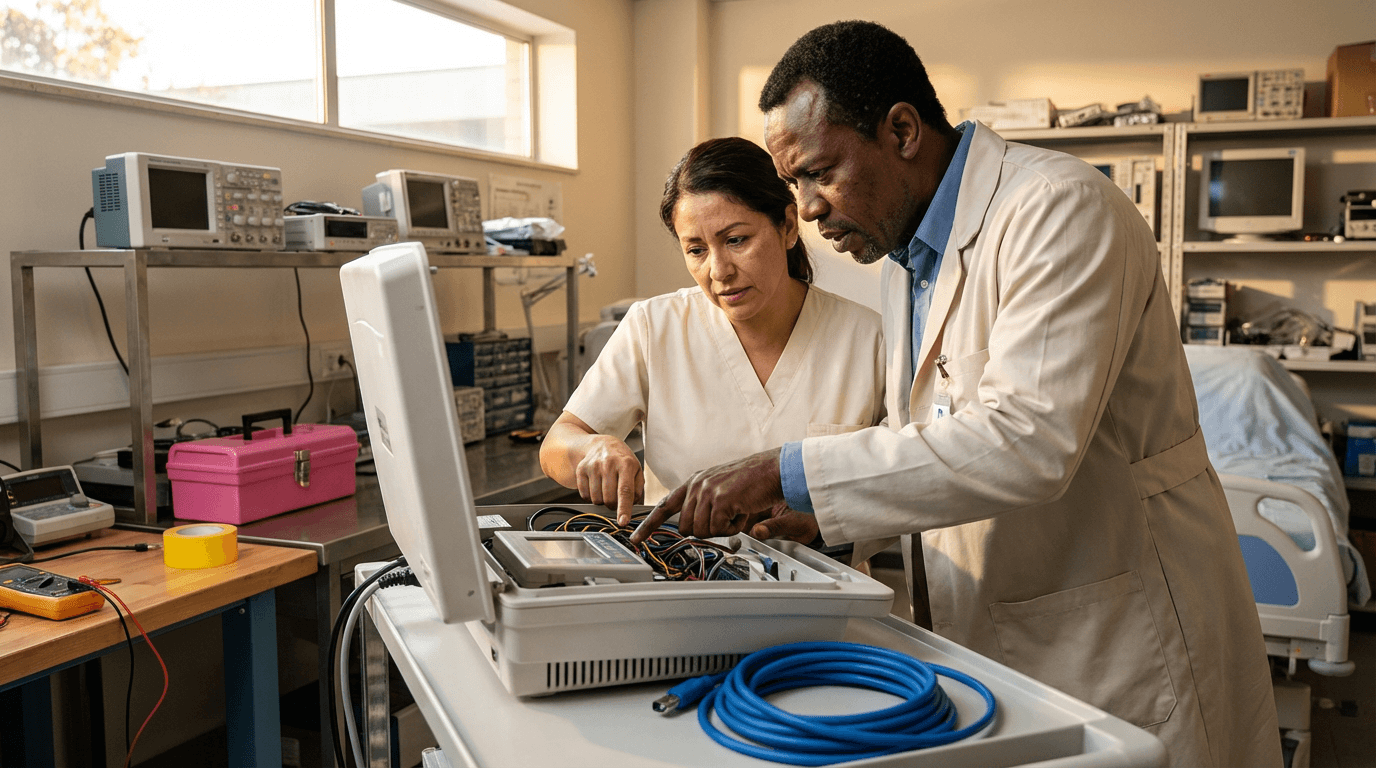
The Medical Equipment Course delivers focused, hands-on training to help you use infusion pumps, defibrillators, and patient monitors safely and confidently. Learn setup, programming, alarm handling, troubleshooting, cleaning, and preventive maintenance, plus clear communication, documentation, and safety management skills so you can reduce errors, improve response time, and keep every device ready for critical use.
Elevify advantages
Develop skills
- Infusion pump mastery: set safe rates, handle alarms, and fix bedside faults fast.
- Defibrillator readiness: run checks, deliver safe shocks, and resolve alerts quickly.
- Patient monitor skills: configure parameters, manage alarms, and verify accurate data.
- Safety and maintenance: apply checklists, prevent failures, and document device issues.
- Team communication: give clear handovers, escalate problems, and support safe practice.
Suggested summary
Before starting, you can change the chapters and the workload. Choose which chapter to start with. Add or remove chapters. Increase or decrease the course workload.What our students say
Your classes are perfect. I purchased the one-year package and finally have the opportunity to follow various topics of my interest without needing to change platforms... I thank you for everything you do, I've already recommended you to other people...

Giulio CarloDigital Marketing Student
I like how the lessons are straight to the point and how I can switch chapters and skip content I don't need.

Mariana FerresPhotography Student
I like the content and the way videos are presented and transcribed, which speeds up the process!

Luciana AlvarengaNail Design Student
The platform is fast, simple to use. The diversity of content and complementary videos help a lot with learning.

André FelipePrompt Engineering Student
FAQ
Who is Elevify? How does it work?
Do the courses have certificates?
Are the courses free?
What is the course workload?
What are the courses like?
How do the courses work?
What is the duration of the courses?
What is the cost or price of the courses?
What is an EAD or online course and how does it work?
PDF Course