


Blood Taking Course
This course offers practical training in blood drawing techniques for adults, elderly, and children, emphasizing safety, infection control, and accurate sample handling to ensure reliable results.
from 4 to 360h flexible workload
valid certificate in your country
What will I learn?
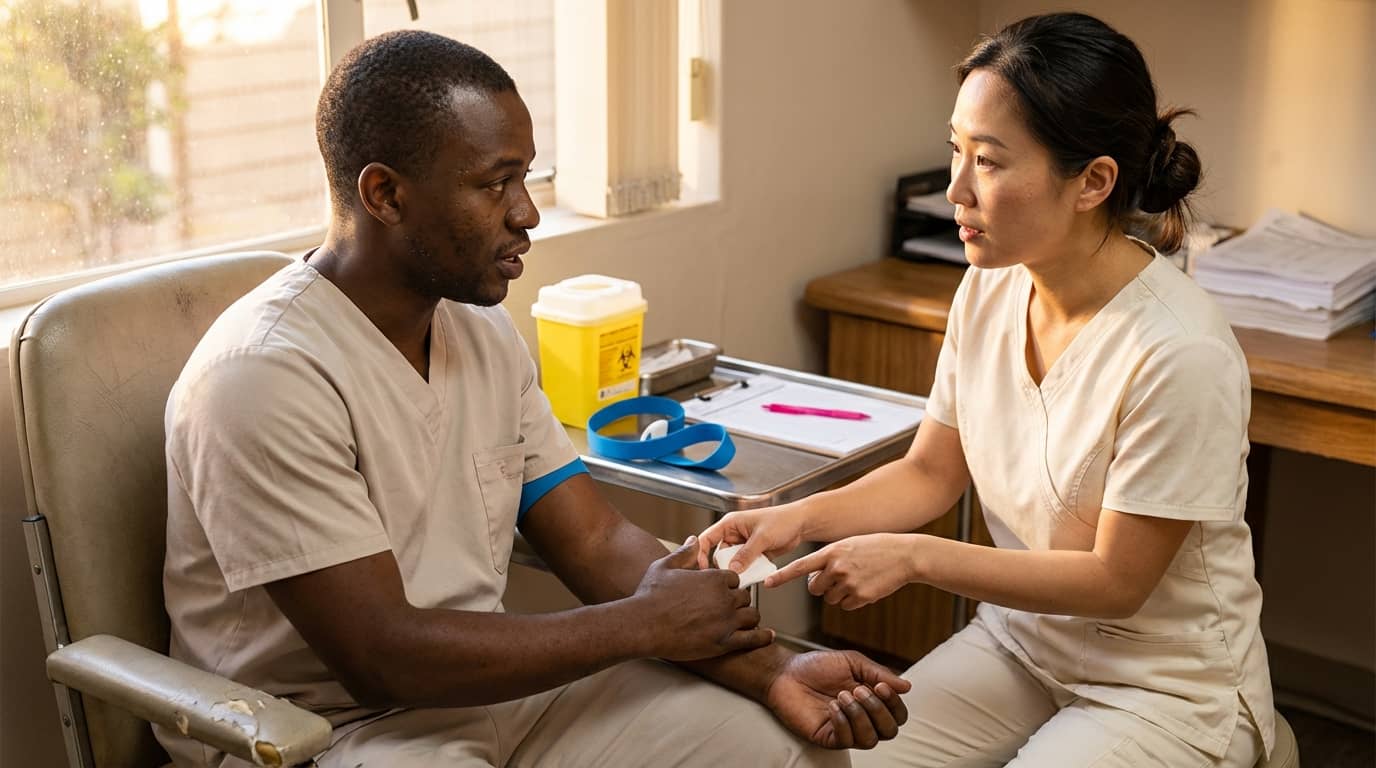
This Blood Drawing Course provides hands-on, step-by-step training in safe vein puncturing and finger-prick blood collection for grown-ups, old people, and children. You will learn how to prevent infections, use clean methods, handle sharp tools safely, follow the right sequence for drawing blood, and avoid mistakes. It also covers dealing with weak veins, blood-thinning medicines, easing pain in children, handling problems, and ensuring quality so that every blood sample is correct, dependable, and properly recorded.
Elevify advantages
Develop skills
- Safe vein puncturing method: carry out neat and precise blood collections each time.
- Handling weak veins: adjust equipment and approaches for older folks and those on blood thinners.
- Children's finger-prick collection: gather small amounts of blood with little discomfort.
- Controlling infections well: use World Health Organisation guidelines for hand washing and clean procedures.
- Quality checks before analysis: mark, manage, and move samples without errors.
Suggested summary
Before starting, you can change the chapters and the workload. Choose which chapter to start with. Add or remove chapters. Increase or decrease the course workload.What our students say
Your classes are perfect. I purchased the one-year package and finally have the chance to follow several topics I'm interested in without having to switch platforms... I appreciate everything you do, I've already recommended you to others...

Giulio CarloDigital Marketing Student
I like how the lessons are straight to the point and how I can switch chapters and skip content I don't need.

Mariana FerresPhotography Student
I like the content and the way the videos are presented and transcribed, which speeds up the process!

Luciana AlvarengaNail Design Student
The platform is fast and easy to use. The variety of content and the extra videos really help with learning.

Giulio CarloPrompt Engineering Student
FAQ
Who is Elevify? How does it work?
Do the courses have certificates?
Are the courses free?
What is the course workload?
What are the courses like?
How do the courses work?
What is the duration of the courses?
What is the cost or price of the courses?
What is an EAD or online course and how does it work?
PDF Course