Air Conditioning Cleaning Training
4.4/5
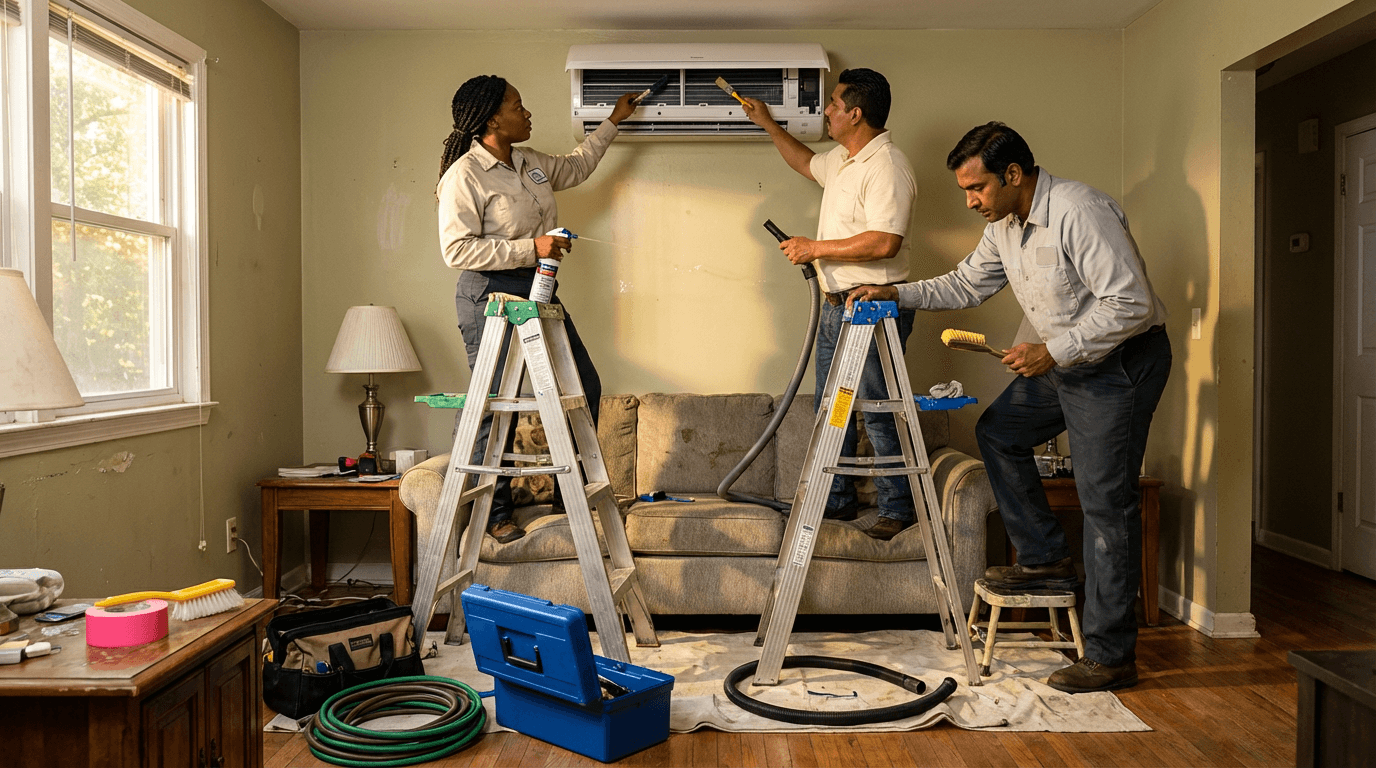
Master air conditioning cleaning for bakery and food areas. Learn safe HVAC sanitation, coil and drain cleaning, chemical selection, and performance checks to prevent contamination, boost efficiency, and deliver reliable refrigeration service. This training equips you with essential skills for hygiene and reliability in sensitive environments.
4.4 in the evaluation
from 4 to 360h flexible workload
valid certificate in your country
What will I learn?
Air Conditioning Cleaning Training teaches you how to safely assess, clean, sanitize, and reassemble wall-mounted splits and ceiling cassettes in food-sensitive spaces. Learn proper PPE, lockout/tagout, coil and drain cleaning, filter care, chemical selection, airflow and condensate checks, documentation, and maintenance planning to improve hygiene, comfort, reliability, and energy efficiency for your clients.
Elevify advantages
Develop skills
- Split AC deep cleaning: perform safe, step-by-step sanitation in food areas.
- Coil, filter, and drain care: restore airflow, prevent leaks, and cut odor fast.
- Food-safe HVAC chemicals: choose and apply low-residue, non-corrosive products.
- Safety-first servicing: lockout/tagout, PPE, and clean worksite containment.
- Post-clean verification: check delta-T, condensate flow, IAQ, and document work.
Suggested summary
Before starting, you can change the chapters and the workload. Choose which chapter to start with. Add or remove chapters. Increase or decrease the course workload.What our students say
Your classes are perfect. I purchased the one-year package and finally have the opportunity to follow various topics of my interest without needing to change platforms... I thank you for everything you do, I've already recommended you to other people...

Giulio CarloDigital Marketing Student
I like how the lessons are straight to the point and how I can switch chapters and skip content I don't need.

Mariana FerresPhotography Student
I like the content and the way videos are presented and transcribed, which speeds up the process!

Luciana AlvarengaNail Design Student
The platform is fast, simple to use. The diversity of content and complementary videos help a lot with learning.

André FelipePrompt Engineering Student
FAQ
Who is Elevify? How does it work?
Do the courses have certificates?
Are the courses free?
What is the course workload?
What are the courses like?
How do the courses work?
What is the duration of the courses?
What is the cost or price of the courses?
What is an EAD or online course and how does it work?
PDF Course