Anatomy of Speech and Language Course
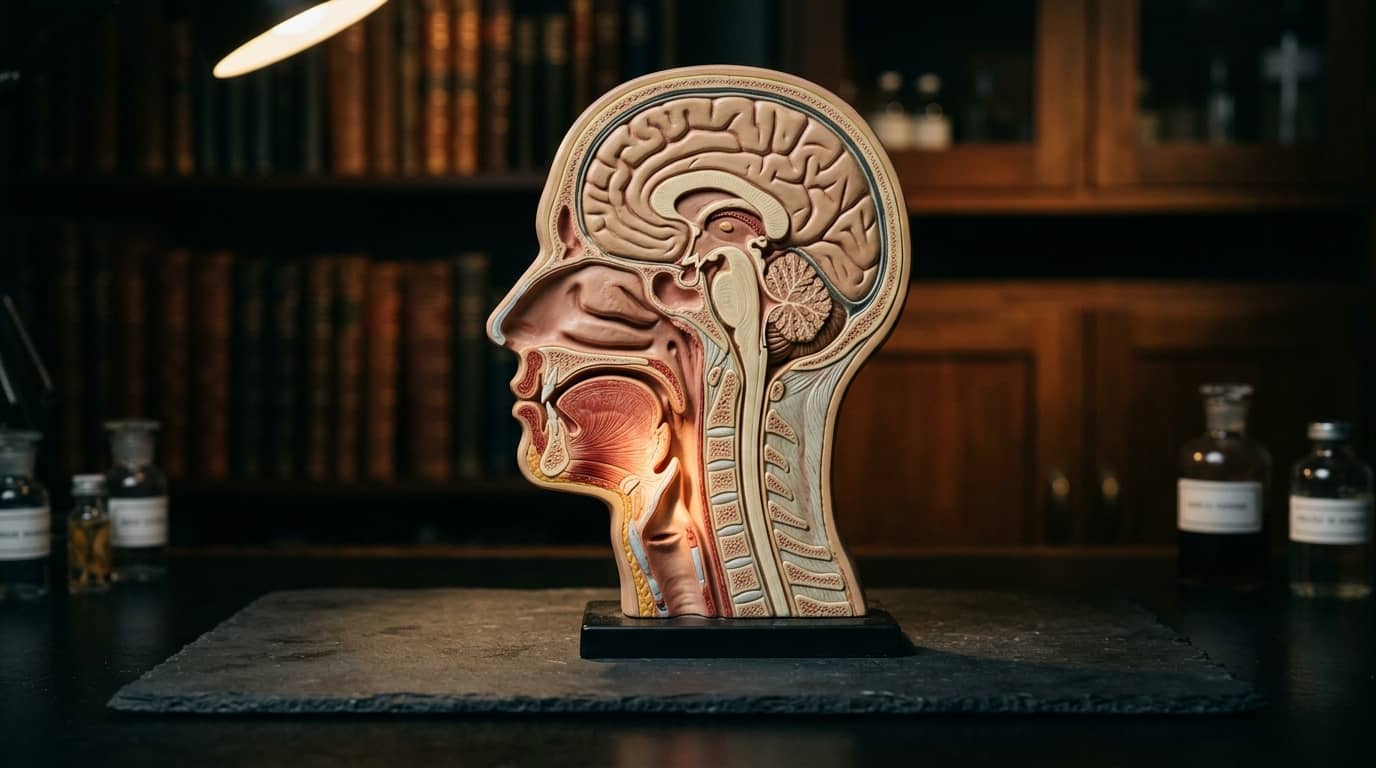
Master the anatomy and physiology behind every aspect of human speech and language, from the respiratory system that powers your voice to the neural networks that process words. This course gives you a rigorous, clinically grounded understanding of how the body produces, shapes, and perceives spoken language. Whether you are pursuing speech-language therapy, linguistics, or neuroscience, this is the foundational knowledge your career demands.
from 4 to 360h flexible workload
valid certificate in your country
What will I learn?
You will build a comprehensive understanding of the biological systems that make human communication possible. Starting with the evolutionary and neurological foundations of language, you will move through the respiratory, laryngeal, and articulatory structures that produce speech sounds. You will study how the vocal tract resonates and filters sound, how the auditory system perceives speech, and how cortical and subcortical networks process language. Clinical chapters connect this anatomy directly to disorders such as aphasia, dysarthria, voice pathology, and resonance disorders. By the end, you will have the anatomical and physiological knowledge needed to analyse, assess, and understand the full spectrum of human speech and language.
Elevify advantages
Develop skills
- Laryngeal Anatomy Mastery: Identify vocal fold structures and explain how they produce voice.
- Neural Language Mapping: Locate cortical and subcortical regions that control speech and language.
- Clinical Disorder Analysis: Connect anatomical impairments to specific speech and language disorder profiles.
- Acoustic Speech Interpretation: Apply the source-filter model to analyse resonance and articulation patterns.
Suggested summary
Before starting, you can change the chapters and workload. Choose which chapter to start with. Add or remove chapters. Increase or decrease the course workload.What our students say
Your classes are perfect. I purchased the one-year package and finally have the opportunity to follow various topics of my interest without needing to change platforms... I thank you for everything you do, I've already recommended you to other people...

Giulio CarloDigital Marketing Student
I like how the lessons are straight to the point and how I can change chapters and skip content I don't need.

Mariana FerresPhotography Student
I like the content and the way videos are presented and transcribed, which speeds up the process!

Luciana AlvarengaNail Design Student
The platform is fast, simple to use. The diversity of content and complementary videos help a lot with learning.

André FelipePrompt Engineering Student
FAQ
Who is Elevify? How does it work?
Do the courses have certificates?
Are the courses free?
What is the course workload?
What are the courses like?
How do the courses work?
What is the duration of the courses?
What is the cost or price of the courses?
What is an EAD or online course and how does it work?
PDF Course