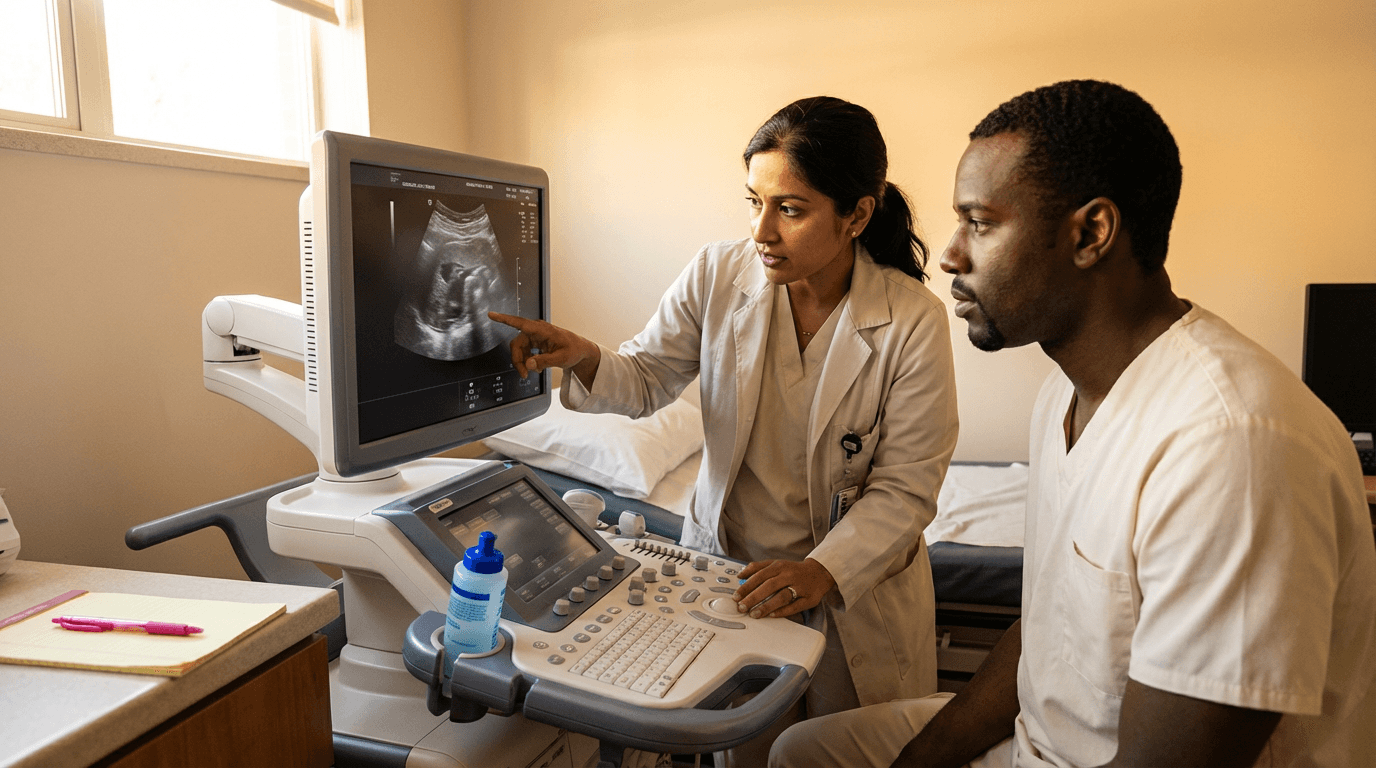
Lesson 1Restating medical question and ultrasound's role in suspected gallbladder issuesIt makes clear how to restate the medical question in the report and ultrasound's role in suspected gallbladder problems, including sorting cases, confirming or ruling out sudden gallbladder inflammation, and guiding next scans or surgery talks.
Turning request into clear questionsMain aims of right upper belly ultrasoundWhen ultrasound gives clear or unclear resultsClearly sharing diagnostic limitsLinking findings to next medical stepsLesson 2Checking common bile duct: measurement method, normal sizes, reasons for wideningIt explains accurate common bile duct measurement method, normal sizes by age and after gallbladder removal, and main reasons for widening, combining with patient history and lab tests for blockage check.
Landmarks for finding CBDInner-to-inner size measurement tipsNormal CBD sizes and age changesChanges after gallbladder removalBlockage vs non-blockage wideningLesson 3Limits of ultrasound in sudden gallbladder inflammation and when to suggest CT/MRCP/HIDAIt discusses ultrasound limits in diagnosing sudden gallbladder inflammation, like obesity, gut gas, and unusual signs, and clear reasons to suggest CT, MRCP, or HIDA when ultrasound is not sure.
Technical and patient limitsUnclear wall thickening and only sludgeSuspected complications outside viewRules to move to CT or MRCPWhen to suggest HIDA for function checkLesson 4Right upper belly abscess, liver abscess, and portal vein clot: ultrasound signsIt reviews ultrasound features of right upper belly and liver abscesses and portal vein clots, including texture, blood flow, gas, and flow changes, and how to tell from cysts, tumours, and plain vs infected clots.
Ultrasound patterns of liver abscessFinding sub-liver and under-diaphragm abscessPortal vein clot grayscale featuresColour Doppler and flow checksTelling abscess from cyst or tumourLesson 5Probe choice, patient position (lying flat, left side, sitting), and gentle pressingIt covers best probe choice by body size and depth, patient positions like lying flat, left side, and sitting, and gentle pressing to move gut gas and better see gallbladder and bile ducts.
Curved vs phased array choiceFlat and left side viewsSitting and between-rib scan waysGentle pressing to cut gut gasAdjusting depth, focus, and brightness settingsLesson 6Checking for complications: gas-filled gallbladder inflammation, burst, around-gallbladder abscessIt focuses on ultrasound check for serious gallbladder inflammation complications, like gas changes, burst, and around-gallbladder abscess, stressing early spotting, key warning signs, and quick reporting ways.
Gas in wall and inside: ring-down signsWall breaks and contained burst signsAround-gallbladder abscess shapeFree fluid and belly lining inflammation signsQuick action and surgery referralLesson 7Main ultrasound features of sudden gallbladder inflammation, long-term inflammation, and bile painIt looks at ultrasound patterns of sudden and long-term gallbladder inflammation and bile pain, highlighting wall changes, inside findings, around fluid, and pain links to separate inflammatory from non-inflammatory gallbladder issues.
Wall thickness and layer patternsInside contents and gallbladder swellingAround fluid and extra blood flow on DopplerPain link and medical backgroundTelling bile pain from inflammationLesson 8Standard liver and bile scan method: liver, gallbladder, bile ducts, liver gateIt outlines standard liver and bile scan method, including step-by-step check of liver, gallbladder, bile ducts, and liver gate, with suggested views, sizes, and records for reliable, quality exams.
Liver check and spot lesion screeningGallbladder long and short viewsCommon bile duct and liver inside ductsLiver gate and portal vein checkNeeded sizes and image labelsLesson 9Report template for suspected gallbladder issues including urgency and suggestionsIt gives a structured report template for suspected gallbladder problems, with must-have descriptions, summary, urgency levels, and clear management suggestions matching local ways and guideline words.
Standard gallbladder description partsCommon bile duct and inside ductsPortal vein and liver tissue notesSummary words and sure diagnosisUrgency, follow-up, and referral tipsLesson 10Medical info to ask from referrer and how it affects scanningIt describes key medical info to get from the referrer, like pain start, fever, lab values, and past scans, and how these details sharpen scan focus, meaning, and quick reporting needs.
Pain timing and typeFever, infection signs, and lab resultsMedicines, surgery, and other health historyPast scans and operation reportsAdjusting scan to medical riskLesson 11Gallstones, sludge, and ultrasound Murphy sign: method to bring out and recordIt details spotting gallstones and sludge, adjusting brightness and focus areas, and exact method to bring out and record ultrasound Murphy sign, including traps like painkillers, overlying pain, and referred pain.
Brightness and shadows of gallstonesMoving vs stuck stones and neck stonesLook and meaning of bile sludgeStandard ultrasound Murphy sign wayRecording images and video clipsLesson 12Key guideline sources for sudden gallbladder inflammation and bile blockage (how to find)It guides to main guidelines on sudden gallbladder inflammation and bile blockage, and shows quick ways to find, check, and quote group suggestions in reports and department rules.
Main radiology and surgery group sourcesUsing databases and guideline storesUnderstanding strength of suggestionsPutting guidance into rulesQuoting guidelines in medical reports