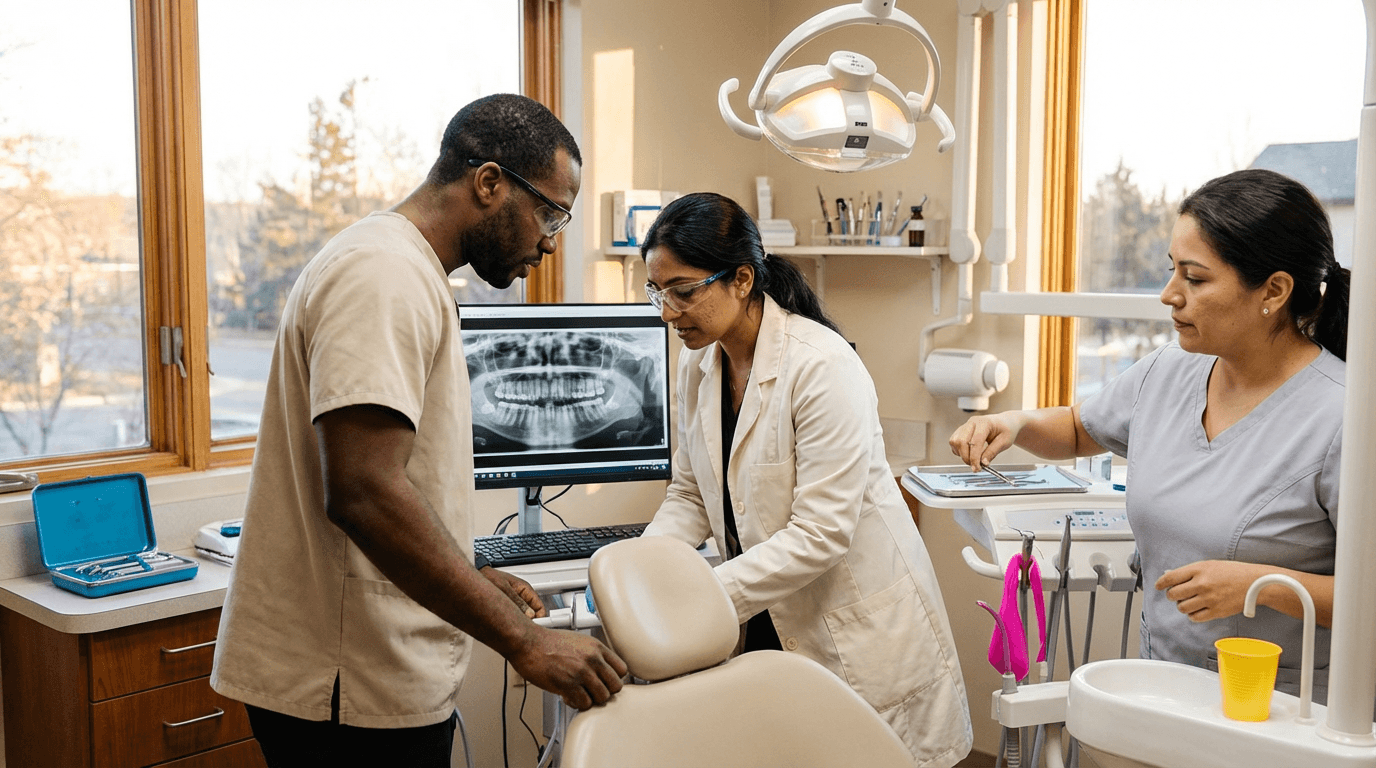
Lesson 1Setting Selection Rationale: Criteria for Office, Ambulatory Surgery Centre, or Hospital Operating Room UseThis part outlines rules for choosing clinic, day surgery centre, or hospital theatre, considering patient health issues, anaesthesia needs, infection risk, resources, and emergency readiness to ensure safe, effective care in Nigeria.
Clinic Setting Needs and LimitsWhen to Use Day Surgery CentreHospital Theatre NeedsChecking Medical Risk and ASA StatusEmergency Readiness and Equipment NeedsLesson 2Flap Design Options for Mandibular Molar Surgery: Envelope, Triangular, and Vertical Releasing Incisions with Pros/ConsThis part analyses flap design rules for lower molar surgery, comparing envelope, triangular, and vertical release cuts, stressing blood flow, access, tension control, and how each affects post-op pain and ridge keeping.
Biology Rules of Gum-Bone FlapsEnvelope Flap Needs, Pros, and ConsTriangular Flap Design and UsesVertical Release Cuts and LimitsFlap Tension Control and RepositioningLesson 3Anaesthesia Level Decision: Indications for Local Anaesthesia Alone, Local with IV Sedation, or General AnaesthesiaThis part reviews patient, procedure, and body risk factors guiding anaesthesia choice, comparing local alone, local with IV calming, and full anaesthesia, including monitoring, airway care, and legal records.
Checking Patient Worry and Health IssuesNeeds for Local Anaesthesia AloneWhen to Add IV Calming to LocalRules for Choosing Full AnaesthesiaMonitoring, Recovery, and Record NeedsLesson 4Formulating the Final Diagnosis: Chronic Periapical Infection with Buccal Cortical Thinning and Proximity to Inferior Alveolar NerveThis part explains how to combine clinical, x-ray, and CBCT data to confirm long-term root tip infection, check cheek bone wall thinning, and evaluate closeness to lower jaw nerve for safe surgery planning and outlook.
Main Clinical Signs of Long-Term Root Tip InfectionX-ray and CBCT Signs of Bone Wall ThinningMapping Closeness to Lower Jaw NerveDifference Diagnosis and Root Canal vs Surgery CareRisk Grouping and Outlook RecordsLesson 5Ridge Preservation Techniques: Socket Graft Materials (Autograft, Allograft, Xenograft, Alloplast), Membrane Types, and Choice Considerations Given Infection and Cortical DefectsThis part looks at ridge keeping after infected molar removal, comparing socket graft materials and membrane types, timing with infection and bone wall faults, and decision paths to keep volume for future implants.
Checking Socket Walls and Fault ShapeOwn Graft, Donor Graft, Animal Graft, and Synthetic ChoicesAbsorbable vs Non-Absorbable MembranesGraft Timing in Infected Removal SitesWays to Keep Ridge Width and HeightLesson 6Tooth Sectioning Strategies: Root Separation Patterns for Mandibular Molars, Instrumentation, and Minimising Torque on NerveThis part covers root shape check, best root split lines for lower molars, tool and instrument choice, controlled splitting steps, and ways to cut twist transfer and mechanical stress near lower jaw nerve.
X-ray Check of Root ShapeDesigning Root Split Patterns by Molar TypeTool Choice for Exact SplittingWays to Cut Twist on the NerveHandling Broken Roots and Hard PartsLesson 7Bone Removal and Access Techniques: Osteotomy Planning, Use of Rotary Instruments vs Piezoelectric Surgery, Minimising Cortical LossThis part details preoperative bone cut design, choice and order of rotary vs vibration tools, washing and cooling ways, and methods to cut bone wall loss while ensuring good access and view for safe tooth removal.
Rules of Bone Cut Design and PlanningChoosing Rotary vs Vibration DevicesHandpiece Control, Washing, and Heat CutKeeping Cheek and Tongue Bone WallsDuring-Surgery Check of Access and ViewLesson 8Debridement of Periapical Lesion: Curettage Technique, Removal of Granulation Tissue, Culture/Biopsy IndicationsThis part describes organised cleaning of root tip lesions, including scraping technique, removal of growth tissue, handling cyst lesions, and when to take samples for bug tests or tissue check to guide bug-killing therapy and disease diagnosis.
Tools for Root Tip ScrapingStep-by-Step Growth Tissue RemovalHandling Cyst and Fibre LesionsWashing Rules and Bleeding ControlNeeds for Sample and Tissue TakingLesson 9Managing Proximity to the Mandibular Canal During Extraction: Gentle Traction, Controlled Apical Curettage, and Use of Intraoperative CBCT or NavigationThis part focuses on spotting high-risk canal closeness, using gentle pull and loosen, controlled root tip scraping, and needs for during-surgery CBCT or guide systems to avoid nerve harm and handle surprise canal show safely.
Preoperative Mapping of Lower Jaw CanalGentle Loosen and Pull TechniquesControlled Root Tip Scraping Near CanalUse of During-Surgery CBCT and GuideHandling Suspected Nerve ShowLesson 10Soft Tissue Management and Closure: Primary Closure vs Open Healing, Use of Collagen Membranes, Suturing Techniques to Maintain Ridge ContourThis part addresses soft tissue handling around removal and graft sites, comparing direct closure vs open healing, use of collagen sheets, flap pull, and stitching ways that protect grafts and keep ridge shape and tough tissue.
Rules for Direct Closure vs Open HealingFlap Pull and Release TechniquesUse of Collagen Sheets for CoverStitch Choice and Tension ControlPostoperative Soft Tissue Change Review