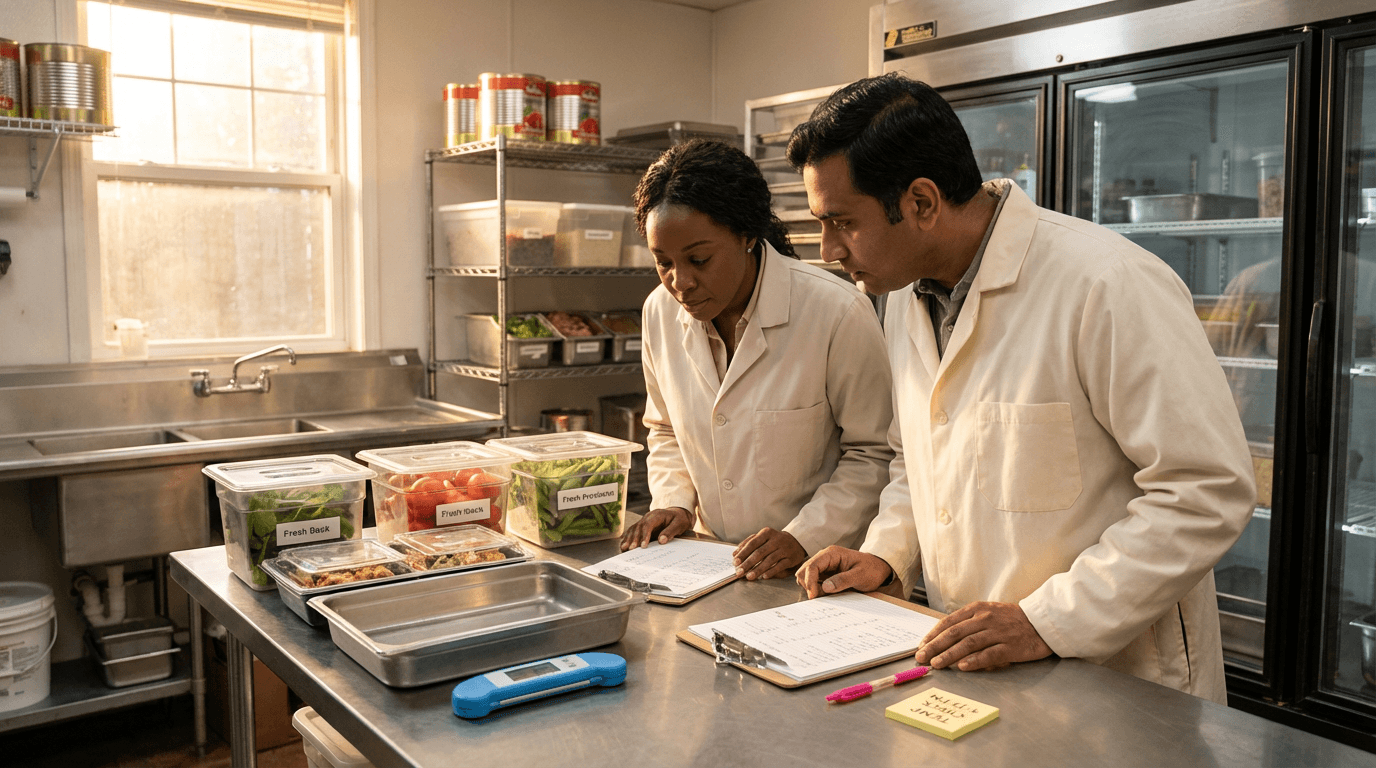
Lesson 1Preparation and separation of raw and RTE operations: work flow, physical barriers, colour-coding, time limits for exposed RTE foodsThis lesson covers how raw and ready-to-eat operations must be separated to prevent cross-contamination in Nigeria. It explains workflow design, barriers, colour-coding, and time limits for exposed RTE foods, plus how inspectors verify controls in practice during visits.
Assessing raw-to-RTE product flowsPhysical barriers and zoning controlsColour-coded tools and utensils policyTime limits for exposed RTE productsVerification of changeover proceduresLesson 2Packing room and finished product handling: packaging integrity, foreign-body prevention, packing line guards and metal detectorsThis lesson covers controls in packing rooms and finished product handling in Nigerian settings. It focuses on packaging suitability, integrity checks, foreign-body prevention, line design, guarding, metal detection, and how inspectors challenge test and review records for safety.
Cleanliness of packing environmentPackaging material suitability checksLine guarding and physical barriersMetal detector setup and challenge testsPacked product integrity inspectionsLesson 3Labelling, traceability and complaint handling on-site: batch coding review, retained sample practice, consumer complaint log checksThis lesson explains how inspectors review labels, batch coding, and traceability to confirm products can be tracked and recalled in Nigeria. It covers retained samples, complaint logs, and how on-site records support rapid investigation of safety issues in local markets.
Mandatory label information checksBatch coding and date marking reviewTraceability one-step up, one-step downRetained sample storage and recordsConsumer complaint log verificationLesson 4Cooking, cooling and hot-holding controls: cooking validation, rapid cooling methods, hot-holding temperatures and monitoringThis lesson explains how to verify safe cooking, cooling, and hot-holding in Nigerian food preparation. It covers critical limits, validation studies, core temperature checks, rapid cooling methods, hot-holding temperatures, monitoring records, and handling of deviations effectively.
Critical limits for cooking temperaturesValidation of cooking and reheating stepsCooling time and temperature controlsHot-holding temperature monitoringHandling undercooked product incidentsLesson 5Pest control, waste management and building fabric: evidences of pests, waste segregation, maintenance of ceilings/doors/lightingThis lesson focuses on pest control, waste handling, and building condition in Nigeria. It explains how to spot pest activity, assess contractor reports, verify waste segregation, and evaluate maintenance of doors, ceilings, drains, and lighting for food safety compliance.
Evidence of pests and harbouragesPest control contracts and recordsWaste segregation and storage areasBuilding integrity and door conditionCeilings, drains and lighting hygieneLesson 6Cleaning procedures and equipment hygiene: cleaning schedules, validation, equipment design for cleanability, residue checksThis lesson describes how to evaluate cleaning programmes and equipment hygiene in Nigerian facilities. It covers written schedules, chemical use, validation and verification, equipment design for cleanability, and residue checks using visual, ATP, and microbiological methods.
Review of cleaning schedules and SSOPsDetergent and sanitiser selectionEquipment design for easy cleaningPost-clean visual and ATP checksMicrobiological verification of cleaningLesson 7Chilled storage and cold chain verification: refrigerator/freezer temp checks, load patterns, airflow and defrost impactsThis lesson explains how to assess chilled storage and the cold chain in Nigeria. It includes refrigerator and freezer temperature checks, load patterns, airflow, defrost cycles, alarm systems, and how records demonstrate continuous temperature control for perishable goods.
Refrigerator and freezer temp recordsProduct loading and stacking patternsAirflow, spacing and blockage risksDefrost cycles and ice buildup reviewTemperature alarms and response logsLesson 8Finished product cold store and dispatch controls: storage rotation (FIFO), temperature monitoring, dispatch checks and transport controlsThis lesson details inspection of finished product cold stores and dispatch areas in Nigerian operations. It focuses on stock rotation, temperature monitoring, loading practices, and transport controls that preserve the cold chain and prevent temperature abuse before delivery to markets.
Assessing FIFO and stock rotationCold room temperature records reviewLoading patterns and door openingVehicle temperature and seal checksPre-dispatch product condition checksLesson 9Personal hygiene facilities and staff behaviour: handwash stations, signage, changing rooms, sick policy adherenceThis lesson covers inspection of personal hygiene facilities and staff behaviour in Nigeria. It includes handwash station adequacy, soap and sanitiser, changing rooms, PPE use, sick policy adherence, and how to observe and question staff during routine tasks for hygiene.
Handwash station location and designSoap, sanitiser and drying provisionsChanging rooms and locker controlsObservation of handwashing practiceSickness reporting and exclusion rulesLesson 10Raw material receiving and supplier verification: delivery checks, documentation, temperature on arrival, foreign-body controlsThis lesson details inspection of raw material receiving and supplier controls in Nigerian businesses. It includes delivery checks, temperature on arrival, packaging integrity, foreign-body controls, documentation, and how supplier approval and performance are verified for quality.
Vehicle and load condition on arrivalTemperature checks for chilled and frozenPackaging integrity and contaminationDelivery documentation and COAsSupplier approval and review records