


Industrial Mechanic and Assembler Course
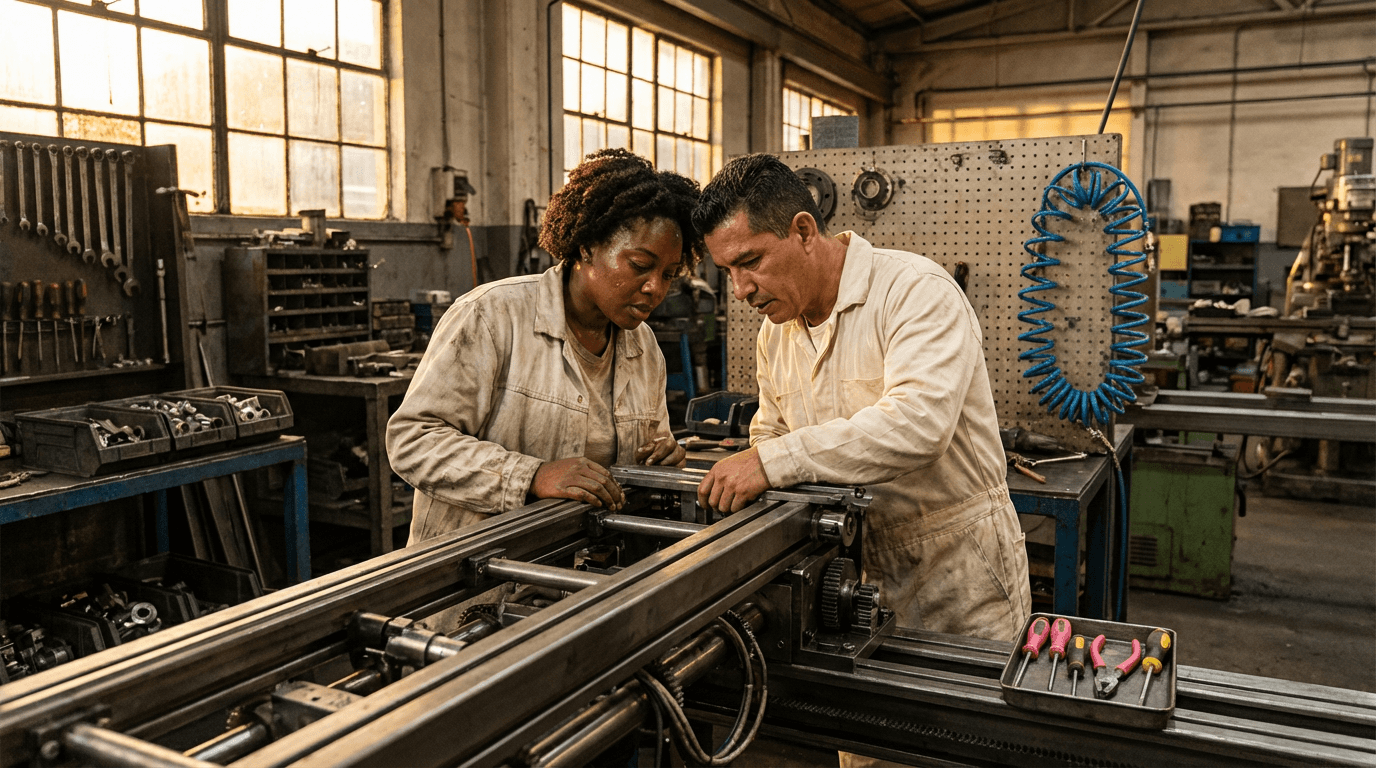
This course provides practical training in assembling, aligning, and maintaining conveyor systems, focusing on safety, troubleshooting, and preventive maintenance to ensure reliable industrial operations.
from 4 to 360h flexible workload
valid certificate in your country
What will I learn?
The Industrial Mechanic and Assembler Course equips you with hands-on, step-by-step skills to put together, line up, and start up conveyor systems with full confidence. You will grasp the basics of components, accurate measuring, torque handling, and lockout/tagout procedures. Gain practice in sorting out issues like shaking, misalignment, excess heat, and bolt problems, then create a strong plan for routine upkeep to cut down on stoppages and make equipment last longer.
Elevify advantages
Develop skills
- Accurate conveyor putting together: make frames straight, line up rollers, apply torque to fasteners.
- Drive system installation: fix motors in place, connect couplings, tighten belts and chains quickly.
- Shaking and problem spotting: identify odd sounds, poor alignment, and bearing faults.
- Safe startup: go through checklists, check emergency stops, record shaking, heat, and noise.
- Routine maintenance scheduling: plan for oiling, checks, and spare parts.
Suggested summary
Before starting, you can change the chapters and workload. Choose which chapter to start with. Add or remove chapters. Increase or decrease the course workload.What our students say
As suas aulas são perfeitas. Adquiri o pacote de um ano e, finalmente, tenho a oportunidade de acompanhar diversos temas do meu interesse sem precisar mudar de plataforma... agradeço por tudo o que fazem, já recomendei vocês a outras pessoas...

Giulio CarloAluno de Marketing Digital
Eu gosto de como as lições são direto ao ponto e como eu consigo alterar capítulos e pular conteúdos que não preciso.

Mariana FerresAluna de Fotografia
Gosto do conteúdo e do modo de apresentação e transcrição de vídeos, o que acelera o processo!

Luciana AlvarengaAluna de Design de Unhas
A plataforma é rápida, simples de usar. A diversidade de conteúdo e os vídeos complementares ajudam muito no aprendizado.

Giulio CarloAluno de Engenharia de Prompt
FAQ
Who is Elevify? How does it work?
Do the courses have certificates?
Are the courses free?
What is the course workload?
What are the courses like?
How do the courses work?
What is the duration of the courses?
What is the cost or price of the courses?
What is an EAD or online course and how does it work?
PDF Course