Agricultural Drones (UAS) for Crop Monitoring Course
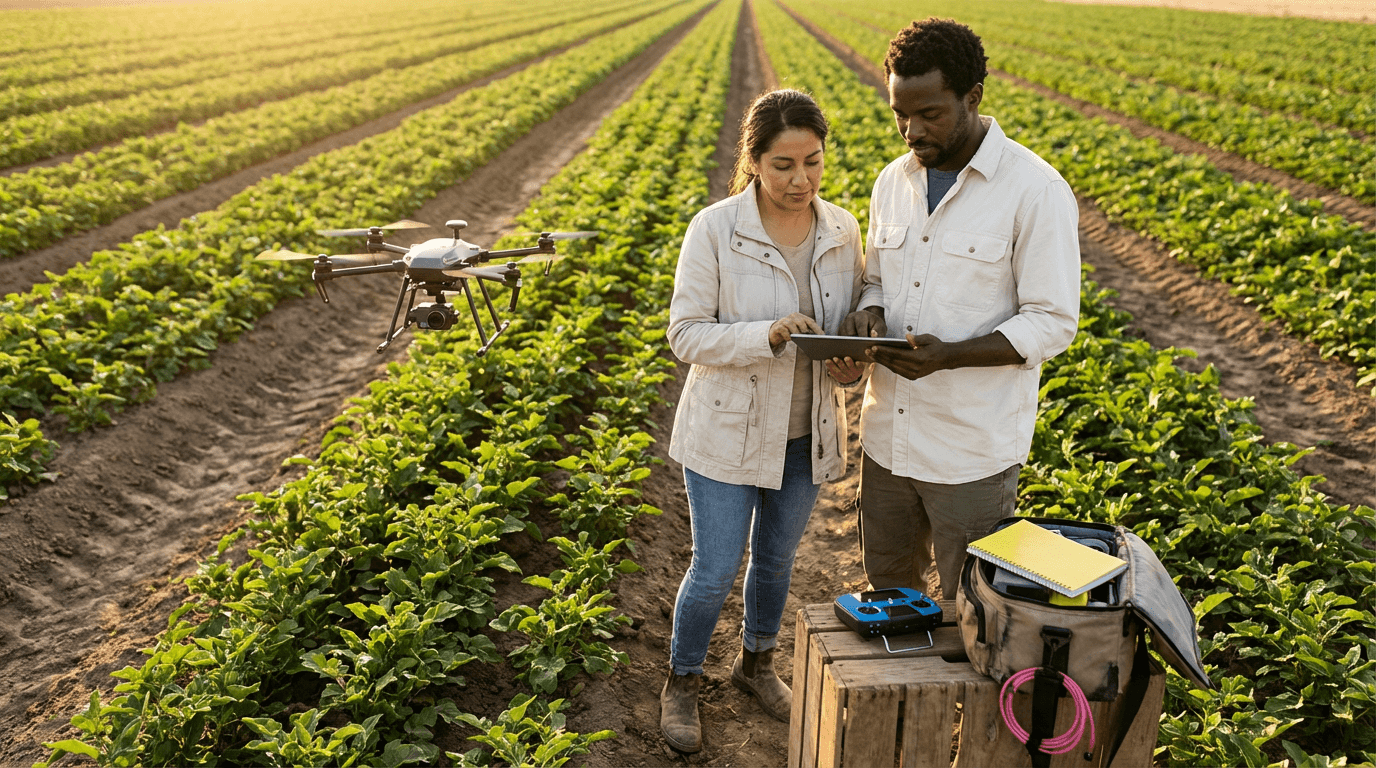
Master using agricultural drones for monitoring crops. Learn to plan flights, pick sensors, analyse NDVI and thermal data, process imagery into maps, and create irrigation and fertiliser plans that raise yields, lower costs, and link with farm systems for better management.
from 4 to 360h flexible workload
valid certificate in your country
What will I learn?
Gain skills in planning drone flights, selecting sensors, and capturing imagery for crops like maize and lucerne. Process data into precise maps, analyse indices for moisture and nutrients, validate in fields, and produce reports, variable rate prescriptions, and workflows for data-driven farm choices over seasons.
Elevify advantages
Develop skills
- Plan drone flights for crops: optimise paths, times, and sensors for quick field checks.
- Process drone images: build precise orthomosaics, height models, and crop maps.
- Analyse NDVI, NDRE, thermal maps to spot water and nutrient issues swiftly.
- Convert maps to variable rate plans and practical irrigation, fertiliser strategies.
- Share drone findings via reports, cost-benefit figures, and priority actions.
Suggested summary
Before starting, you can change the chapters and workload. Choose which chapter to start with. Add or remove chapters. Increase or decrease the course workload.What our students say
Your classes are perfect. I purchased the one-year package and finally have the opportunity to follow various topics of my interest without needing to switch platforms... I thank you for everything you do, I've already recommended you to other people...

Giulio CarloDigital Marketing Student
I like how the lessons are straight to the point and how I can switch chapters and skip content I don't need.

Mariana FerresPhotography Student
I like the content and the way videos are presented and transcribed, which speeds up the process!

Luciana AlvarengaNail Design Student
The platform is fast, simple to use. The diversity of content and complementary videos really help with learning.

André FelipePrompt Engineering Student
FAQ
Who is Elevify? How does it work?
Do the courses have certificates?
Are the courses free?
What is the course workload?
What are the courses like?
How do the courses work?
What is the duration of the courses?
What is the cost or price of the courses?
What is an EAD or online course and how does it work?
PDF Course