Lesson 1First aid and survival kit contents: seasickness remedies, hypothermia management, trauma supplies, CPR basicsOutline recommended first aid and survival gear for coastal boating, including seasickness fixes, hypothermia prevention, trauma supplies, CPR basics, and how to sort, waterproof, and check de onboard kit regular.
Core contents of a coastal first aid kitManaging seasickness and dehydration at seaRecognizing and treating hypothermia earlyBleeding control, dressings, and splintingCPR basics and emergency response sequenceLesson 2Personal flotation devices: types, correct sizing for adults and children, wear policy while underwayCover French rules for lifejackets, buoyancy aids, and harnesses, including buoyancy ratings, right sizing for adults and children, check routines, and wear policy for PFDs underway in different sea and weather.
French buoyancy categories 50N, 100N, 150NChoosing PFDs for adults, children, and infantsInflatable versus foam lifejackets at seaFitting, adjustment, and crotch strap useInspection, servicing, and CO₂ cylinder checksLesson 3Visual distress signals: hand flares, parachute flares, orange smoke, conditions for use and shelf lifeDetail types of visual distress signals, legal carry for 0–6 NM in France, right deployment ways, safe handling, storage, and how to match flare use with radio calls and search rescue services.
French legal flare requirements up to 6 NMHand flares: range, handling, and burn hazardsParachute rockets: firing angles and driftOrange smoke for daytime location markingStorage, expiry dates, and disposal of pyrotechnicsLesson 4French legal mandatory safety equipment list for coastal navigation: lifejackets, distress signals, fire extinguisher, sound signals, navigation lights (reference to French regulations)Summarize French legal safety gear for coastal navigation up to 6 NM, including lifejackets, distress signals, fire extinguishers, sound signals, and lights, with guide on checks and proof of compliance.
French coastal navigation safety categoriesMinimum lifejacket and buoyancy requirementsRequired distress signals and fire equipmentSound signaling and navigation light rulesRecordkeeping, inspections, and onboard checksLesson 5Fire safety on small motorboats: extinguisher types (A/B/C), placement, maintenance and inspectionDetail fire risks on small motorboats, extinguisher classes and ratings, right placement, check routines, and crew training for engine, fuel, and galley fires, including shutdown and evacuation steps.
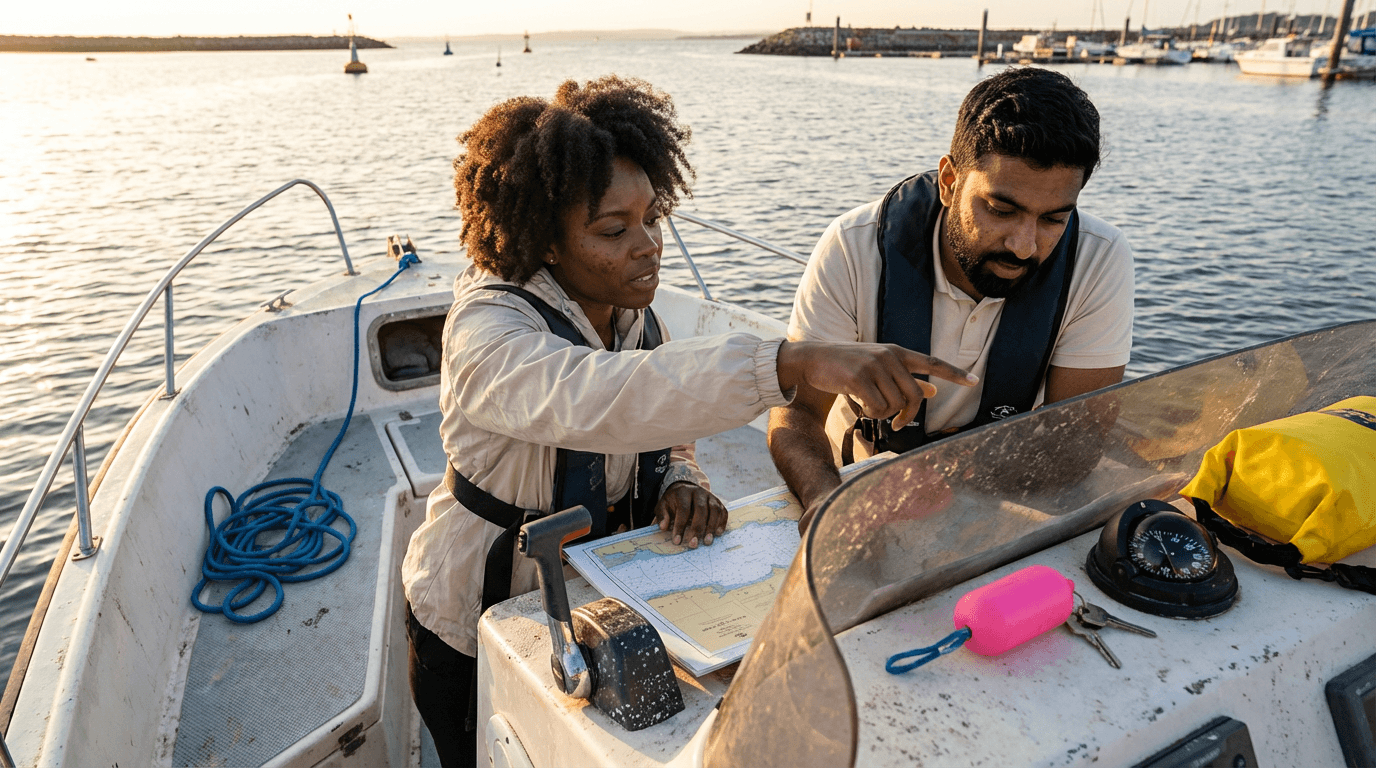
Common fire causes on small powerboatsExtinguisher classes A, B, C and ratingsNumber, size, and placement of extinguishersInspection, servicing, and pressure checksEngine shutdown and fuel isolation in a fireLesson 6Charts, publications and tools considered essential: paper chart folio for area, pilot book excerpts, tide tables, compass, parallel rulers, handheld GPS redundancyExplain essential charts, publications, and tools for safe coastal navigation, focusing on extra, accuracy, and real use when electronics fail, and how to keep all navigation data fresh for French waters.
Required paper charts for 0–6 NM coastal zoneUsing pilot books and local notices to marinersTide tables, tidal streams, and height calculationsMagnetic compass checks and deviation controlParallel rulers, dividers, and backup handheld GPSLesson 7Emergency location devices: PLB/EPIRB vs handheld VHF DSC, signaling mirror, flares storage and registrationCompare PLBs, EPIRBs, and handheld VHF DSC radios for distress alerting, plus mirrors and flares, explaining registration, programming, battery life, mounting, and link with other onboard safety systems.
EPIRB types, coding, and registration in FrancePLB use for crew and personal overboard safetyHandheld VHF DSC setup, MMSI, and test callsUsing mirrors, lights, and non-pyro signalsBattery life, self-tests, and mounting optionsLesson 8Navigation lights and day shapes: port/starboard, masthead, all-round lights for small powerboatsExplain navigation lights and day shapes for small powerboats, including right color, arcs, placement, and switching, plus common errors, upkeep, and how to stay visible and proper in coastal night work.
Required lights for power-driven vessels under wayAnchor lights and optional all-round white lightsSide lights, masthead, and stern light sectorsDay shapes for anchoring and restricted abilityLamp, LED, wiring checks, and lens cleaningLesson 9Sound signaling devices: horn, whistle, bell rules and practical useCover mandatory and recommended sound signaling gear, including horn, whistle, and bell, with French and COLREGS rules, upkeep, and real use for maneuvering, warning, and low visibility spots.
Legal sound signal requirements for small craftTypes of horns and whistles for coastal boatsBell use at anchor and in restricted visibilityStandard maneuvering and warning sound signalsMaintenance and regular testing of sound devicesLesson 10Anchoring equipment: anchor types suitable for small coastal bays, chain/rope scope calculation, spare rode, anchor bridleDescribe anchoring systems for coastal bays, covering anchor types, chain and rope combos, scope calculation, setting and retrieving ways, and value of spare rode, snubbers, and bridles for small motorboats.
Anchor types for sand, mud, and mixed bottomsChain, rope, and combined rode configurationsScope calculation for depth and conditionsSetting, checking, and breaking out the anchorSpare anchor, backup rode, and anchor bridle useLesson 11Bilge and dewatering equipment: manual bilge pump, electric bilge pump, buckets, patching kitsExplain bilge and dewatering systems on small motorboats, including manual and electric pumps, buckets, and emergency patching kits, with focus on fitting, testing, and response for flooding.
Manual bilge pump capacity and placementElectric bilge pumps, wiring, and float switchesBilge strainers, non-return valves, and clogsUsing buckets and sponges for rapid dewateringTemporary hull patching and leak control kits