Lesson 1Cold-weather specific checks: battery condition, diesel heaters, hose stiffness, anti-freeze measures for seals and filtersDis cover cold weather risks to refueler vehicles and fuel systems, like battery performance, diesel heater readiness, hose flexibility, and protecting seals, filters, and parts from freezing wey fit spoil safe fuel delivery.
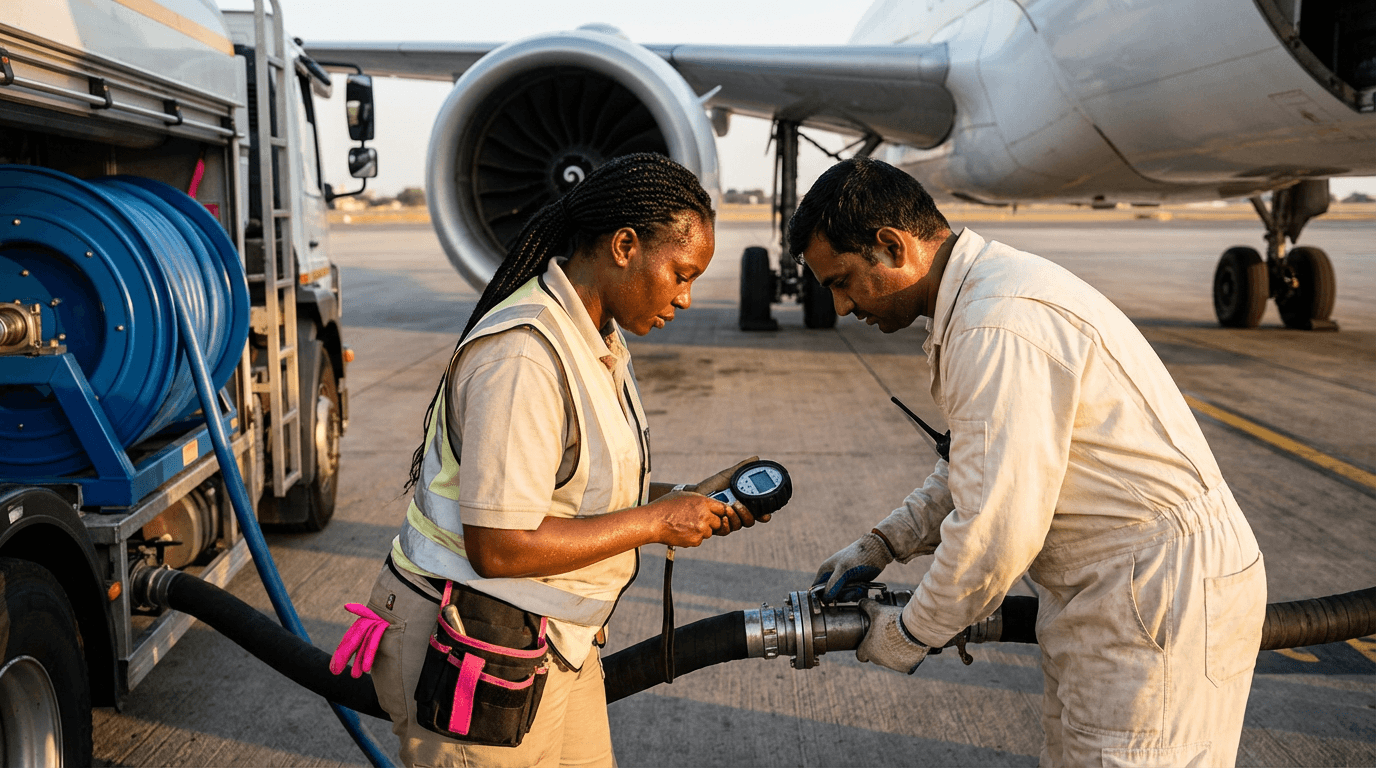
Assess battery health and cold-cranking capacityVerify diesel heater operation and fuel supplyCheck hose stiffness and risk of crackingProtect seals, O-rings, and gaskets from freezingCold-weather additives and anti-gel measuresLesson 2Refueler systems: hose integrity, couplings, reels, nozzles, meters and calibration verificationDis focus on refueler fuel delivery systems, including hoses, couplings, reels, nozzles, meters, and calibration verification, and explain inspection steps to make sure integrity, accuracy, and no-leak fueling operations.
Inspect hose outer cover and reinforcementCheck couplings, seals, and swivel jointsTest hose reels, rewind, and locking devicesNozzle condition, bonding, and deadman testsMeter accuracy checks and seal verificationLesson 3Documentation and paperwork: load manifests, fuel quality certificates, delivery notes, maintenance logs, authorization formsDis describe da required operational documents for each fueling task, like load manifests, fuel quality certificates, delivery notes, maintenance records, and authorization forms, and how to review, complete, and store dem safe.
Verify load manifests and uplift calculationsCheck fuel quality certificates and batch dataComplete delivery notes and customer sign-offUpdate maintenance and defect log entriesControl, filing, and retention of recordsLesson 4Human factors and time-pressure mitigation: fatigue checks, communication with dispatcher, prioritization under busy turnaroundDis address human factors wey affect pre-operations checks, including fatigue, time pressure, communication with dispatch, and task prioritization, to cut down errors during busy turnarounds and keep safety margins.
Recognizing fatigue and reduced vigilanceBriefing with dispatcher on workloadPrioritizing critical safety checks firstUse of cross-checks and peer verificationStrategies to resist unsafe time pressureLesson 5Onboard safety equipment: portable and fixed fire extinguishers, spill kits, PPE (cold-weather gear, gloves, eye protection), signageDis outline required onboard safety equipment for refuelers, like fire extinguishers, spill kits, PPE, and safety signage, and explain inspection, serviceability checks, and correct placement for quick access in emergencies.
Inspect portable fire extinguishers and sealsCheck fixed fire systems and activation pointsVerify spill kit contents and absorbent stocksConfirm PPE availability and correct sizingSafety signage, labels, and placard conditionLesson 6Daily vehicle inspection checklist: engine, brakes, lights, tires, cabin controls, fuel pump operationDis detail da structured daily inspection of refueler vehicles, focusing on engine, brakes, steering, lights, tires, cabin controls, and fuel pump operation to ensure roadworthiness and safe ramp performance before entering movement area.
Engine oil, coolant, and visible leak checksBrake, steering, and parking brake functionLights, beacons, and audible warning devicesTire condition, inflation, and wheel securityCabin controls, mirrors, and visibility checksLesson 7Inspection and isolation of returned refueler: steps to verify truck after returning from another stand before next assignmentDis describe how to inspect and, if needed, isolate a refueler coming back from another stand, verifying cleanliness, fuel system status, documentation, and safety equipment before assigning to next operation.
Confirm previous fueling task completionCheck for leaks, spills, or fuel odorsVerify filter status and water drain recordsReview trip log and any defect reportsIsolation procedures if issues are detectedLesson 8Filtration and water-separation systems on truck: bowl/selector valves, coalescers, filter elements, differential pressure indicatorsDis explain filtration and water-separation components on refueler trucks, including bowls, selector valves, coalescers, filter elements, and differential pressure indicators, and how to inspect dem to keep fuel clean and prevent contamination.
Identify filter vessels and water separator layoutInspect sight bowls and drain water correctlyCheck selector valves for correct positionAssess coalescer and filter element conditionInterpret and record differential pressure readingsLesson 9Pre-shift verification routines and timing: frequency of checks (start of shift, between stands), checklists and sign-off practicesDis cover structured pre-shift and in-shift verification routines, including timing of checks, use of standardized checklists, documentation, and sign-off practices to ensure accountability and consistent safety performance.
Start-of-shift full vehicle and system checkBetween-stand quick turnaround inspectionsUse of standardized checklists and formatsSupervisor review and electronic sign-offHandling defects found during routine checksLesson 10Grounding and bonding equipment: cable condition, clamps, testing procedures and continuity checksDis explain grounding and bonding principles for refuelers, focusing on cable integrity, clamp condition, and continuity testing, and describe inspection routines wey prevent static discharge during fueling on da ramp.
Visual inspection of grounding cable insulationClamp jaw condition and spring tensionContinuity testing and resistance limitsStorage, routing, and chafing preventionActions when grounding equipment is unserviceable