Absolute Dating Techniques Course
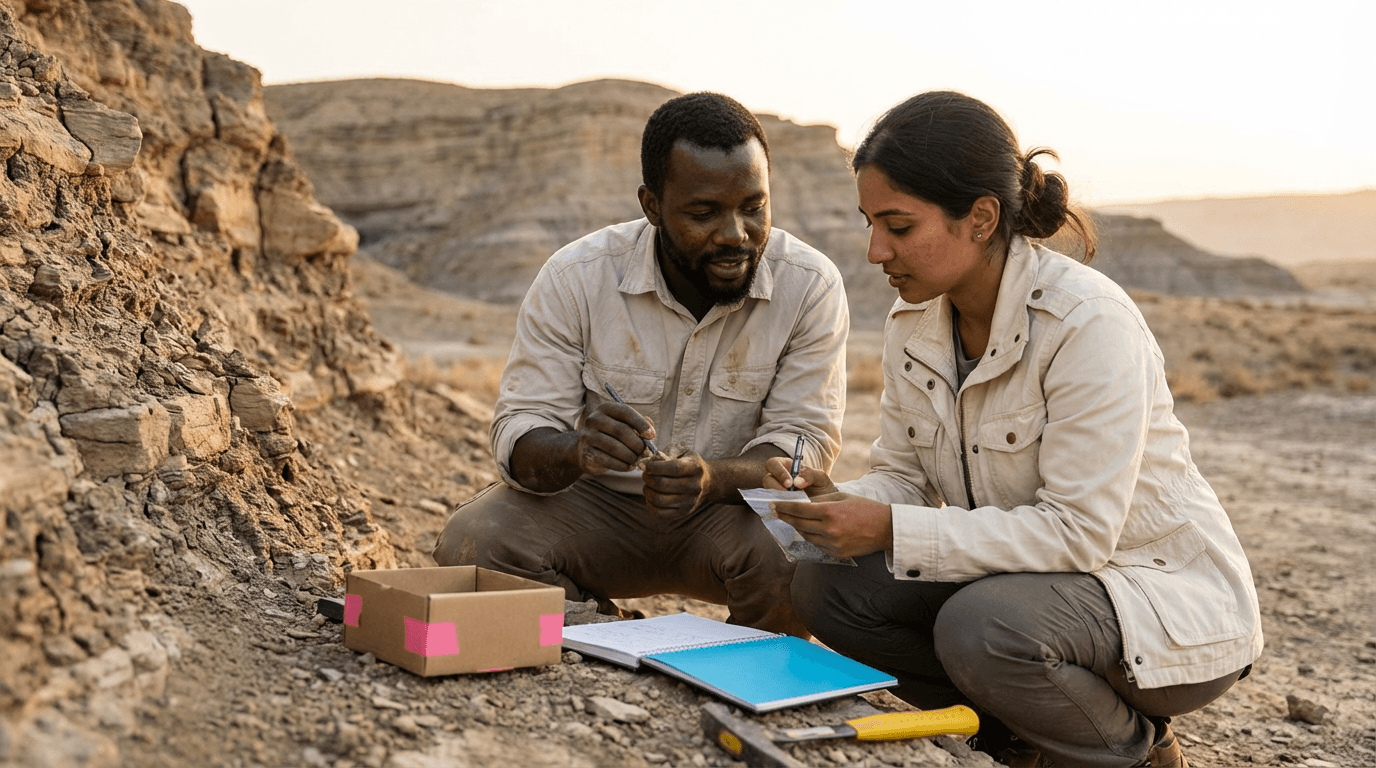
Gain mastery in absolute dating methods to create reliable geological timelines. Explore radiocarbon, luminescence, U-Pb, Ar-Ar, and tephrochronology techniques, integrate results from multiple methods, and minimize uncertainties in practical geography and geology applications. This course equips you with essential tools for accurate age determination in diverse geological settings.
from 4 to 360h flexible workload
valid certificate in your country
What will I learn?
This course provides practical skills for confidently dating basalts, fluvial sands, tuffs, lake sediments, shelter deposits, and granitoids. You will learn to select and apply K-Ar, Ar-Ar, U-Pb, radiocarbon, luminescence, fission-track, and (U-Th)/He methods appropriately, prevent sampling and lab mistakes, validate results through cross-checking, and construct reliable chronological frameworks with precise uncertainty assessments.
Elevify advantages
Develop skills
- Design multi-method dating strategies using optimal radiocarbon, Ar-Ar, U-Pb, and OSL techniques.
- Properly collect and process samples like charcoal, bones, ash, basalts, and sediments.
- Identify and fix dating issues such as contamination, reworking, diagenesis, and inheritance.
- Develop strong chronologies by combining stratigraphy, paleomagnetism, and Bayesian models.
- Clearly quantify and report age uncertainties for professional geochronology tasks.
Suggested summary
Before starting, you can change the chapters and workload. Choose which chapter to start with. Add or remove chapters. Increase or decrease the course workload.What our students say
Your classes are perfect. I purchased the one-year package and finally have the opportunity to follow various topics of my interest without needing to change platforms... I thank you for everything you do, I've already recommended you to other people...

Giulio CarloDigital Marketing Student
I like how the lessons are straight to the point and how I can switch chapters and skip content I don't need.

Mariana FerresPhotography Student
I like the content and the way videos are presented and transcribed, which speeds up the process!

Luciana AlvarengaNail Design Student
The platform is fast, simple to use. The diversity of content and complementary videos help a lot with learning.

André FelipePrompt Engineering Student
FAQ
Who is Elevify? How does it work?
Do the courses have certificates?
Are the courses free?
What is the course workload?
What are the courses like?
How do the courses work?
What is the duration of the courses?
What is the cost or price of the courses?
What is an EAD or online course and how does it work?
PDF Course