


from 4 to 360h flexible workload
valid certificate in your country
What will I learn?
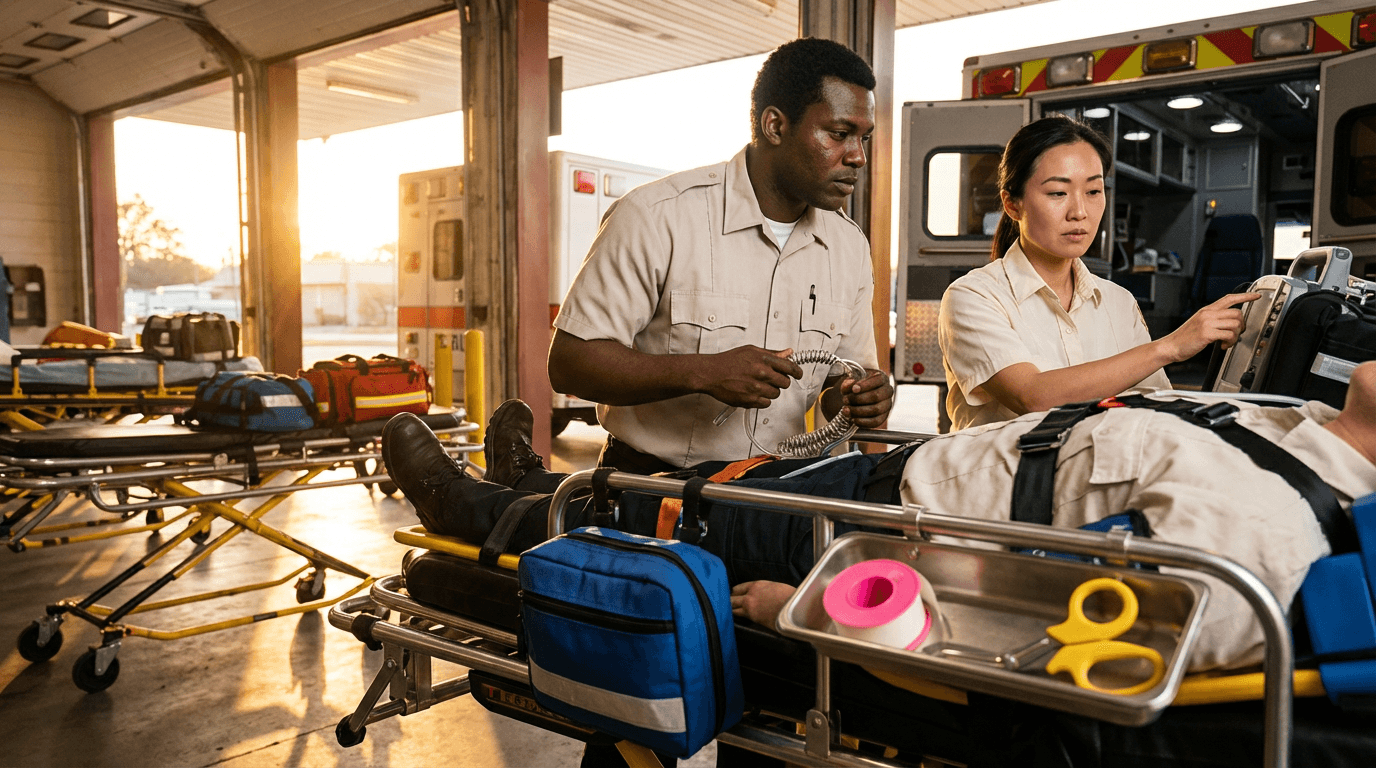
The Medical Emergency Course provides targeted, evidence-based training to enhance quick assessment, resuscitation, and crisis handling skills. You will learn to follow ERC and AHA guidelines, excel in high-performance BLS/ALS, trauma triage, hemorrhage control, anaphylaxis treatment, safe medication use, and organized communication for smooth handovers and ongoing improvement in critical scenarios.
Elevify advantages
Develop skills
- High-impact resuscitation: apply ERC/AHA algorithms, tools, and quality metrics quickly.
- Prehospital pharmacology: master adult emergency drugs, dosing, and safe administration routes.
- Trauma and hemorrhage control: perform ABCDE assessment, stop bleeding, and select rapid transport options.
- Anaphylaxis management: identify early signs, administer IM epinephrine, and secure the airway promptly.
- Critical communication: lead teams, conduct handovers using SBAR/MIST, and document high-risk incidents.
Suggested summary
Before starting, you can change the chapters and workload. Choose which chapter to start with. Add or remove chapters. Increase or decrease the course workload.What our students say
Your classes are perfect. I purchased the one-year package and finally have the opportunity to follow various topics of my interest without needing to change platforms... I thank you for everything you do, I've already recommended you to other people...

Giulio CarloDigital Marketing Student
I like how the lessons are straight to the point and how I can switch chapters and skip content I don't need.

Mariana FerresPhotography Student
I like the content and the way videos are presented and transcribed, which speeds up the process!

Luciana AlvarengaNail Design Student
The platform is fast, simple to use. The diversity of content and complementary videos help a lot with learning.

André FelipePrompt Engineering Student
FAQ
Who is Elevify? How does it work?
Do the courses have certificates?
Are the courses free?
What is the course workload?
What are the courses like?
How do the courses work?
What is the duration of the courses?
What is the cost or price of the courses?
What is an EAD or online course and how does it work?
PDF Course