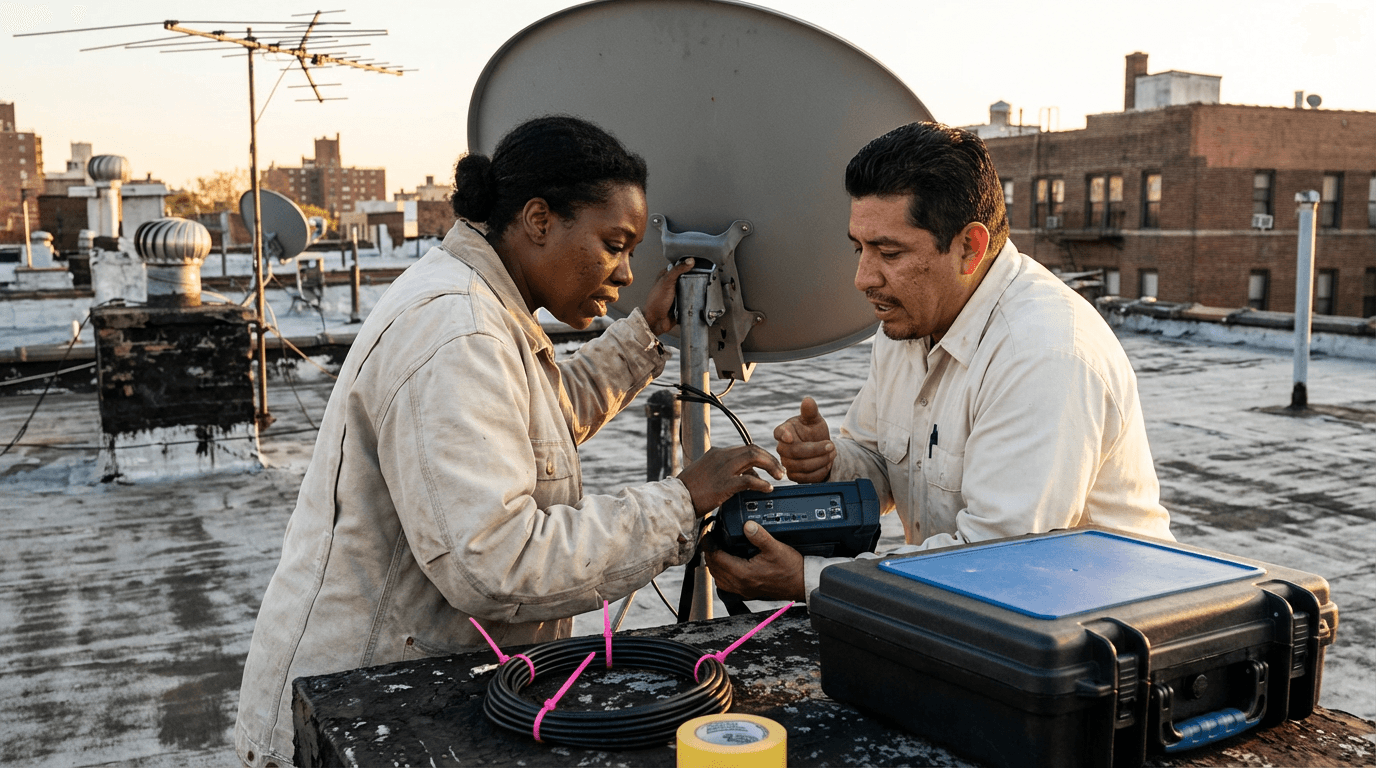
Lesson 1Line-of-sight check: spotting trees, houses, roof sides, and how leaves change with seasonsLearn to check line-of-sight by finding trees, houses, roof sides, and other things blocking. You go think about the satellite path, where to put the dish, and how leaves change with seasons that can mess up signal for long time.
Using sighting tools to trace satellite pathsIdentifying current physical obstructionsEstimating seasonal foliage growth impactComparing alternative dish mounting spotsDocumenting LOS risks in site notesLesson 2Before-work check: papers, permissions, customer okay, and site pictures for starting recordBefore you start, make sure papers, permissions, and customer info right. This part explain how to check job details, take starting pictures, and note any damage or dangers to protect both the worker and the customer.
Reviewing work orders and job scopeConfirming customer identity and expectationsChecking permits and property approvalsTaking baseline photos of site conditionsRecording pre-existing damage and hazardsLesson 3Checking coax cables, joins, splitters, multi-switches, and inside endsThis part cover checking coax lines, joins, splitters, and multi-switches for breaks, water, and signal drop. You go also look at inside ends, labeling, and holding tight to make sure it last long.
Identifying kinks, crushing, and UV damageChecking connectors for corrosion and loosenessEvaluating splitters and multiswitch placementInspecting indoor wall plates and terminationsLabeling cable paths for future serviceLesson 4Using tools and apps for first azimuth/elevation/skew check (satellite find websites, compass apps)Learn to use satellite find sites and phone apps to get azimuth, elevation, and skew numbers. This part cover map matching, magnet north vs true north, and checking readings with what you see on site.
Choosing reliable satellite lookup websitesUsing compass and inclinometer appsUnderstanding magnetic vs true northChecking skew values for selected satellitesCross-checking app data with field realityLesson 5Eye check of dish, holder, pole, and wall/roof supportsDo a good eye check of the dish, holder, pole, and supports. Learn to find wrong alignment, loose parts, rust, and water harm that could make it unsafe, wrong pointing, or weak system over time.
Checking dish alignment and visible warpingInspecting mast plumb and rigidityExamining wall and roof bracket anchoringIdentifying rust, cracks, and metal fatigueAssessing sealant and water intrusion pointsLesson 6Personal safety gear and PPE list: belts, ties, hard hats, hand covers, and foot wearUnderstand the safety gear you need for satellite jobs, like belts, ties, hard hats, hand covers, and foot wear. Learn to use a PPE list to check condition, fit, and rules before each job.
Selecting fall arrest harnesses and lanyardsChoosing anchors and lifelines for roofsUsing helmets, gloves, and eye protectionSelecting slip-resistant, insulated footwearCompleting and storing PPE checklistsLesson 7Roof and balcony get-there planning: ladder spots, fall dangers, and help plansPlan safe way to get to roofs and balconies by picking steady ladder spots, control fall dangers, and prepare help ways. Learn to check surfaces, tie points, weather risks, and local rules before you climb.
Selecting safe ladder locations and anglesSecuring ladders to structures and anchorsAssessing roof surfaces and load capacityIdentifying fall hazards and exclusion zonesPlanning rescue routes and emergency accessLesson 8Checking dish state: mirror, feedhorn/LNB, bolts, rust, and strong buildCheck the state of the mirror, feedhorn or LNB, and all bolts. This part cover rust, sun damage, water enter, and weak build that may need fix, new part, or better tie down.
Inspecting reflector surface for dentsChecking LNB housing and weather sealsTesting LNB arm rigidity and alignmentEvaluating bolts, nuts, and clamp tightnessDeciding when replacement is requiredLesson 9Electric safety and ground checks: near power lines, lightning guard, and tie needsThis part explain how to spot electric dangers near satellite spots, like power lines and service poles. Learn ground, tie, and lightning guard basics to keep the system and people safe.
Maintaining clearances from overhead linesIdentifying service entrances and metersVerifying dish and mast grounding pathsChecking bonding to building grounding systemAssessing surge and lightning protection