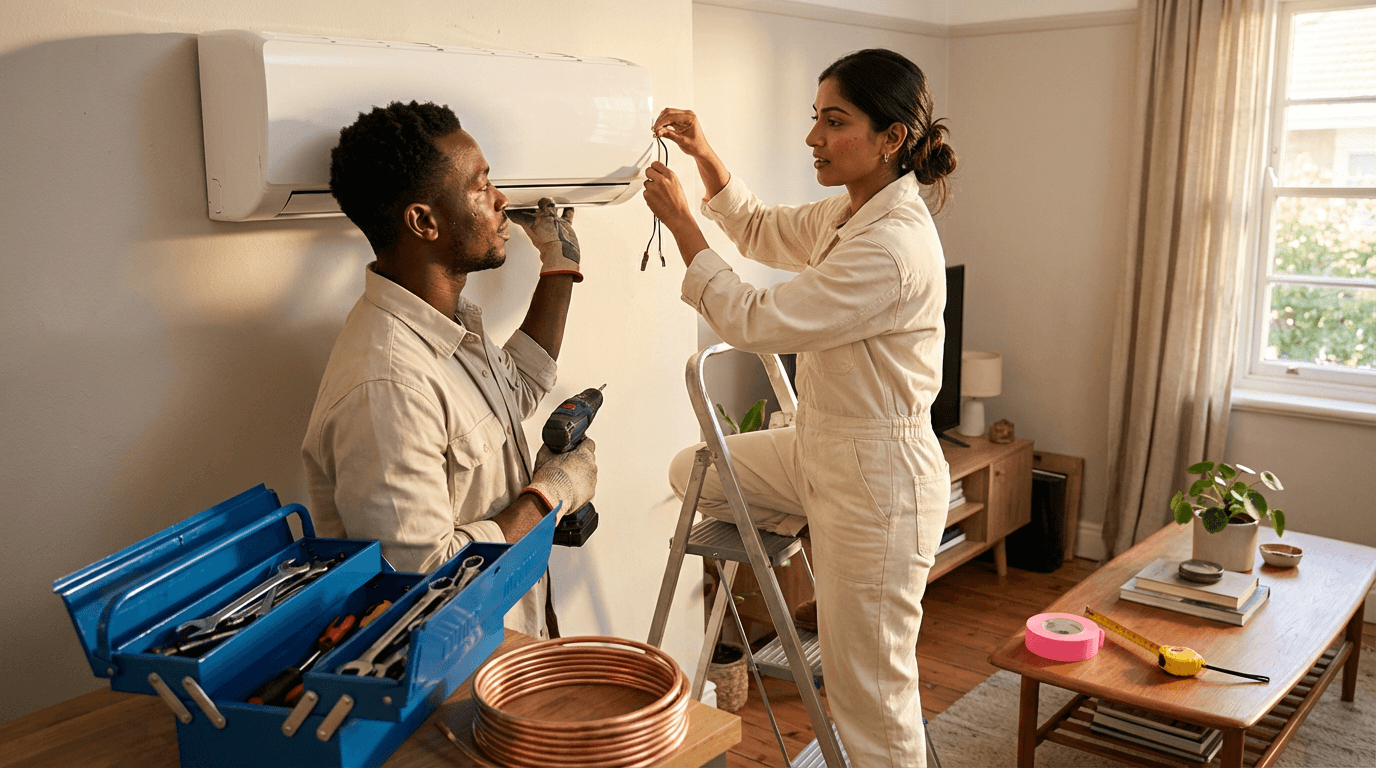
Lesson 1Inside Unit Mount: Place Heights, Cold Gas Line Chase Enter, Water Tray DirectionExplain right inside unit place for comfort, fix access, and water out. Detail line set path, wall pass, and water tray direction to stop leaks, noise, and future fix issues.
Pick best wall and mount heightPlan cold gas line chase and pathDrill and seal wall passSet and level inside mount plateDirect and test water trayLesson 2Power Connections, Phase Checks, and Safety Locks Before Power OnDetail safe power ends, wire size, and ground. Include phase turn checks, control wiring, and check safety locks before power on di split system.
Check supply power and breaker sizeEnd power and ground wiresConnect control and talk wiringCheck phase turn on three-phase unitsTest safety locks and fusesLesson 3Write Settings and Hand Over Basic Work Notes to OwnerFocus on write final settings, control parts, and test results. You go ready owner handover notes, basic work instructions, and fix reminders for pro close.
Record final control and timer settingsLog pressures, temperatures, and testsMake basic user work guideExplain filter clean and fixGet owner sign-off and warranty papersLesson 4Air Out and Empty: Pump Pick, Target Air Level, Wet Remove WaysGuide you through pump pick, hose setup, and reach target air. Stress deep empty, wet remove, micron gauge use, and decay tests to confirm system dry and tight.
Pick right air pump sizeConnect hoses and core remove toolsPull air to target micron levelDo standing air decay testSee signs of wet or leaksLesson 5Leak Find and Pressure Test: Dry Nitrogen Pressure Test, Electric Leak Finder UseExplain how to pressure with dry nitrogen, separate parts, and watch pressure decay. You go learn safe regulator use, soap water ways, and electric leak finder apply.
Set up nitrogen bottle and regulatorPressure system to test pressure limitsCheck joints with soap waterUse electric leak finder rightRecord test pressure and timeLesson 6Wall Support and Mount Frame Put: Level, Anchor Pick for Brick or Stud WallsDetail how to put wall supports and frames for strong hold. Focus on level, anchor choice for brick or stud walls, load paths, rust protect, and check pull-out strong and steady.
Check wall kind and load capacityChoose anchors for brick or studsMark, drill, and clean anchor holesLevel supports and tight fastenersCheck support line and strongLesson 7Start Sequence and Start Checks: Superheat/Subcool Measure, Steady Temperature Check, Water Out Test, Noise and Shake ChecksWalk through first start, including mode pick, superheat and subcool checks, and temperature steady. Also cover water out tests, noise, and shake check.
Follow maker start sequenceMeasure superheat and subcoolCheck supply and return temperaturesTest water out workCheck work noise and shakeLesson 8Site Ready and Pre-Put Checks: Tools, Permits, Clear Spaces, Materials ListCover site ready before work start, including tool pick, permit check, and safe clear spaces. You go also build materials list to avoid delay and make sure code-follow, good put.
Check site enter and work area safetyConfirm permits, codes, and utility placesCheck inside and outside unit clear spacesReady full tools and materials listCheck building for mount fitLesson 9Outside Unit Put: Base Pad or Supports on Outside Wall, Anti-Shake Pads, Clear and Air Flow DistancesDescribe outside unit place on pads or wall supports, with mind to clear spaces, air flow, shake control, and fix access. Include snow, flood, and noise thoughts for long time strong.
Pick base pad or wall support systemSet needed fix and air flow clear spacesPut and place anti-shake padsLevel unit and hold to supportsPlan for water out, snow, and floodLesson 10Cold Gas Line Put: Cut, Clean Edge, Bend, Flare vs Weld Work Flow, Torque and Seal WaysCover cut, clean edge, and bend copper lines without bend tight. Compare flaring and weld work flows, torque values, and seal ways to make sure leak-free, code-follow cold gas pipe.
Measure, cut, and clean edge copper pipeUse bend tools to avoid tight bendsPrep and make true flaresApply torque to flare nuts rightCover and support line sets properLesson 11Open Service Valves, Cold Gas Release Way and Handle Captive Cold Gas SystemsExplain open service valves and release factory charge without bring dirty. Cover captive cold gas systems, valve stem handle, and write final work pressures.
Find service valves and capsBackseat and crack valves rightRelease captive cold gas safeCheck for leaks after open valvesRecord work pressures and temps