


FPV Drone Training
4.6/5
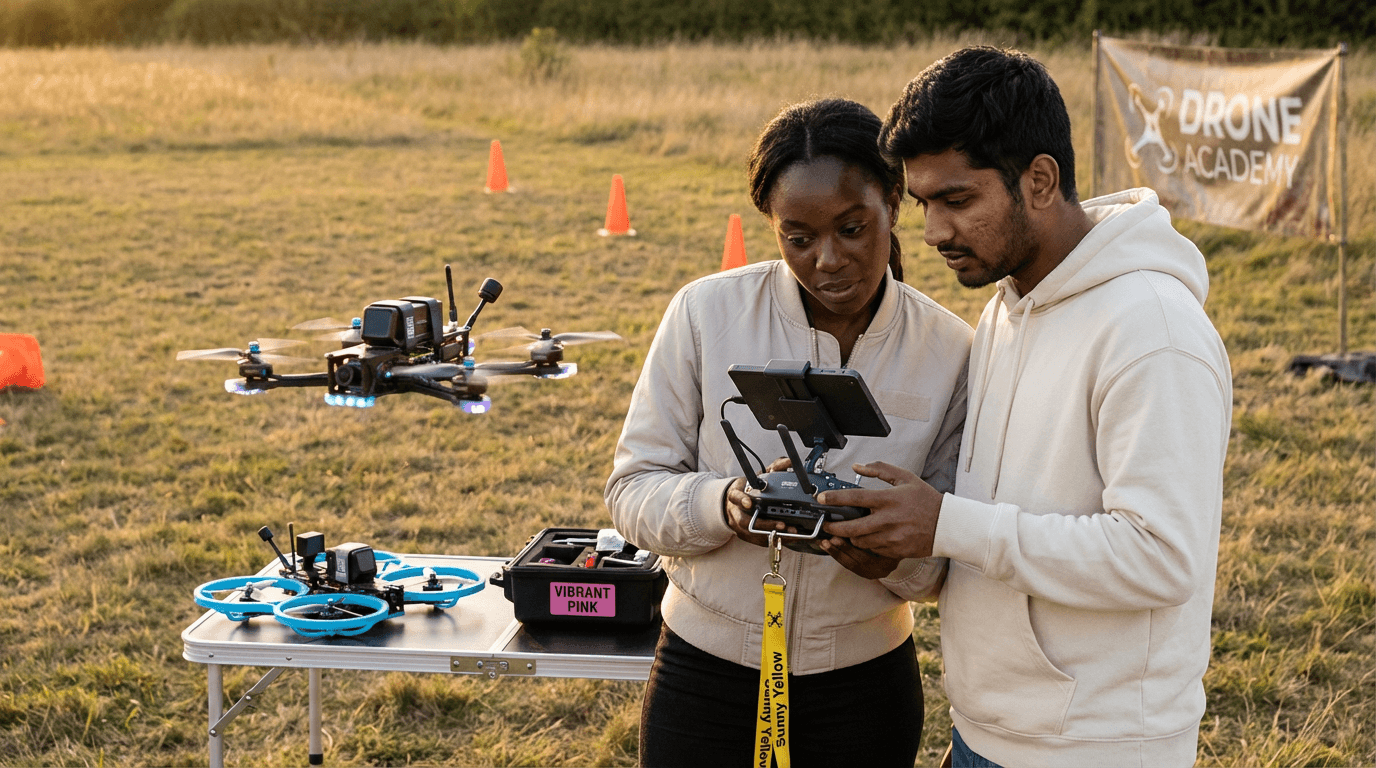
Gain mastery in FPV drone racing and cinematic flying through professional mission planning, precise tuning, strict safety measures, and smart gear choices. Develop skills to design racing tracks, optimize lap times, capture smooth cinematic footage, handle risks effectively, and review telemetry data for enhanced speed and reliability in FPV operations. This comprehensive program ensures you progress from beginner to confident pilot with practical, measurable results.
4.6 in the evaluation
from 4 to 360h flexible workload
valid certificate in your country
What will I learn?
This FPV Drone Training offers a quick, hands-on way to build strong FPV flying abilities. You will learn to pick racing lines, control throttle, and analyze performance using telemetry data. Then, you master planning cinematic shots, flying smoothly, and doing basic video editing. The course also includes choosing hardware, tuning setups, following safety rules, understanding regulations, reducing risks, and practicing in a structured manner to ensure steady improvement in every session.
Elevify advantages
Develop skills
- Master FPV racecraft by planning fast lines, optimizing laps, and reducing split times.
- Design cinematic FPV shots by storyboarding, flying smooth paths, and framing professional footage.
- Set up and tune pro FPV drones by selecting components, configuring firmware, and adjusting PIDs.
- Ensure drone safety and compliance by using checklists, managing airspace, and following FPV regulations.
- Review risks and performance by analyzing DVR and telemetry data, debriefing flights, and making improvements.
Suggested summary
Before starting, you can change the chapters and workload. Choose which chapter to start with. Add or remove chapters. Increase or decrease the course workload.What our students say
As suas aulas são perfeitas. Adquiri o pacote de um ano e, finalmente, tenho a oportunidade de acompanhar diversos temas do meu interesse sem precisar mudar de plataforma... agradeço por tudo o que fazem, já recomendei vocês a outras pessoas...

Giulio CarloAluno de Marketing Digital
Eu gosto de como as lições são direto ao ponto e como eu consigo alterar capítulos e pular conteúdos que não preciso.

Mariana FerresAluna de Fotografia
Gosto do conteúdo e do modo de apresentação e transcrição de vídeos, o que acelera o processo!

Luciana AlvarengaAluna de Design de Unhas
A plataforma é rápida, simples de usar. A diversidade de conteúdo e os vídeos complementares ajudam muito no aprendizado.

Giulio CarloAluno de Engenharia de Prompt
FAQ
Who is Elevify? How does it work?
Do the courses have certificates?
Are the courses free?
What is the course workload?
What are the courses like?
How do the courses work?
What is the duration of the courses?
What is the cost or price of the courses?
What is an EAD or online course and how does it work?
PDF Course