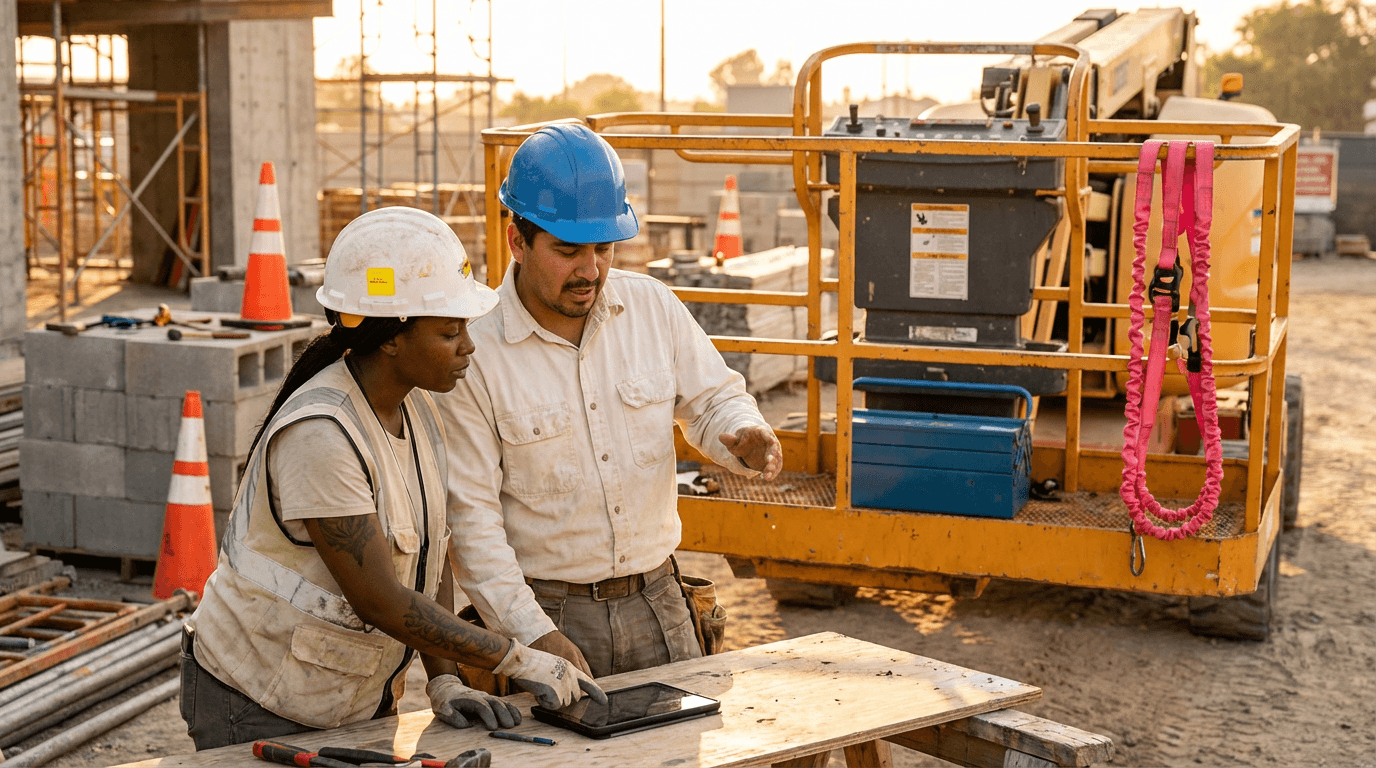
Lesson 1Finding maker’s inspection list and operator manualsThis part teaches how to find and understand the maker’s inspection list and operator manuals. Learners make sure they using the right papers, follow the steps needed, and know limits, warnings, and procedures for specific models.
Finding the right operator and service manualsReading warnings and limits for specific modelsFollowing the maker’s inspection listUnderstanding how often to inspectGetting digital or on-board papersLesson 2Powertrain and electrical checks: batteries, wiring, alternator, and isolation stepsThis part focuses on checking MEWP powertrain and electrical systems. Learners check batteries, engines, wiring, alternators, and isolation tools, making sure connections tight, charge good, and shutdown safe before using the platform.
Checking batteries, electrolyte, and terminalsLooking at engine oil, coolant, and fuel systemsInspecting wiring, connectors, and harness pathsTesting alternator output and charging signsUsing lockout and electrical isolation stepsLesson 3Hydraulic system checks: hoses, fittings, fluid levels, leaks, and cylinder strengthThis part explains how to check MEWP hydraulic systems for leaks, damage, and performance problems. Learners look at hoses, fittings, cylinders, and fluid levels, spotting conditions that could cause sudden moves, loss of support, or harm to environment.
Checking hoses, fittings, and quick couplersLooking at hydraulic fluid level and dirtExamining cylinders, rods, and seals for damageSpotting active leaks and seepage patternsHandling leaks and environmental controlsLesson 4Control functions test: main, backup, dead-man, and emergency loweringThis part details how to test all MEWP control functions before use. It includes main and backup controls, dead-man features, speed limits, and emergency lowering, making sure the machine responds right and stops safe under operator command.
Testing ground and platform main controlsChecking backup and extra control stationsLooking at dead-man controls and enable switchesConfirming proportional speed and smooth workTesting emergency stop and emergency loweringLesson 5Inspection records: filling pre-start forms, defect tagging, and detention/lockout stepsThis part covers how to fill MEWP pre-start inspection records right. Learners practice writing findings, tagging bad units, and using detention or lockout steps to stop use until repairs checked and recorded.
Filling daily pre-start inspection formsRecording defects, trends, and follow-up actionsUsing defect tags and out-of-service labelsDoing detention and lockout stepsStoring and keeping inspection recordsLesson 6Tires, tracks, axles, and outriggers: wear, pressure, alignment, and ground contact areasThis part addresses checking tires, tracks, axles, and outriggers. Learners check wear, pressure, alignment, and ground contact, making sure the MEWP has good support, grip, and stability on the planned surface before going up.
Checking tire wear, cuts, and sidewall damageLooking at tire pressure and foam-filled stateInspecting tracks, rollers, and tension systemsChecking axles, hubs, and steering partsVerifying outrigger pads and ground contactLesson 7Reporting and escalation: reporting bad equipment, stop-work power, and repair check papersThis part explains how to spot unsafe MEWP conditions, use stop-work power, and write defects. It covers reporting paths, isolation steps, repair checks, and recordkeeping to keep faulty units out of service.
Spotting critical and minor MEWP defectsUsing stop-work power and refusing unsafe equipmentInternal reporting paths and communication flowTagging, locking out, and removing units from serviceWriting repairs and return-to-service checksLesson 8Safety devices and emergency systems: alarms, interlocks, platform load cell, and descent systemsThis part covers checking and testing MEWP safety devices and emergency systems. Learners verify alarms, interlocks, load-sensing tools, and emergency descent features to make sure the platform stays safe during normal and unusual operations.
Testing tilt, overload, and motion alarmsVerifying interlocks and limit switchesChecking platform load-sensing and load cellsInspecting emergency stop and emergency loweringTesting manual descent and ground control systemsLesson 9Visual walk-around: boom, platform, controls, guardrails, and weld conditionsThis part guides a systematic MEWP walk-around check. Learners examine booms, platforms, controls, guardrails, welds, and structural parts, spotting cracks, bends, rust, and missing pieces before operating at height.
Inspecting boom sections and joint pointsChecking platform floor, entry gate, and toe boardsVerifying guardrails, midrails, and tie pointsInspecting visible welds and structural membersChecking decals, placards, and safety labels