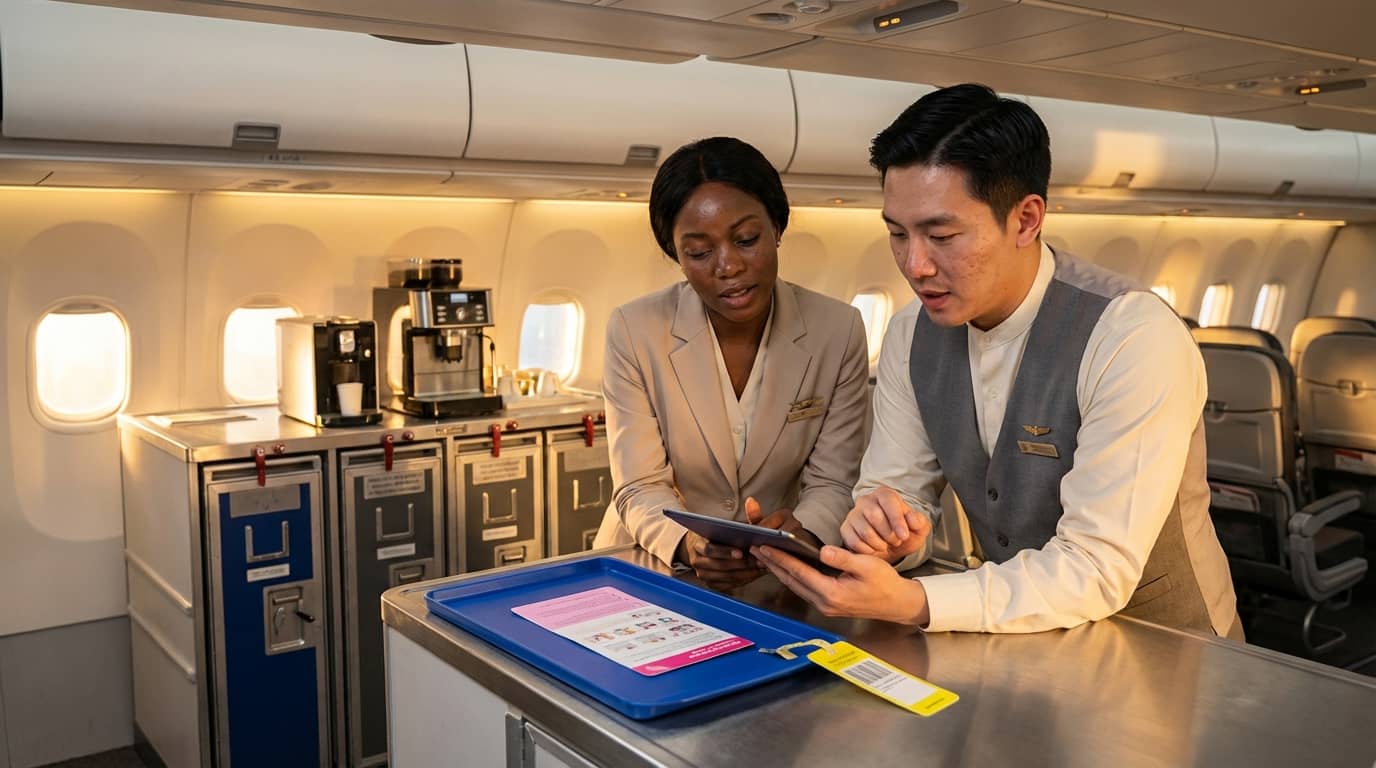
Lesson 1Communication techniques for nervous or confused passengers: de-escalation phrases, clear directions, empathy and repetitionThis lesson teaches ways to spot anxious or puzzled passengers, use soothing words, show understanding, repeat info, and use pictures to explain, easing worries and avoiding trouble.
Recognizing anxiety and confusion cuesUsing calm, simple, and clear phrasingEmpathy, validation, and reassuranceRepetition and visual demonstrationDe‑escalation and referral to purserLesson 2Passenger boarding management: priority boarding, families with children, unaccompanied minors, reduced mobility assistanceThis lesson shows how to group passengers for boarding, handle special cases like VIPs, families, kids alone, and those with mobility issues, working with gate team for safe, orderly boarding.
Boarding groups and zone coordinationPriority and premium customer handlingFamilies with children and strollersUnaccompanied minors boarding supportPassengers with reduced mobility assistanceLesson 3Required documentation and regulatory checks (IDs, licenses, manifests, NOTOC, flight plans)This lesson explains checking crew IDs and licences, passenger lists, NOTOC, and other papers, plus linking with pilots to confirm all legal checks before closing the door.
Crew IDs, licenses, and medical validityPassenger manifests and seat countsNOTOC contents and safety implicationsFlight plans and operational paperworkFinal checks before door closureLesson 4Welcoming passengers: scripted greetings, language choices, body language, first impressionsThis lesson focuses on greeting passengers at the door with standard phrases, picking right languages, friendly posture and eye contact to make a warm, safe first welcome.
Door positions and greeting assignmentsUsing standard greeting scripts and variationsLanguage selection and inclusive phrasingBody language, eye contact, and smilingManaging first impressions during delaysLesson 5Crew briefing procedures: roles, special passengers, turbulence, security threats, cultural or language notesThis lesson outlines crew meetings, assigning duties, covering safety, special travellers, rough air plans, threats, and notes on cultures or languages for better service.
Briefing timing, location, and leadershipRole and area assignments in the cabinReview of safety, security, and threatsSpecial passengers and medical concernsTurbulence, routes, and language notesLesson 6Documentation and handover for special needs: special meals, wheelchair assistance, UMNR paperwork and briefingsThis lesson covers noting special requests like meals, wheelchairs, unaccompanied kids, ensuring proper forms, updates, and crew handovers for smooth handling.
Reading special service request codesSpecial meal lists and distribution plansWheelchair assistance coordinationUMNR documentation and custody chainBriefing crew on special needs passengersLesson 7Personal presentation, uniform standards, grooming and professional conductThis lesson details uniform rules, neatness, hygiene, and how stance, voice, and behaviour build the airline's image and gain passenger trust.
Uniform components and correct wearGrooming, hair, makeup, and accessoriesPersonal hygiene and fragrance guidelinesBody language, posture, and facial expressionsProfessional tone, language, and boundariesLesson 8Carry-on baggage policies and bin management: weight/size enforcement, gate checks, securing loose itemsThis lesson explains hand luggage rules, checking sizes/weights, gate checks if needed, and packing overheads and under seats safely for comfort and on-time flights.
Standard and airline‑specific carry‑on limitsMeasuring and weighing bags at the gateIdentifying and tagging gate‑checked baggageSafe loading of overhead bins and closetsSecuring loose items under seats and in galleysLesson 9Safety equipment checks: life vests, oxygen, firefighting, AED, first aid kit, emergency lightingThis lesson covers pre-flight checks of vests, oxygen, fire gear, AED, first aid, lights, using lists, reporting faults, and coordinating with pilots and maintenance.
Cabin safety equipment checklistsLife vests and flotation device inspectionsOxygen bottles, masks, and PSU checksFire extinguishers, PBE, and smoke detectorsAED, first aid, and emergency lighting checksLesson 10Pre-flight cabin and galley inspections: seating, overhead bins, cabin cleanliness, food service setupThis lesson includes checks of seats, bins, toilets, lights, galley gear, food, ensuring cabin is clean, stocked, and ready before passengers board.
Seat, belt, and tray table inspectionsOverhead bins, closets, and coat areasLavatory cleanliness and supply checksGalley equipment and latches inspectionCatering, carts, and service item counts