Facility Maintenance Staff Training
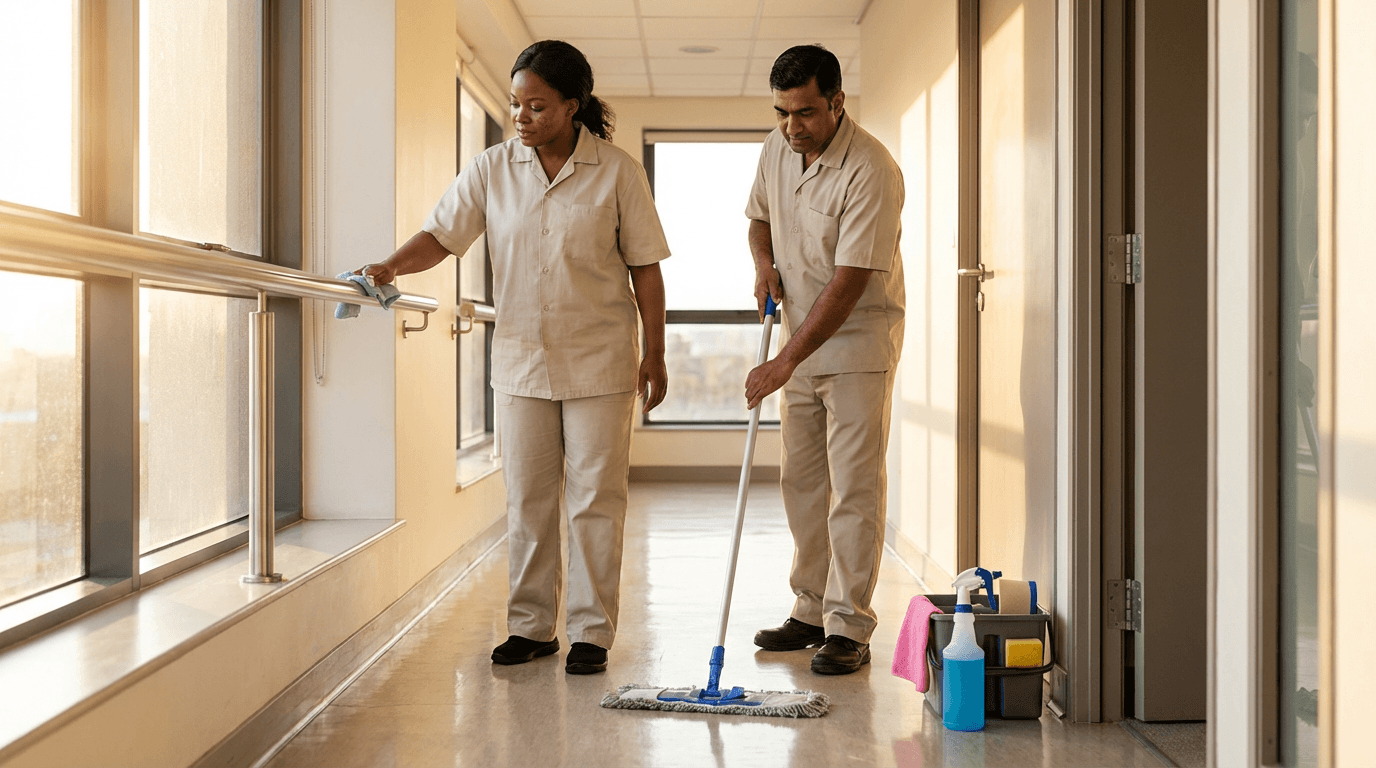
Gain essential skills in professional facility maintenance and cleaning, covering efficient daily routines, safe use of chemicals and tools, basic repairs, hazard management, record-keeping, and customer-oriented communication. This training prepares you to deliver impeccable, secure environments and excel as a dependable maintenance expert in Kenyan workplaces.
from 4 to 360h flexible workload
valid certificate in your country
What will I learn?
This course equips facility maintenance staff with hands-on skills to maintain cleanliness, safety, and smooth operations in any building. You will master daily cleaning routines for all areas, proper handling of tools, equipment, and chemicals, plus effective management of hazards, biohazards, and waste disposal. Gain confidence in performing minor repairs, keeping accurate records, communicating clearly, and upholding professional standards to boost service quality and client satisfaction.
Elevify advantages
Develop skills
- Safe cleaning practices: confidently use PPE, follow MSDS, and handle chemicals.
- Master daily workflows: plan smart routes for offices, toilets, and public areas.
- Basic repair abilities: fix lights, unclog drains, and adjust doors without needing specialists.
- Hazard and incident management: identify risks, document problems, and adhere to safety rules.
- Professional behaviour: interact politely with users, respect privacy, and maintain dignity.
Suggested summary
Before starting, you can change the chapters and workload. Choose which chapter to start with. Add or remove chapters. Increase or decrease the course workload.What our students say
Your lessons are perfect. I purchased the one-year package and finally have the opportunity to follow various topics of my interest without needing to change platforms... I thank you for everything you do, I've already recommended you to other people...

Giulio CarloDigital Marketing Student
I like how the lessons are straight to the point and how I can change chapters and skip content I don't need.

Mariana FerresPhotography Student
I like the content and the way videos are presented and transcribed, which speeds up the process!

Luciana AlvarengaNail Design Student
The platform is fast, simple to use. The diversity of content and complementary videos help a lot with learning.

André FelipePrompt Engineering Student
FAQ
Who is Elevify? How does it work?
Do the courses have certificates?
Are the courses free?
What is the course workload?
What are the courses like?
How do the courses work?
What is the duration of the courses?
What is the cost or price of the courses?
What is an EAD or online course and how does it work?
PDF Course