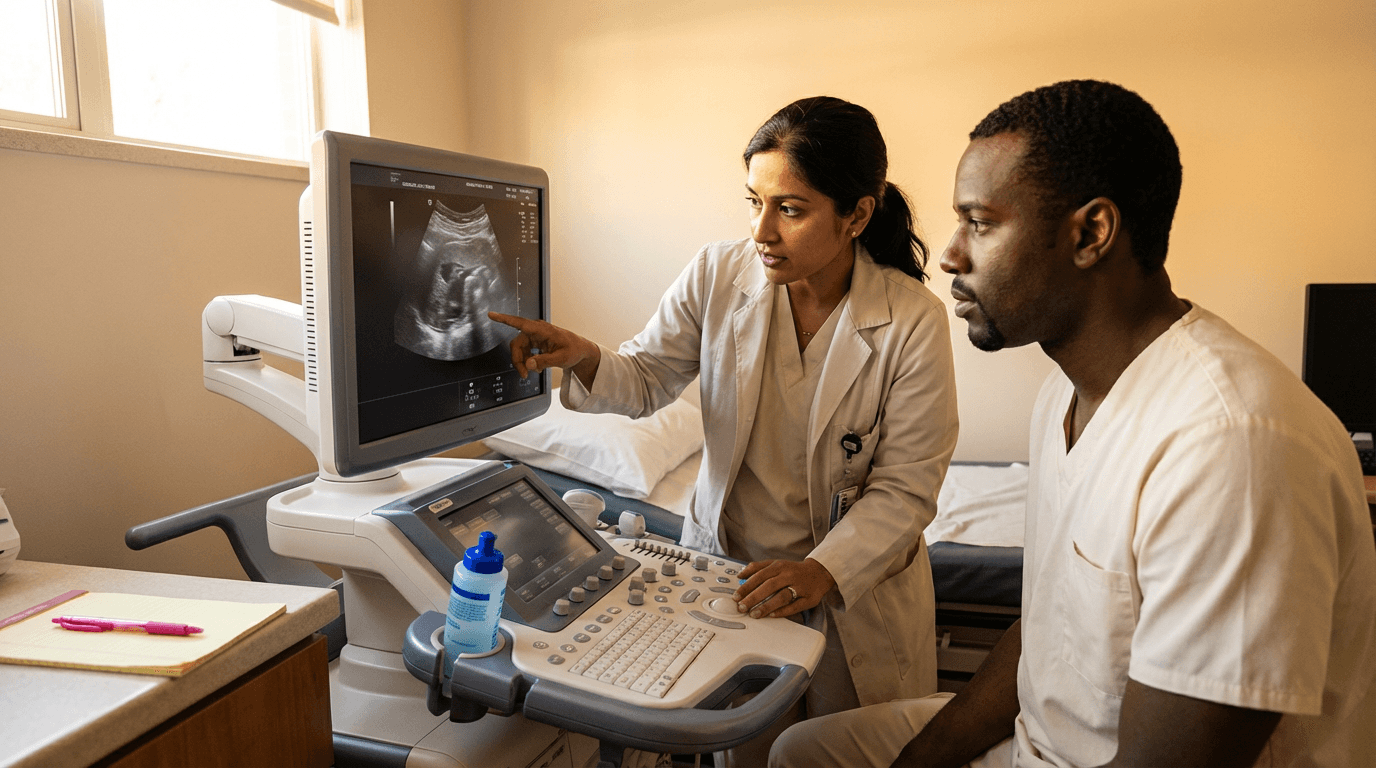
Lesson 1Restatin clinical question an role a ultrasound in suspected gallbladder diseaseClarify how fi restate di clinical question in di report an define role a ultrasound in suspected gallbladder disease, includin triage, rulin in or out acute cholecystitis, an guidin further imaghin or surgical consult. Dis help yuh turn doctor question inna clear scan goal, know what ultrasound do fi gallbladder issues.
Translatin request inna focused questionsPrimary goals a RUQ ultrasound examWhen ultrasound is definitive or inconclusiveCommunicatin diagnostic limits clearlyLinkin findins to next clinical stepsLesson 2Evaluation a common bile duct: measure technique, normal ranges, causes a dilationExplain technique fi accurate common bile duct measure, normal ranges by age an post-cholecystectomy status, an major causes a ductal dilation, integratin findins wid clinical an lab data fi obstruction assessment. Learn how fi measure duct right, know normal size, an why it swell, link to patient tests.
Landmarks fi CBD identificationInner-to-inner diameter measure tipsNormal CBD ranges an age adjustmentsPost-cholecystectomy diameter changesObstructive versus nonobstructive dilationLesson 3Limits a ultrasound in acute cholecystitis an when fi recommend CT/MRCP/HIDADiscuss limits a ultrasound in diagnosin acute cholecystitis, includin obesity, bowel gas, an atypical presentations, an outline clear indications fi recommendin CT, MRCP, or HIDA when ultrasound findins are equivocal. Dis cover when scan nuh enough, like fat blockin, an when fi send fi CT or other tests.
Technical an patient-related limitsEquivocal wall thickenin an sludge onlySuspected complications beyond field a viewCriteria to escalate to CT or MRCPWhen to suggest HIDA fi functional assessmentLesson 4Right upper quadrant abscess, hepatic abscess, an portal vein thrombosis: ultrasound signsReview ultrasound features a right upper quadrant an hepatic abscesses an portal vein thrombosis, includin echotexture, vascularity, gas, an flow changes, an discuss differentiation from cysts, tumors, an bland versus septic thrombus. Spot pus pockets, blood clots in vein, wid signs like gas or no flow, an tell from tumors.
Sonographic patterns a hepatic abscessSubhepatic an subphrenic abscess detectionPortal vein thrombosis grayscale featuresColor Doppler an spectral flow assessmentDifferentiatin abscess from cyst or tumorLesson 5Probe selection, patient positionin (supine, left lateral decubitus, upright), an graded compressionCover optimal transducer selection by body habitus an depth, patient positionin in supine, left lateral decubitus, an upright postures, an use a graded compression to displace bowel gas an improve visualization a gallbladder an bile ducts. Pick right probe, move patient different ways, press gentle fi clear gas an see better.
Curvilinear versus phased array selectionSupine an left lateral decubitus viewsUpright an intercostal scannin approachesGraded compression to reduce bowel gasOptimizin depth, focus, an gain settingsLesson 6Assessment fi complications: emphysematous cholecystitis, perforation, pericholecystic abscessFocus on ultrasound assessment a severe complications a cholecystitis, includin emphysematous change, perforation, an pericholecystic abscess, wid emphasis on early recognition, key warnin signs, an urgent communication pathways. Look fi gas in gallbladder, holes, pus around, an act quick fi send to surgery.
Gas in wall an lumen: ring-down artifactsWall defects an contained perforation signsPericholecystic abscess morphologyFree fluid an peritonitis indicatorsUrgent escalation an surgical referralLesson 7Key sonographic features a acute cholecystitis, chronic cholecystitis, an biliary colicExplore sonographic patterns a acute an chronic cholecystitis an biliary colic, highlightin wall changes, lumen findins, pericholecystic fluid, an pain correlation to distinguish inflammatory from noninflammatory gallbladder disease. See wall swell, stones, fluid, an match to patient pain fi tell acute from old or just colic.
Wall thickness an stratification patternsLumen contents an gallbladder distensionPericholecystic fluid an hyperemia on DopplerTenderness correlation an clinical contextDifferentiatin biliary colic from cholecystitisLesson 8Standard hepatobiliary scan protocol: liver, gallbladder, bile ducts, porta hepatisOutline standard hepatobiliary scan protocol, includin systematic evaluation a liver, gallbladder, bile ducts, an porta hepatis, wid recommended views, measurements, an documentation to ensure reproducible, high-quality examinations. Step by step check liver, gallbladder, ducts, wid must-see views an notes.
Liver survey an focal lesion screeninGallbladder long an short axis viewsCommon bile duct an intrahepatic ductsPorta hepatis an portal vein assessmentRequired measurements an image labelinLesson 9Reportin template fi suspected gallbladder disease includin urgency an recommendationsProvide structured reportin template fi suspected gallbladder disease, includin mandatory descriptive elements, impression, urgency gradin, an clear management recommendations aligned wid local pathways an guideline terminology. Get template fi write report wid clear words, urgency level, an next steps fi doctor.
Standardized gallbladder description fieldsCommon bile duct an intrahepatic ductsPortal vein an hepatic parenchyma commentsImpression wordin an diagnostic certaintyUrgency, follow-up, an referral adviceLesson 10Clinical information fi request from referrer an its impact on scanninDescribe essential clinical information fi obtain from di referrer, such as symptom onset, fever, laboratory values, an prior imaghin, an explain how dese details refine scan focus, interpretation, an urgency a communication. Ask fi pain start, fever, blood tests, old scans, an use dem fi better scan an report.
Symptom timin an character a painFever, sepsis markers, an lab resultsMedication, surgery, an comorbidity historyPrevious imaghin an operative reportsTailorin scan focus to clinical riskLesson 11Gallstones, sludge, an sonographic Murphy sign: technique fi elicit an documentDetail recognition a gallstones an sludge, optimization a gain an focal zones, an precise technique fi elicit an document di sonographic Murphy sign, includin pitfalls such as analgesia, overlayin tenderness, an referred pain. Spot stones by shadow, sludge by look, an press fi pain sign, note pitfalls like meds.
Echogenicity an shadowin a gallstonesMobile versus impacted stones an neck stonesAppearance an significance a biliary sludgeStandardized sonographic Murphy sign methodDocumentation a images an cine clipsLesson 12Relevant guideline references fi acute cholecystitis an biliary obstruction (how fi locate)Guide learners to key guidelines on acute cholecystitis an biliary obstruction, an demonstrate efficient strategies fi locate, appraise, an cite society recommendations within reports an departmental protocols. Find rules from big groups, use dem in report, keep up to date.
Major radiology an surgical society sourcesUsin databases an guideline repositoriesInterpretin strength a recommendationsIncorporatin guidance inna protocolsCitin guidelines in clinical reports