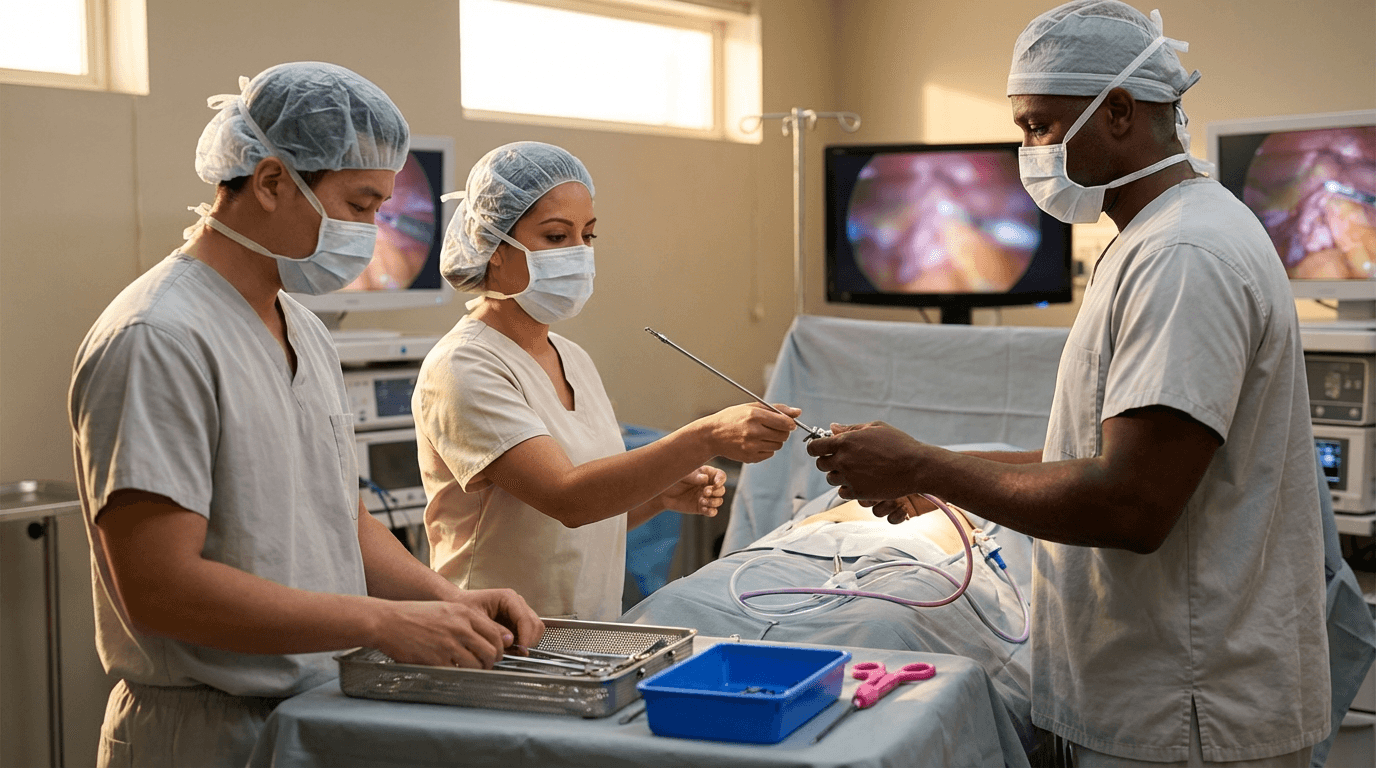
Lesson 1Clip appliers and clips: reusable vs disposable, sizes, loading checks, and safe firing practicesDis part explain clip applier types, clip sizes, loading checks, an safe firing technique, stressing cystic duct an artery clipping strategy, spacing, an check fi prevent clip slippage or misplacement.
Reusable vs disposable clip appliersClip size selection for cystic ductLoading checks and jaw inspectionSafe firing and clip spacingConfirming secure clip placementLesson 2Suction/irrigation systems: laparoscopic suction tips, irrigation tubing setups, smoke evacuation, and trocar valve managementDis part explain suction an irrigation handpieces, tip options, tubing setup, an smoke evacuation, paying mind to keep clear fields, stop clogging, an manage trocar valves fi hold pneumoperitoneum.
Suction–irrigation handpiece assemblyTip types and clog preventionIrrigation fluid selection and warmingSmoke evacuation options and setupTrocar valve care and leak controlLesson 3Sutures, staplers, and closure instruments: fascial closure devices, trocar site closure techniques, and suture materials appropriate for portsDis part review sutures, staplers, an closure tools fi port sites, including fascial closure devices, trocar site closure techniques, an suture choice fi reduce hernia, bleeding, an infection risks.
Suture materials for port closureFascial closure device optionsTechniques for ≥10 mm port closureSkin closure methods and adhesivesStapler use for difficult closuresLesson 4Specimen retrieval and extraction tools: endobags, specimen pouches, extension port use, and wound protectionDis part cover endobags an retrieval pouches, port choice fi extraction, gallbladder decompression, an wound protection fi cut down bile spillage, stone loss, an port-site contamination.
Endobag sizes and deployment stepsGallbladder decompression before baggingPort choice for specimen extractionPreventing stone and bile spillageWound protection during extractionLesson 5Consumables and sterile supplies: trochar seals, insufflator tubing, CO2 canister handling, instrument tray disposables, and backup items to have on handDis part review key consumables fi cholecystectomy, like trocar seals, insufflation tubing, CO₂ sources, light covers, an tray disposables, plus backup items an strategies fi avoid intraoperative supply shortages.
Trocar seals and reducer insertsInsufflation tubing and filtersCO₂ source checks and safetySterile tray liners and drapesBackup consumables and checklistsLesson 6Core trocar and access devices: types, sizes (5 mm, 10/11 mm), obturators, balloon and optical trocars, and insertion technique considerationsDis part review trocar types, diameters, obturators, an access options, focusing pon safe insertion, port positioning, an fix gas leaks fi ensure stable pneumoperitoneum an ergonomic instrument layout.
Bladed vs bladeless trocar designs5 mm versus 10–12 mm port selectionOptical trocar use and safety checksBalloon trocars and fixation methodsSafe primary and secondary port insertionLesson 7Dissectors and scissors: Maryland, Metzenbaum, ultrasonic and advanced energy scissors—indications and instrument handlingDis part detail laparoscopic dissectors an scissors, including Maryland an Metzenbaum patterns an ultrasonic scissors, wid stress pon indications, grip, tip control, an coordinated use wid traction an countertraction.
Maryland dissector uses in Calot’s triangleMetzenbaum scissors for fine dissectionUltrasonic scissors setup and safetyHand positioning and tip controlCoordinating dissection with retractionLesson 8Electrosurgery accessories and energy devices: laparoscopic bipolar forceps, monopolar hooks, vessel sealing devices, and safe cable routingDis part cover monopolar an bipolar instruments, advanced vessel sealing devices, generator settings, an safe cable routing, highlighting strategies fi prevent burns, insulation failure, an stray energy injuries.
Monopolar hook setup and testingBipolar forceps indications and limitsVessel sealing device selectionGenerator modes and power settingsSafe cable routing and insulation checksLesson 9Graspers and retractors: fenestrated, atraumatic, Babcock equivalents, and their specific uses during gallbladder retractionDis part detail atraumatic graspers an retractors fi gallbladder manipulation, including fenestrated an Babcock-style jaws, wid focus pon safe traction, exposure of Calot’s triangle, an avoid organ injury.
Fenestrated atraumatic grasper usesBabcock-style graspers for fundusInfundibulum grasping and tractionDynamic retraction for exposureAvoiding gallbladder wall injuryLesson 10Laparoscopes and camera accessories: scopes, camera head checks, cleaning, anti-fog agents, and lens warming optionsDis part explain laparoscope types, camera head checks, white balance, an cable management, plus cleaning, anti-fog, an lens warming strategies fi keep clear, stable images throughout laparoscopic cholecystectomy.
0° vs 30° laparoscope selectionCamera head connection and focus testsWhite balance and color adjustmentLens cleaning and anti-fog techniquesCable routing and strain relief