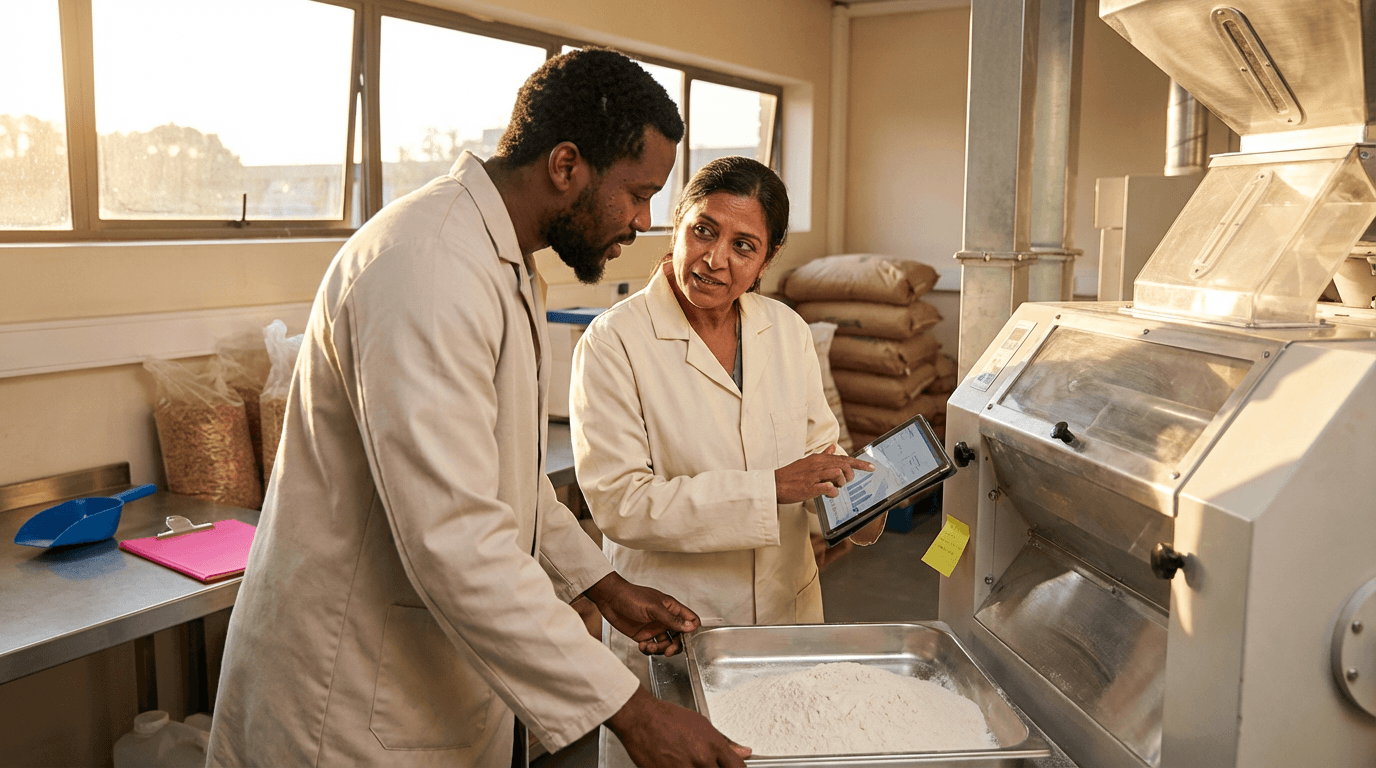
Lesson 1Conditioning/tempering: hydration targets, time/temperature effects on bran toughness and endosperm friability, typical moisture adjustments (1.5–3% increase) and soaking timesDis section detail wheat conditionin an temperin before millin. It explain moisture addition calculations, target levels fi different wheats, time an temperature effects pon bran toughness an endosperm friability, an typical soakin times an controls.
Moisture addition and target calculationsTempering time and temperature effectsSingle versus multistage temperingMonitoring kernel hardness and friabilityTypical soaking times and adjustmentsLesson 2Purifiers and scourers: role in bran removal and semolina quality for high extraction; particle size and airflow tuningDis section focus pon purifiers an scourers use to clean an grade middlins. It explain how air flow, vibration, an sieve selection remove bran, how setins affect semolina purity an yield, an how scourers reduce surface contamination an adherin bran.
Purifier construction and working principleAirflow, deck load, and vibration tuningMiddlings sizing and sieve selectionSemolina purity versus yield tradeoffsScourer types and operating parametersLesson 3Reduction system (reduction rolls): gradual size reduction, control of starch damage, and reduction sequencingDis section analyse di reduction system, where middlins ground to flour. It cover smooth roll configuration, gradual size reduction, feed an stock distribution, control a starch damage an heat, an sequencin a reduction an sizin passages.
Role of reduction versus break systemSmooth roll surface and feed distributionGradual reduction and stock recyclingStarch damage and temperature controlReduction and sizing passage sequencingLesson 4Breaking system (break rollers): function, roll configuration, crack sizing, and typical roll gap/speed considerationsDis section examine di break system, where kernels open wid minimal flour damage. It cover roll surface types, corrugation an spiral, gap an differential setins, feed control, an how break release clean endosperm while limitin bran powder an specks.
Objectives of the break systemRoll surface, corrugation, and spiralBreak roll gap and differential settingsBreak release, sizing, and tailingsMonitoring bran powder and speck levelsLesson 5Grain reception and intake: sampling protocols, official tests to run on arrival, storage segregation and blending logisticsDis section explain grain reception procedures, from truck arrival to silo allocation. It detail samplin plans, official quality an safety tests, gradin, segregation by quality class, an blendin strategies dat support consistent millin performance.
Truck inspection and unloading safetyRepresentative sampling and sample handlingOfficial quality and food safety testsGrading, rejection, and acceptance criteriaSegregation and blending in silo managementLesson 6Blending and millstream recombination: blending logic to meet extraction/ash targets, use of midstreams and tailstreamsDis section explain how millstreams blend to meet flour specs. It cover classification a core, mid, an tail streams, ash an colour profilin, extraction targets, an use a automated scales an recipes to keep consistent flour quality.
Classification of millstreams by qualityAsh, color, and protein profilingBlending logic for extraction targetsUse of midstreams and tailstreamsAutomated scales and recipe controlLesson 7Cleaning: equipment (scourers, aspirators, destoners, magnetic separators, sieves), objectives and typical operational settingsDis section review cleanin operations dat prepare wheat fi temperin. It cover scalpin, aspiration, destonin, magnetic separation, an scourers, along wid setins dat remove dust, stones, metals, an foreign seeds while minimizin sound grain loss.
Cleaning flow sheet and line layoutScalpers, sieves, and aspiration unitsDestoners and gravity separationMagnetic separators and metal controlScourers and surface dust removalLesson 8Sifting plans and plansacker operation: plans, purifier passages, and how sieving fractions are arranged to control ash and particle sizeDis section describe design an operation a sifting systems, includin plansifters an plansackers. It explain how sieves arrange, how purifier passages integrate, an how sifting plans control ash distribution, granulation, an millstream classification.
Plansifter layout and flow diagramsSieve cloth selection and maintenancePlansacker operation and bag changeoverPurifier passages within the sifting planGranulation and ash control by streamsLesson 9Critical control points where poor settings harm quality: conditioning moisture/time, roll gaps and differential, sifter mesh/openings and airflowDis section identify critical control points where poor setins damage yield or quality. It focus pon temperin moisture an time, break an reduction roll gaps an differentials, an sifter mesh an airflow setins dat govern ash, starch damage, an speck count.
Tempering moisture targets and timingRoll gap setting and differential controlFeed rate, roll wear, and temperatureSifter mesh selection and maintenanceAirflow balance and tailing managementLesson 10Flour conditioning and fortification: tempering, emulsifier or improver additions, storage in silos and microbial controlDis section cover flour conditionin an fortification after millin. It discuss temperin fi moisture uniformity, addition a vitamins, minerals, an improvers, silo storage conditions, aeration, an microbial control measures fi safe, stable flour.
Post-milling flour tempering objectivesVitamin and mineral premix handlingEmulsifiers and functional improversFlour silo design and aeration controlMicrobial risks and mitigation stepsLesson 11Finished flour packing and storage: protecting against moisture uptake and oxidation, traceability and labelingDis section cover how finished flour pack, label, an store to preserve quality. It explain moisture an oxygen control, packagin materials, traceability systems, an warehouse practices dat prevent infestation, cakin, an contamination.
Bagging lines and bulk loading systemsPackaging materials and barrier propertiesMoisture and oxygen control in storageLabeling, coding, and traceability recordsWarehouse hygiene, pests, and stock rotation