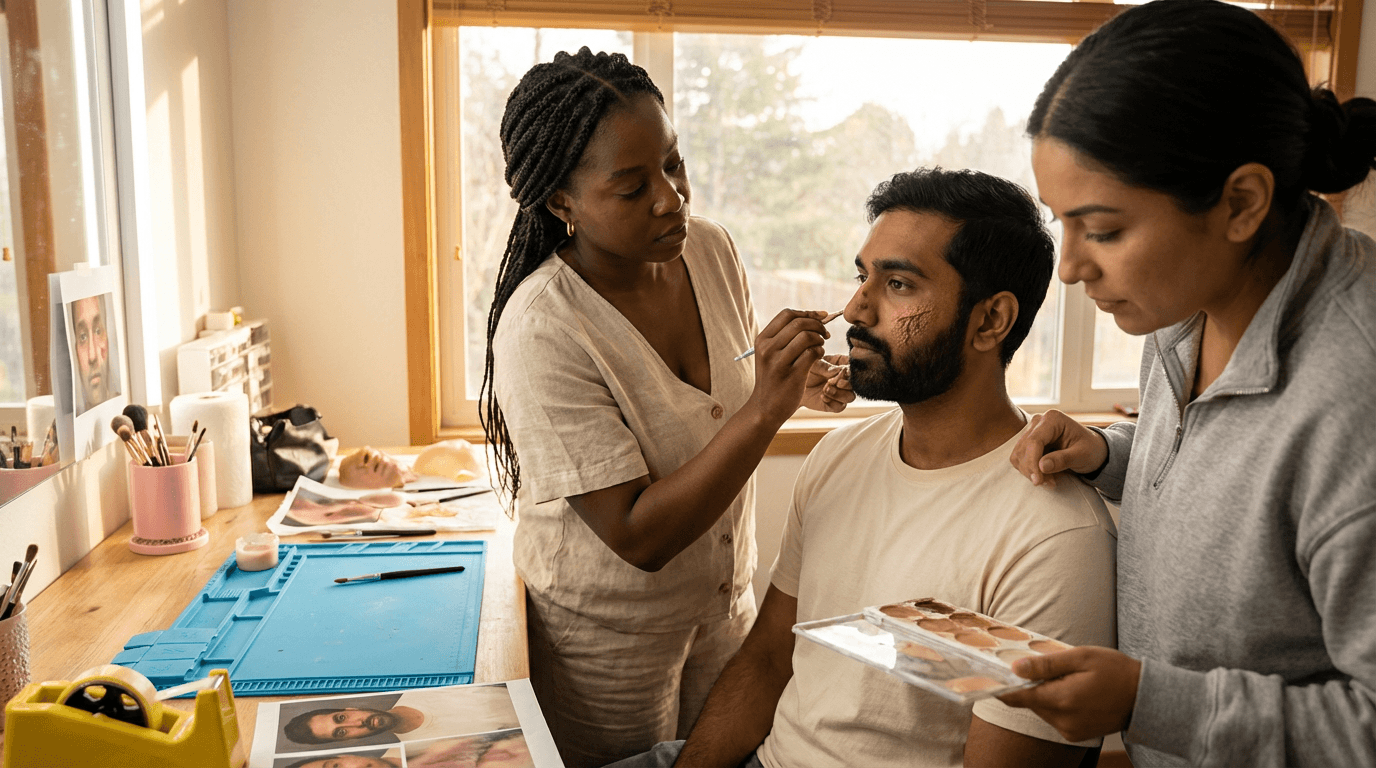
Lesson 1Adhesives an' removers: pros-aide, medical adhesive, spirit gum, silicone adhesives, isopropyl alcohol, adhesive removers an' dem compatibility wid different prosthetic basesUnderstand adhesive systems an' removers fi different prosthetic bases. Learn compatibility, working times, removal strategies, an' how fi minimize skin trauma while maintaining secure, camera-ready adhesion.
Pros-aide types and correct usageMedical adhesive and sensitive skinSpirit gum and modern alternativesSilicone adhesives and bond strengthIsopropyl alcohol and safe handlingAdhesive removers and skin protectionLesson 2Skin safety an' hygiene protocols: patch testing, cross-contamination prevention, sterilization vs. cleaning, single-use items, PPE fi artist an' actorLearn professional hygiene standards fi prosthetic makeup. Yuh wi distinguish cleaning from sterilization, prevent cross-contamination, manage single-use items, an' apply PPE correctly to protect both artist an' performer.
Handwashing and glove change routinesCleaning versus sterilization methodsPreventing cross-contamination on setManaging single-use versus reusable itemsPPE selection for artist and performerDisinfecting workstations and equipmentLesson 3Blood, scab an' fluid products: types (coagulated, syrup blood, gel blood), viscosity choices fi fresh vs. old wounds, stain behavior an' removersStudy blood, scab, an' fluid products fi realistic effects. Compare viscosities, staining behavior, an' removal methods, an' plan continuity so wounds, sweat, an' fluids remain consistent across shooting days.
Types of blood: syrup, gel, and coagulatedChoosing viscosity for wound ageStain behavior on skin and fabricsSafe use near eyes, mouth, and noseRemoval strategies and stain controlContinuity planning for fluid effectsLesson 4Allergy an' sensitivity management: how fi perform a skin patch test, recognizing contact dermatitis, emergency steps fi reactions, documentation an' actor consent formsDevelop a structured approach to allergies an' sensitivities. Learn to conduct patch tests, recognize early reaction signs, respond to emergencies, an' document findings wid clear consent an' incident records.
Pre-job medical and allergy screeningHow to perform a skin patch testRecognizing contact dermatitis symptomsImmediate steps for adverse reactionsDocumentation, consent, and incident logsLesson 5Essential tools an' consumables: brushes, stipple sponges, sculpting tools, alcohol wipes, barrier films, release agents, mixing cups, pigments, powdersExplore essential tools an' consumables fi safe, efficient prosthetic work. Learn correct selection, setup, labeling, an' maintenance to avoid contamination, waste, an' tool damage in both studio an' on-set environments.
Brush types and dedicated usesStipple sponges and texture toolsSculpting tools and detailing aidsBarrier films, wipes, and release agentsMixing cups, palettes, and labelingPigments, powders, and storage careLesson 6Overview a common prosthetic media: foam latex, slab-silicone, skin-safe silicone (platinum an' tin), gelatin, pros-aide transfers, an' 3D printed transfersSurvey di most common prosthetic media an' dem behavior. Compare foam latex, gelatin, silicones, transfers, an' 3D prints in terms a comfort, durability, application workflow, an' removal considerations.
Foam latex: strengths and limitationsGelatin appliances and reusabilityPlatinum versus tin-cure siliconesPros-aide and 3D printed transfersChoosing media for role and scheduleLesson 7Properties comparison: breathability, flexibility, longevity under hot lights, detail capture, an' cost per unitCompare key performance traits a major prosthetic materials. Learn how breathability, flexibility, durability under heat, detail fidelity, an' cost influence material choice fi film, theater, an' long-wear applications.
Breathability and skin occlusion risksFlexibility, movement, and comfortLongevity under hot lights and sweatFine detail capture and edge qualityCost per unit and budgeting choicesLesson 8Paints an' colorants: alcohol-activated palettes, silicone paints, PAX mixtures, cream makeup, pigments an' mixers fi realistic skin tonesExamine paints an' colorants used over prosthetics. Learn when to choose alcohol-activated, silicone, PAX, or creams, how fi mix realistic skin tones, an' how fi layer, seal, an' maintain durability on set.
Alcohol-activated palettes and usageSilicone paints and bond to appliancesPAX mixtures and adhesion behaviorCream makeup for blending and detailMixing pigments for varied skin tonesSealing, fixing, and on-set touch-upsLesson 9Environmental considerations: heat management under lights, sweat mitigation, ventilation when using solvents, an' safe disposal a chemical wasteAddress environmental an' health factors in prosthetic work. Learn to manage heat, sweat, an' ventilation, handle solvents safely, an' dispose a chemical waste in compliance wid studio an' local regulations.
Heat buildup under lights and coolingSweat mitigation under appliancesVentilation for solvents and aerosolsSafe storage of flammable productsChemical waste segregation and disposal